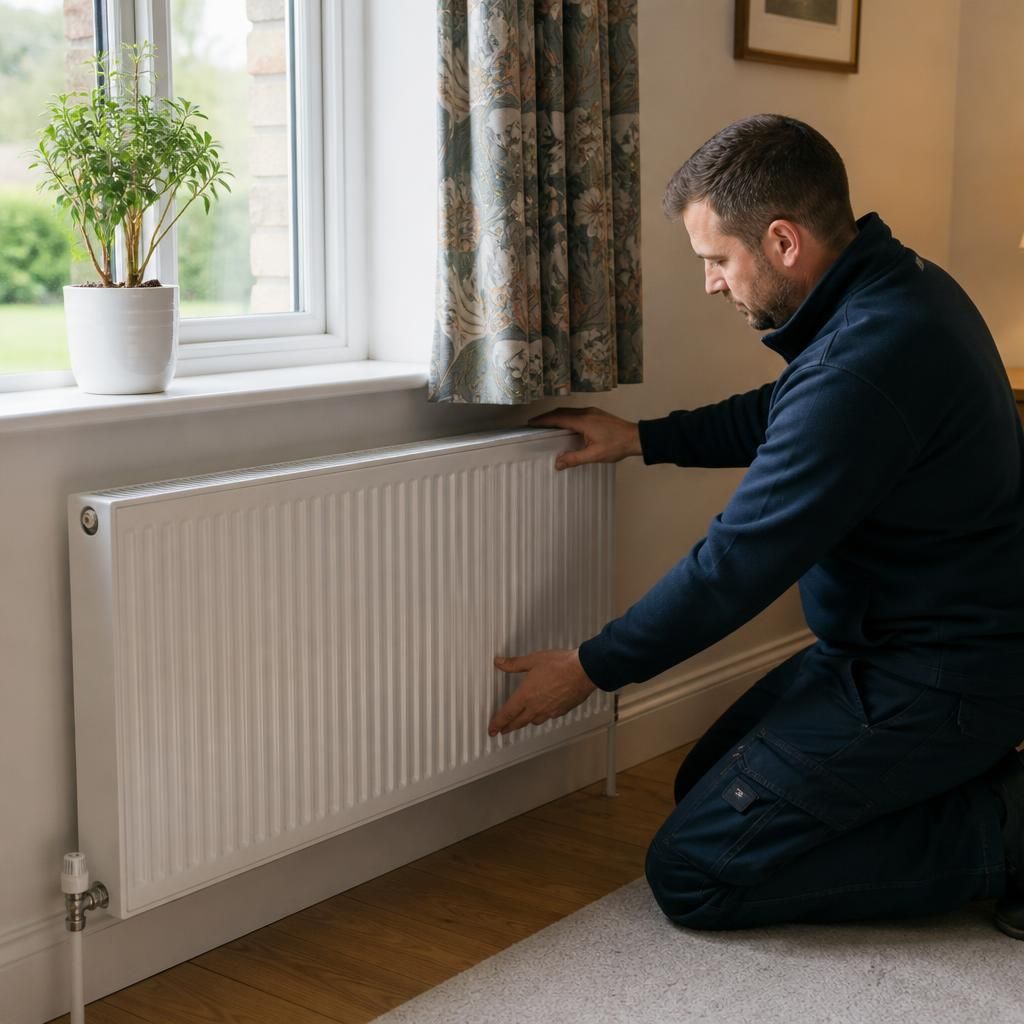
Will my existing radiators work with an air source heat pump?
Often, yes: existing radiators can work with an air source heat pump if they provide enough heat at the system’s lower flow temperature. We calculate the heat loss room by room and check each radiator, so any upgrades are identified before installation rather than after.
The deciding factor is not the age of the radiators, but the heat each one can deliver at the flow temperature an air source heat pump needs. A radiator that works well with a gas or oil boiler may provide less heat when the system runs at a lower temperature. That does not automatically mean the radiators must all be replaced.
Some homes can keep most or all of their existing radiators. Others need larger radiators in particular rooms, changes to the pipework, or improvements to the building fabric. We assess those points together rather than judging the system by radiator size alone.
What we check during the survey
Each room has a different heating requirement. A large sitting room with external walls and older windows may need more heat than a smaller bedroom, even if both rooms have similar radiators. We calculate the heat loss room by room, taking account of the walls, windows, roof, floor, room size, air movement and neighbouring heated spaces.
We then compare that requirement with the output of each existing radiator at the intended heat pump operating temperature. The radiator type, dimensions, number of panels, fins and condition all affect the result. A double-panel radiator with fins can deliver considerably more heat than a small single-panel radiator occupying a similar wall area.
The survey also looks at the heating circuit itself. Narrow or long pipe runs may restrict the water flow needed by a heat pump. Valves can be worn or unsuitable, and an old system may contain sludge that reduces circulation. We identify these issues before recommending equipment, so the quotation reflects the work the property actually needs.
When existing radiators can stay
Your radiators are more likely to remain suitable when the rooms have modest heat loss and the radiators already have enough output at the proposed flow temperature. Good loft insulation, sound windows and controlled draughts can help, although they do not remove the need for room-by-room calculations.
A heat pump is normally designed to run for longer periods at a steady, lower temperature rather than rapidly heating cold rooms in short bursts. Weather compensation adjusts the system as outdoor conditions change. With suitable radiators and controls, the house can maintain a steady temperature without relying on the high-temperature bursts associated with some boiler systems.
The existing heating pattern matters too. A radiator that appears adequate on paper may struggle if a room is usually heated from cold, if doors are left open, or if the thermostat is positioned in a warmer part of the house. We discuss how the rooms are used before finalising the design.
When replacement or alteration is sensible
If a room needs more heat than its radiator can provide, we may recommend a larger radiator, a different radiator type or an additional emitter. That does not necessarily mean replacing every radiator in the property. Often, the changes are limited to rooms with high heat loss, such as an extension, a large kitchen or a bedroom above an exposed space.
Some radiators can be made suitable by using a taller or wider model in the same general position. In other rooms, wall space, furniture or the location of the existing pipework may influence the choice. We explain the practical options and include the agreed changes in the written quotation before work starts.
Pipework may need attention where small-bore runs cannot carry the required flow without excessive resistance or noise. We might replace selected sections, alter connections or recommend a wider route where access allows. The right approach depends on how the pipes are installed, not simply on whether the property has older heating pipework.
Older and rural properties need a careful design
Solid-wall houses, barn conversions and listed properties can have uneven heat loss between rooms. Thick walls may retain heat well in some areas, while exposed elevations, high ceilings or older glazing create greater demand elsewhere. We account for those differences rather than applying a standard radiator recommendation across the whole house.
Fabric improvements can reduce the size of radiator needed, but they must suit the building. In an older property, inappropriate insulation or draught-proofing can affect ventilation and moisture movement. We can show where an improvement would make a useful difference and where radiator changes are the more practical answer.
What happens if the radiators are not suitable?
We set out the shortfall by room and explain the consequence of each option. You may choose to replace selected radiators, improve insulation first, alter pipework, or reconsider the design temperature. The important point is that the heat pump should not be installed on the assumption that the existing system will cope.
Replacing radiators involves draining and refilling parts of the heating system. Access to concealed pipes, floors and finished walls can affect the amount of disruption. We identify those details during the survey and separate installation work from optional improvements, so you can make an informed decision before anything is ordered.
There is no reliable answer based only on the number or size of radiators already in the house. A room-by-room heat-loss calculation, radiator output check and pipework assessment show whether the existing emitters can work with the proposed design. We use those findings to specify only the changes needed for the property, rather than treating every installation as a complete radiator replacement.
A radiator may feel less hot to the touch after the change. That does not mean the room is underheated. An air source heat pump is designed to maintain the room steadily rather than deliver short bursts of very hot water.
Once the system is installed, we balance the heating circuit and set the controls to match the design. This helps each radiator receive the right flow of water, while avoiding unnecessary noise or uneven temperatures between rooms.
If a room still cannot reach its target temperature, the readings show where the problem lies. We can then adjust the settings or discuss a specific radiator change, rather than replacing equipment without evidence.