
How long does a business EV charging installation take?
A business EV charging installation can take from a straightforward installation to a longer project, depending on the electrical capacity, cable routes, number of charge points and any groundworks or permissions needed. We establish the programme during the site survey, then complete the installation, testing and handover so the charging equipment is ready for use.
A business EV charging installation can take from a short installation visit to a longer project involving electrical upgrades, groundworks or several charge points. The accurate timescale comes from the site survey, because the existing supply, parking layout and cable route usually matter more than the charger itself.
A single charge point close to a suitable distribution board is usually the simplest arrangement. A larger workplace, fleet or customer-facing site may need several charge points, load management, longer cable runs, protection for outdoor equipment and changes to the incoming electrical supply. Each addition can affect the programme.
The main stages are:
- Initial information: We establish how many vehicles need charging, when they are parked, how much energy they need and whether staff, visitors or a commercial fleet will use the points.
- Site survey: We inspect the intake position, consumer unit or distribution board, available capacity, earthing arrangement, parking bays and possible cable routes. We also identify walls, roads, drainage, landscaping and other areas that could affect the installation.
- Electrical design: We calculate the likely load and decide whether the site needs load management. This can help several charge points share the available supply without exceeding the building’s electrical capacity.
- Permissions and network work: If the existing supply cannot support the planned charging capacity, the distribution network operator may need to assess an upgrade. That process can take longer than the physical installation. Planning or landlord approval may also be needed, depending on the site.
- Preparation: We agree the equipment position, cable route, parking arrangements and any trenching or remedial work. A written quotation sets out the required work before installation starts.
- Installation: We fit the charge points, protective devices, cables, communications equipment and any load-management controls. Groundworks, reinstatement and work across several parking areas add to the time on site.
- Testing and handover: We test the electrical installation and charging equipment, check the controls and explain operation to the people who will use or manage the system. We provide the relevant paperwork and information for ongoing use.
Your electrical intake may be some distance from the parking bays, particularly at a rural business, farm or older commercial property. In that case, the cable route may cross a yard, road or landscaped area. We assess the route before quoting, so the programme includes the necessary containment, trenching and reinstatement rather than treating them as unexpected work.
A multi-point installation also needs a decision about how the available power will be shared. Without suitable control, several vehicles charging together could place too much demand on the building. We can design the system around the site’s available capacity and intended use, but a supply upgrade may still be appropriate where vehicles need to charge at the same time.
Networked chargers can add further preparation. The site may need a reliable communications connection, user access controls, usage records or payment arrangements. We confirm these requirements before the equipment is ordered, because they can affect both the installation and the final handover.
Business operations can also affect the programme. We identify which parking bays, access roads or electrical areas need to be clear, and we explain when the supply must be isolated. Your staff can then plan around any temporary loss of power or restricted vehicle access. The work area is left tidy after the installation.
Once the survey is complete, we separate the work into what can be completed by our engineers and what depends on third parties, such as the network operator, planning authority, landlord or groundworks contractor. This gives you a more useful timescale than a standard installation estimate.
Our electrical engineers install and test the system in line with the required electrical standards. As a NICEIC- and ECA-registered electrical contractor, we can provide the certification and handover information needed for the completed installation. The final programme is confirmed once the survey has established the site’s electrical and physical requirements.
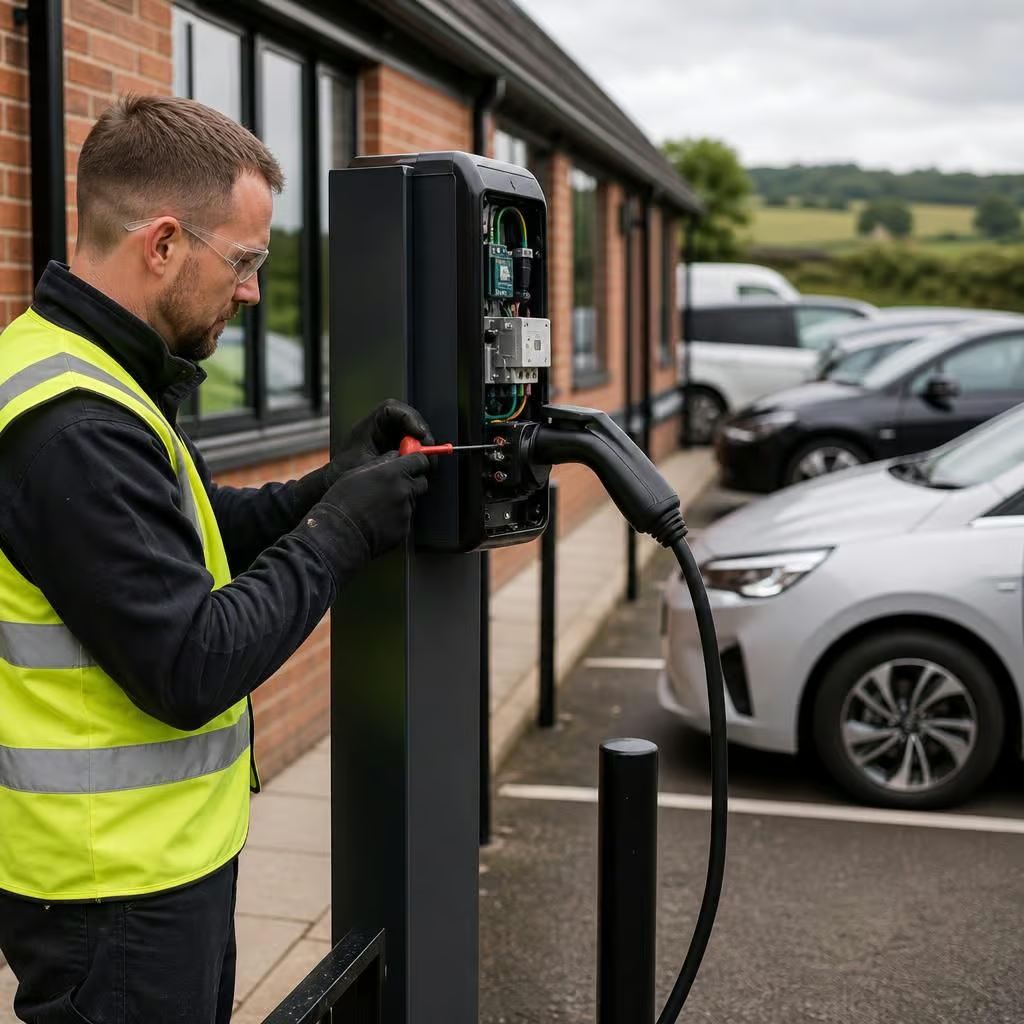
The installation date depends partly on what must be agreed before work starts. We confirm who can authorise access, which parking bays are affected and whether the charge points need staff access, visitor use or payment control. That prevents unfinished account setup or unclear parking arrangements from delaying handover.
On the day, we protect the work area, complete the electrical installation and carry out functional checks before users rely on the equipment. We also explain the controls to the person managing the site and provide the test results, certificates and operating information needed for the system’s records.