
Can fleet EV charging be restricted to authorised vehicles?
Yes. Fleet chargers can restrict use through RFID cards, mobile apps or user permissions, so only approved drivers or vehicles can start a session. Smart charging software can also record each authorised session and apply rules for charging times, power limits and cost allocation.
Access control is set up in the charger management system, so only approved users or vehicles can start a charging session. The restriction can apply to individual charge points, a group of bays or the whole fleet site.
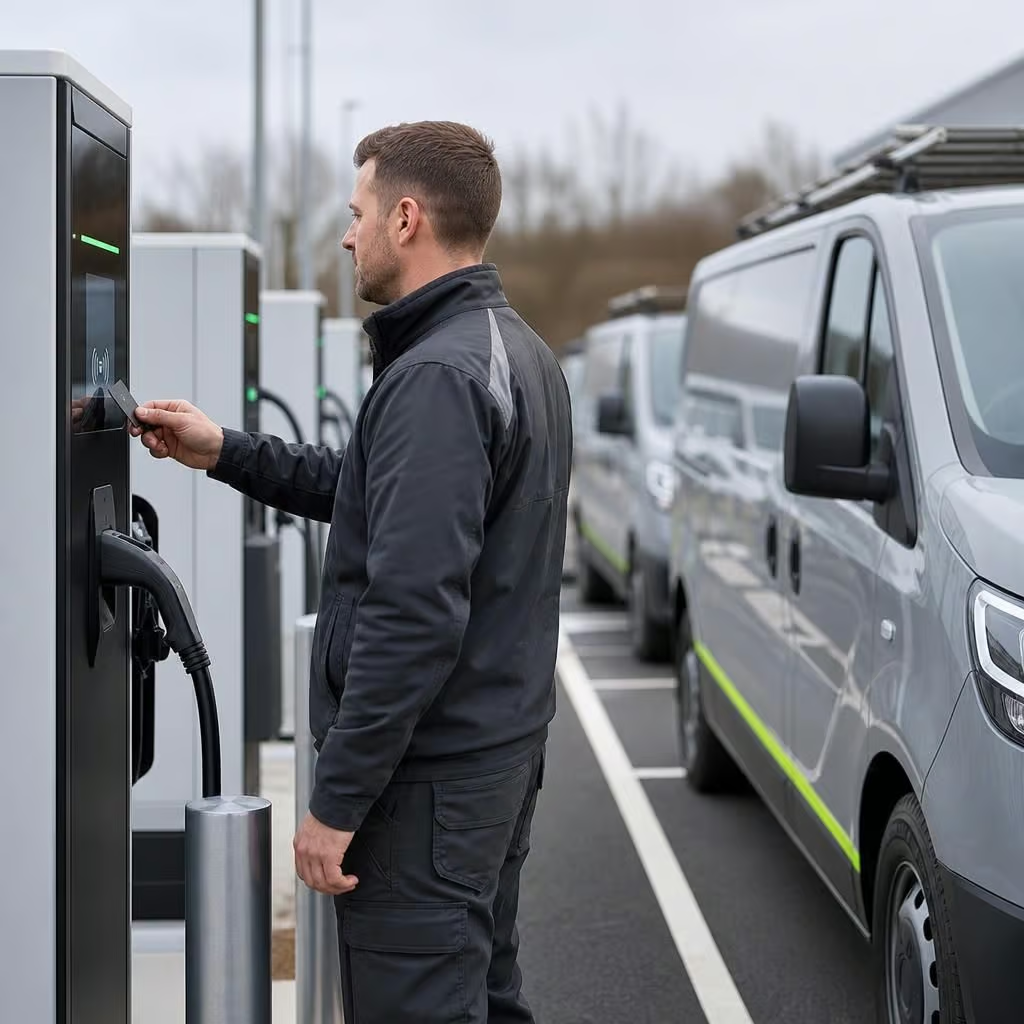
RFID cards and fobs work well where several drivers use shared vehicles. Each driver presents an assigned card or fob before charging starts. We can link that card to a person, vehicle, department or cost centre. If a card is lost or an employee leaves, the administrator can remove its permission without changing the charger.
App-based access suits organisations that already manage vehicles through driver accounts. An approved driver signs in before starting a session. Permissions can be limited to particular chargers, sites or times. The app can also show the session record, including the vehicle, user, energy used and charging duration.
Vehicle identification can provide a more automatic experience, but it depends on the vehicle and charger supporting the same identification standard. The system recognises an approved vehicle when it connects, rather than relying only on a card or phone. We check compatibility during the design stage, because not every electric vehicle or charge point supports automatic identification.
Authentication and authorisation are separate parts of the arrangement. Authentication confirms who or what is requesting a charge. Authorisation decides whether that person or vehicle is allowed to use the particular charger. A driver might be recognised successfully but still be refused because the vehicle is assigned to another site or the charger is reserved for a different department.
Access rules can reflect the way the fleet operates. For example, pool cars might use any fleet bay, while pool vans use higher-powered chargers near the service area. A management vehicle could have priority during working hours, while contractors receive temporary access for a defined period. We can discuss the required rules before selecting the charging hardware and management platform.
Smart charging controls are useful alongside access restrictions, but they do a different job. Access control decides who may charge. Smart charging decides when an approved vehicle charges and how much power it receives. This can help a site avoid charging every vehicle at once, protect the available electrical capacity and give priority to vehicles needed first.
For a fleet, the records can also support internal cost allocation. Each session may be associated with a driver, registration, vehicle group or department, depending on the information captured by the system. That gives the fleet manager a clearer record than a shared charge point with no user identification. The charging system still needs to be configured correctly, and the organisation needs a process for checking exceptions.
Not every restriction is digital. If unauthorised vehicles can simply occupy the charging bays, a login requirement will not stop misuse of the parking space. Signage, marked bays and suitable parking controls may be needed as well. Physical barriers can create difficulties for cable access, emergency release and accessibility, so we consider those points during the site design.
Network connection is another practical consideration. App access and remote management usually rely on the charger communicating with its management platform. We check the available connection and agree what should happen if communication is temporarily lost. Some systems can continue local charging for approved settings, while others may apply a default restriction until the connection returns.
We also consider how administrators will manage the system after installation. The fleet manager may need to add a new vehicle, issue a temporary card, suspend access, change a department allocation or review an unusual charging session. A system that requires an installer for every small change can become difficult to run, so we explain the day-to-day controls and hand over the relevant information.
Privacy matters when charging records are linked to named drivers or vehicle movements. The organisation should decide which information it needs, who can view it and how long it should retain it. We can identify the data captured by the proposed access method, so the fleet manager can check that it fits the organisation’s own policies.
During the design visit, we establish which vehicles need access, who may use each bay, whether visitors need temporary charging, how sessions must be recorded and what should happen during network or power constraints. We then match those requirements to compatible chargers and controls, rather than treating RFID, app access or automatic vehicle identification as interchangeable features.
A vehicle-only policy works best when the fleet has clear registration records. We match each approved vehicle to its registration or fleet identifier, then check how the charging system handles replacements, pool vehicles and temporary substitutions. That prevents a newly leased van from being blocked simply because its details have not yet been added.
If a vehicle is sold, written off or moved to another depot, its charging permission can be removed without changing the charge point. We also agree who can make those changes and how exceptional use is recorded, so access stays controlled as the fleet changes.