
Will my home need electrical upgrades before an EV charger is installed?
Possibly, but not every home needs an upgrade. We check the consumer unit, earthing, cable route and available electrical capacity, then explain any work needed before installing the charger.
Most homes do not need a complete rewiring before an EV charger is installed. Some need a targeted upgrade so the charger has a safe, suitably protected circuit and does not overload the rest of the installation.
The work depends on the condition of the existing installation, the charger’s output, the route to the parking space and how much electricity the property uses at the same time. An older home may need more attention than a newer one, particularly if the consumer unit, earthing arrangement or supply cable has not been updated.
An older consumer unit may need replacing. Fuse boards with rewireable fuses, outdated protection or limited space may not provide the protection required for a modern EV charge point. A replacement consumer unit can provide suitable circuit protection and room for the charger circuit, while also bringing other immediate safety issues to light.
That does not automatically mean the whole house needs rewiring. If the existing cables are in good condition and correctly sized, we normally deal with the part of the installation that affects the charger. We explain any wider work separately, so you can distinguish essential work from recommended improvements.
The earthing arrangement can affect the installation. Some properties, especially older rural homes and detached buildings, have an electrical supply arrangement that needs additional protection when an EV charger is fitted. We check for risks such as a broken or high-resistance protective conductor and the way the supply earth is provided.
Where the charger location creates a particular risk, we may recommend protective equipment or a different installation method. This is important when the charge point is outside the main building, on a detached garage or supplied by a long underground cable. The aim is to make sure a fault cannot make accessible metalwork dangerous.
The charger needs its own correctly sized circuit. We select the cable, protective device, isolation and routing for the distance between the consumer unit and the charge point. A short cable run through the house is different from a route to a garage, outbuilding or parking area across a drive.
Longer routes may require larger cable, additional protection or changes to the way the cable is installed. We also consider exposure to moisture, physical damage, buried services and the position of the charge point. The finished installation should be protected without creating unnecessary disruption inside the home.
Your incoming supply may limit the available capacity. The main fuse and supply arrangement determine how much electrical load the property can take safely. A charger running at the same time as an electric shower, immersion heater, cooker, heat pump or workshop equipment may place a high demand on the supply.
If the available capacity is limited, a load-management system may allow the charger to reduce or pause its charging rate when other large appliances are running. That can avoid an unnecessary supply upgrade, but we assess whether it is suitable for the way your home is used. We do not assume that a larger charger is automatically the best choice.
In some cases, the electricity network operator may need to be involved. We check the supply requirements and explain if an application or approval is needed before the installation proceeds. Any change to the charger specification or installation method is discussed with you first.
Solar panels or a home battery can change the assessment. Existing generation and storage equipment may affect how the charger should be connected and controlled. We consider the equipment already installed, the way it is metered and whether charging from surplus solar is part of the plan.
A separate charger circuit may still be required. Connecting it correctly helps avoid unwanted interaction between the charger, solar inverter, battery and household protection. If the existing electrical system cannot accommodate the proposed arrangement, we set out the practical alternatives rather than treating the charger as an isolated appliance.
A cable to a detached garage is often the part that needs most planning. The existing supply to the garage may have been designed for lighting and sockets, not sustained vehicle charging. We check the cable size, protective devices, earthing and the route between the buildings.
If that supply is unsuitable, we may need to install a new cable or alter the distribution arrangement. Trenching, drilling and surface-mounted cable may be involved, depending on the building and the parking position. We explain where the cable will run and what access is needed before work starts.
Small defects can also stop the installation from going ahead. Loose connections, damaged cable, poor bonding or signs of overheating need attention before a charger is connected. These issues are not specific to EV charging, but the charger’s sustained load can make an existing weakness more significant.
We record what we find and tell you what needs correcting. If the installation is safe and suitable, we proceed with the agreed charger work. If it is not, we do not connect the charger until the relevant issue has been dealt with.
For electrical work, our NICEIC and ECA registration reflects the standards we work to and the certification provided for the installation. You receive a written quotation before work starts, with any required upgrade identified rather than added unexpectedly during the job.
The result may be a direct charger installation, a new consumer unit, an upgraded supply to an outbuilding, improved protection or load management. The right answer comes from the property and its electrical demand, not simply from the age of the house or the charger’s advertised power.
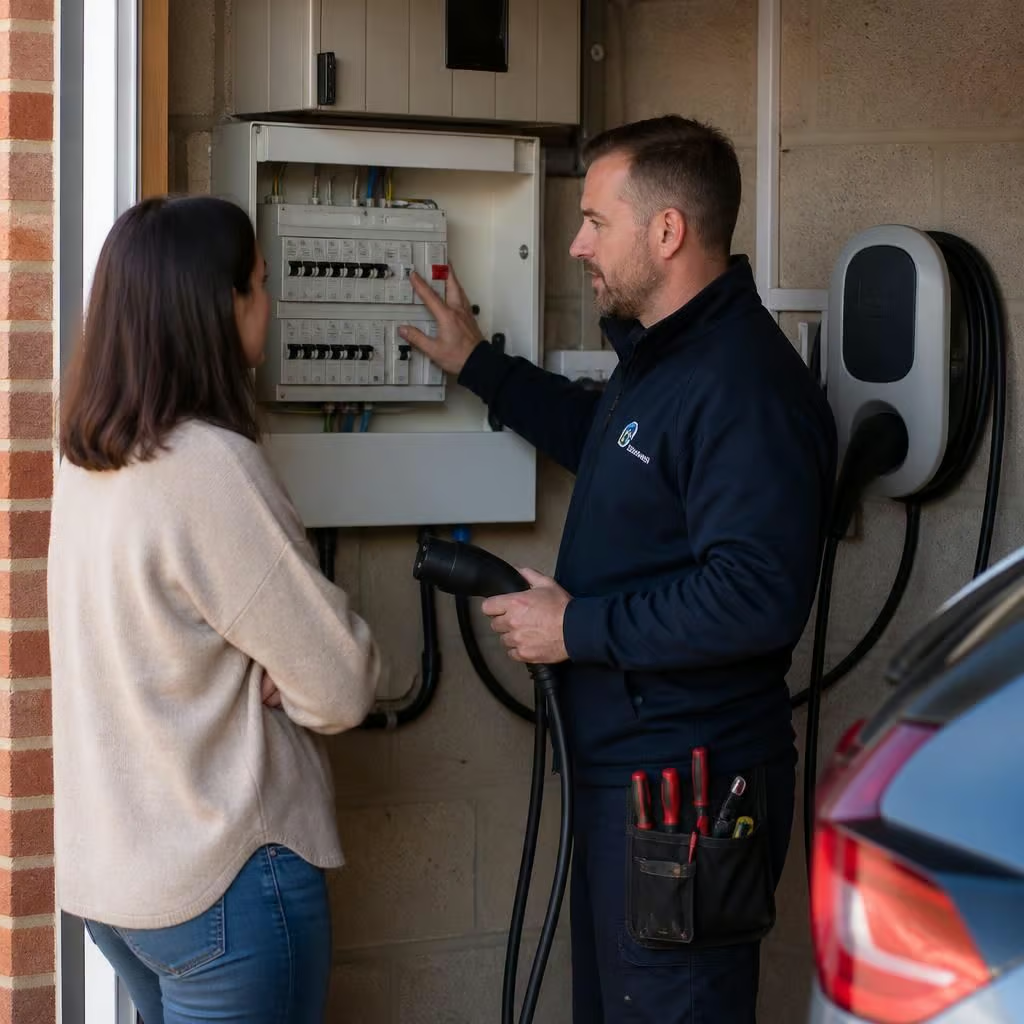
The charger’s output affects the electrical work needed at home. If your property has limited capacity, a lower charging rate or load management may be more suitable than upgrading the incoming supply.
We compare the charger with the way you use electricity, including cooking, heating, hot water and workshop equipment. That gives you a practical choice between changing the charger arrangement and carrying out additional electrical work.