How long does home EV charger installation take?
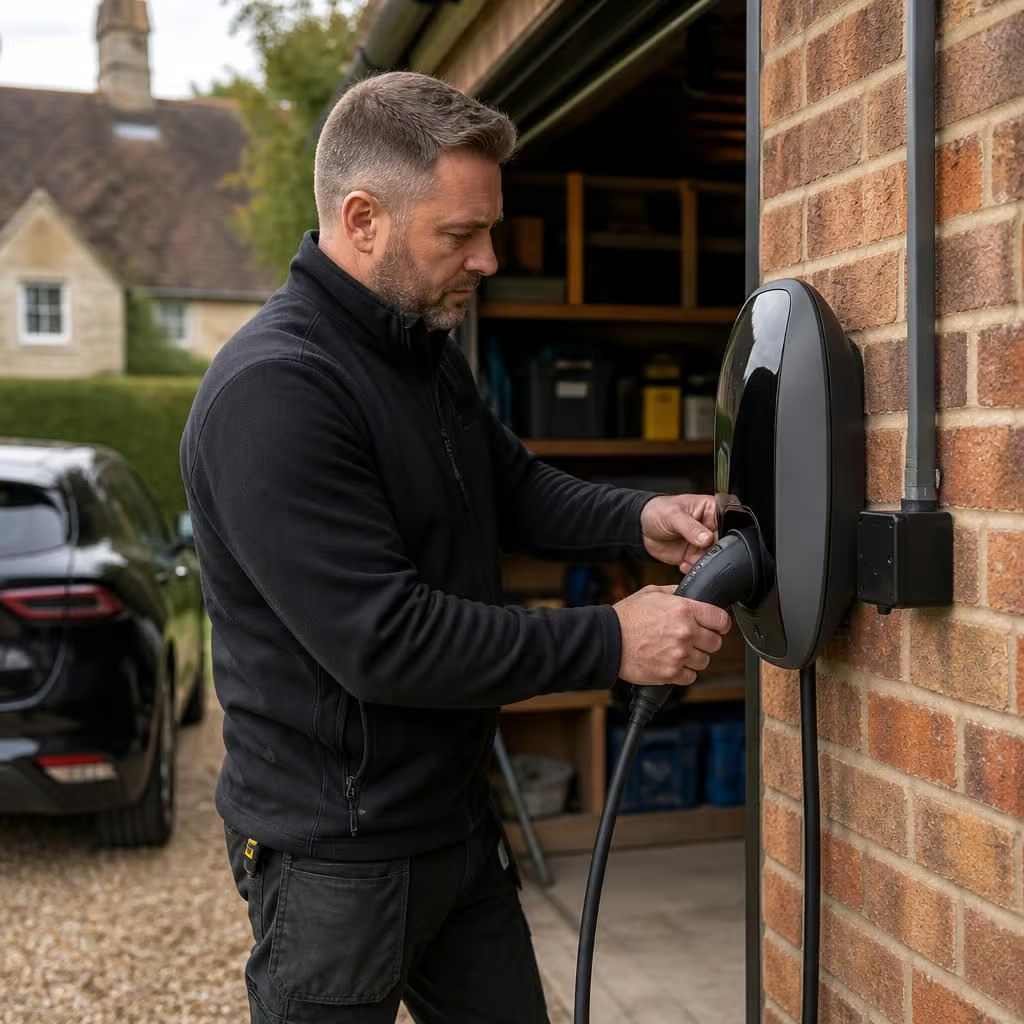
Most home EV charger installations take a few hours once the survey is complete. The total timescale depends on the cable route, the available electrical supply and any work needed before fitting.
There is no fixed installation time for every home. A straightforward charger can often be fitted during one planned visit, while a longer cable route, an older consumer unit or work to the electricity supply can add preparation and installation time. We establish the likely timescale during the survey and set it out in the quotation before work starts.
The survey comes first
Your charger may be close to the consumer unit, or it may need to reach a garage, carport or parking space at the end of the drive. We assess the cable route, the position of the charger and the condition of the existing electrical equipment.
We also check the incoming supply, earthing arrangement and spare capacity in the consumer unit. If the property has older wiring or limited capacity, we explain what needs attention before the charger can be connected safely.
A short, accessible cable route usually keeps the work simpler. A long route through a house, external wall, loft, outbuilding or garden takes more planning. Trenching, drilling through masonry, lifting floorboards or making good after concealed cabling can all extend the work.
Properties with detached garages, barn conversions and older rural wiring often need more detailed planning. That does not make a charger unsuitable, but it can change the cable route and the work required at the consumer unit.
What happens during a straightforward installation
- We confirm the agreed charger position and cable route with you.
- We install the mounting unit and run the cable from the consumer unit.
- We connect the protective equipment and charger controls required for the installation.
- We configure the charger and connect any approved smart charging features.
- We test the installation, explain how to use it and provide the relevant paperwork.
The fitting itself may take less time than the survey and preparation suggest, but we allow enough time to work safely and leave the area tidy. We do not cut corners to fit an installation into an unsuitable schedule.
Work that can make installation take longer
- A long or difficult cable route: External cable may need protective ducting, while concealed cable requires access through walls, floors or ceilings.
- A detached parking area: A garage or outbuilding may need a separate route from the house, along with checks on the existing supply to that building.
- An older consumer unit: We may need to replace or upgrade equipment before adding a new high-load circuit.
- Limited electrical capacity: Load management may be needed so the charger does not overload the home’s supply when other appliances are running.
- Network operator requirements: Some installations need notification or approval connected with the property’s electricity supply. This can affect the overall programme.
- Solar panels or battery storage: Existing or planned generation changes how we assess the charger and its controls. We include that equipment in the design rather than treating it as an afterthought.
- Planning or building constraints: Listed homes and properties in sensitive locations may need extra care over the charger position and cable appearance.
We tell you about these points before work starts. The written quotation separates the charger installation from any additional electrical work, so you can see what affects the timescale and cost.
Can the charger be installed during the survey?
Usually, the survey and installation are separate stages because we need to confirm the design, equipment and quotation first. An installation may be possible without further delay when the cable route, supply and charger position are already clear, but we do not assume that every property is ready for immediate fitting.
Separating the stages also gives you time to decide on the charger position and appearance. Moving the unit later can mean extra cable work and additional making good, particularly when the cable is concealed.
How long does the whole process take?
The overall process runs from the initial assessment through to commissioning and paperwork. A simple home with a nearby consumer unit and an accessible route has fewer stages than a home with an outbuilding, long driveway or ageing electrical system.
If we identify work outside the original installation, we explain it before proceeding. That might include consumer unit work, a new route, protective ducting or coordination with the electricity network. We do not add surprise charges to the agreed work.
Our NICEIC-registered electricians carry out the electrical installation and testing. Once the charger is live, we show you the controls and confirm what paperwork you should keep for the property.
The most useful way to get an accurate answer for your home is to arrange an assessment with the parking position, consumer unit and preferred cable route in mind. We can then give you a realistic installation plan rather than a generic time estimate.
If the parking space or consumer unit is difficult to access, the installation can take longer than the fitting itself. Keep the intended charger position clear, and make sure we can reach the route between it and the consumer unit.
That preparation helps us work through the agreed plan without stopping to move vehicles, furniture or stored items. It also gives us space to test the charger safely and complete the handover before we leave.