
Does charger power affect EV charging station installation cost?
Yes. Higher-power chargers can increase installation cost because they may need heavier cabling, additional electrical protection or upgrades to the property’s supply; a survey confirms what your chosen charger requires.
The charger’s power rating affects installation cost, but it is only one part of the calculation. A domestic wallbox normally places a modest demand on the property. A higher-output unit can require different cabling, protection, load management or a larger electrical supply. Commercial installations may also need several charge points working together, which changes the design again.
Domestic wallboxes
For most homes, the main cost difference comes from the distance between the consumer unit and the parking space. A lower-powered wallbox may still need a long cable route, surface containment, drilling through walls or changes to the consumer unit. Those items can cost more than the difference between two charger ratings.
If the charge point is close to the consumer unit, the installation may be relatively straightforward. If the cable must cross a house, run through an outbuilding or reach a detached garage, we need more cable and additional mechanical protection. The route may also need careful planning around listed walls, rendered elevations or areas where cables cannot be buried.
A higher-powered domestic charger can increase the electrical work involved. We may need to assess:
- whether the property has enough available capacity for the charger;
- whether the existing cable can carry the required load;
- whether the consumer unit has suitable protection and space for the new circuit;
- whether a dedicated earthing or fault-protection arrangement is needed; and
- whether dynamic load management should limit charging when the cooker, heating or other large loads are running.
Load management can sometimes avoid the need for a larger supply. It adjusts the vehicle’s charging rate when the rest of the property is using electricity. That can make a higher-powered charger practical without paying for unnecessary supply work, although the vehicle and charger must support the arrangement.
The car matters as well
A charger’s maximum output does not automatically mean the car will charge at that rate. The vehicle has its own charging limit. If that limit is lower, choosing a more powerful unit may add installation cost without reducing charging time.
We therefore look at how the vehicle will be used, when it is normally charged and what the property can support. A household that charges overnight may not benefit from paying for a higher output. Someone returning home with limited time before the next journey may place more value on faster charging.
Higher-powered commercial charging
Commercial units can cost more to install because the electrical design is larger and the site often has more complex requirements. Several vehicles may need to charge at once, so we consider the combined demand rather than treating each charge point as a separate domestic installation.
That may involve a three-phase supply, upgraded distribution equipment, additional protection and a charging management system. The cable routes can also be longer. Car parks may require ground works, ducting, bollards or other protection for equipment and cables. These site works can have a greater effect on the final cost than the charger rating itself.
For landlords, workplaces and other managed sites, we also consider how users will access the charge points and how energy use will be monitored. A simple single-point installation has a different cost profile from a site designed for several users or future expansion.
What we include in the cost assessment
Our survey considers the proposed charger, the vehicle’s charging capability, the supply arrangement and the physical route to the parking space. We inspect the consumer unit and identify any work needed to make the circuit safe and compliant. For a commercial site, we also assess the number of charge points, simultaneous use and the available space for distribution equipment.
That gives you a cost based on the installation your property actually needs, rather than a price based only on the charger’s headline power. We provide a written quotation before work starts, so any supply, protection or cable-route work is identified before you decide.
Our NICEIC- and ECA-registered electricians carry out the electrical work directly. The result is a charge point matched to the car, the building and the way you intend to use it, without paying for power the vehicle or property cannot use.
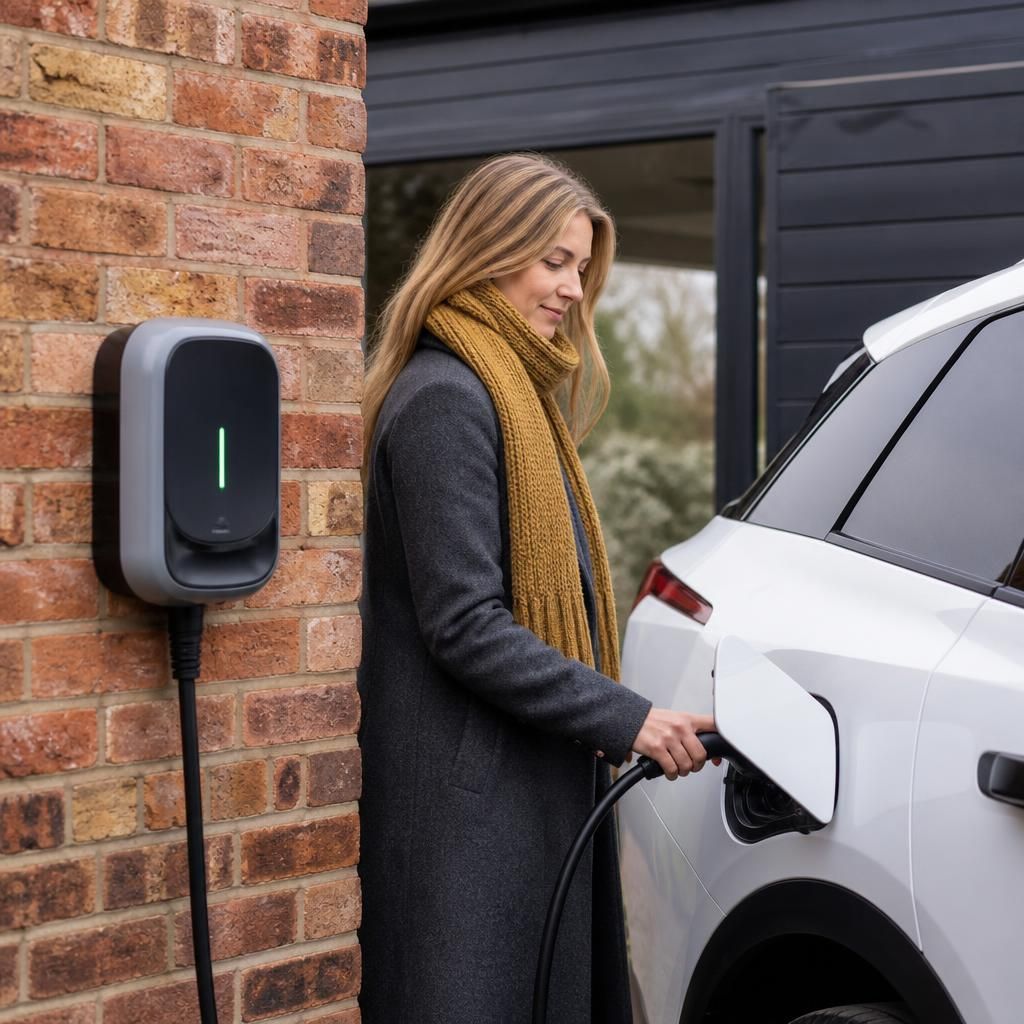
A higher-rated charger isn’t automatically the better choice. The useful rating is the one that fits the car’s onboard charger and the time available for charging.
Choosing the right power can prevent you paying for equipment that rarely operates at its maximum. We compare the car’s specification with the household’s charging pattern, then explain what the installation needs before you commit to a model.