
How do smart EV charger controls manage charging around household electricity use?
Smart EV charger controls monitor electricity use in your home and adjust charging so the car does not add unnecessary demand when other appliances are running. They can schedule, pause or resume charging to fit household needs and, where connected to solar, use available surplus generation.
Smart EV charger controls manage household electricity use by measuring the power flowing into the home, then adjusting the vehicle’s charge rate or timing. The charger can reduce or pause charging when demand rises, resume when demand falls, and follow charging rules set for the property.
The charger does not simply switch on at a fixed power. A current clamp, usually fitted near the electricity meter or consumer unit, measures the home’s total demand. The control system compares that demand with the supply limit agreed for the property. If the oven, immersion heater, kettle and heat pump are running together, the charger can reduce its demand before the incoming supply becomes overloaded.
This is known as dynamic load management. It matters because an EV charger can be one of the larger electrical loads in a home. Without load management, several high-demand appliances operating at once could cause nuisance tripping or require a larger electrical connection. With it, the charger shares available capacity with the rest of the property.
Your charging speed may therefore change during a session. When household demand is low, the charger can provide more power. When demand increases, it can lower the rate or pause briefly. The car remains connected, and charging continues when capacity becomes available again.
Charging priorities are set around how the home is used. We can configure the controls so normal household electricity takes priority over the vehicle. That prevents an evening cooking period, for example, from competing with the charger for the same available capacity. The exact settings depend on the charger, vehicle and electrical installation.
- Maximum demand: the charger stays within the available supply capacity for the property.
- Departure time: charging is planned so the vehicle has the required time to charge before it is needed.
- Charge limit: the vehicle can be charged to a chosen level rather than being charged unnecessarily.
- Low-demand periods: charging can be directed towards times when the home normally uses less electricity.
- Tariff settings: where the charger and tariff support it, charging can follow cheaper price periods supplied through the relevant app or service.
A departure time is more useful than simply choosing “start now” when the car is parked for several hours. The control system has more flexibility to reduce the charge rate while appliances are running, then increase it later. That can avoid a peak in household demand without leaving the vehicle short of charge.
Solar generation adds another layer of control. Where the system supports it, the charger can use available generation from the home rather than treating all charging power as imported electricity. The controls need to distinguish between electricity being produced and electricity being used elsewhere in the property. If cloud cover reduces generation, the charger may slow down or use an agreed amount of imported power, depending on the settings.
Solar charging is not always the same as charging at the fastest possible rate. A home may be producing enough power for a slow charge but not a full-rate charge. The control system can reduce the vehicle’s demand to make use of that available generation. We explain the trade-off during the design stage so the charging behaviour matches the way the household uses its car.
Smart controls need reliable information to make sensible decisions. We check where the meter data can be measured, how the charger communicates with its control platform and whether the home has a suitable internet connection. Some systems rely on a cloud service or app, while others continue basic load management locally if communication is interrupted. The behaviour varies by equipment, so we explain what remains available if the connection drops.
The charger also needs to communicate correctly with the vehicle. The car controls the battery’s acceptance of charge, while the charger controls the supply delivered to the car. A setting in the charger cannot override the vehicle’s own limits, battery condition or charging schedule. We take both sides into account when setting the system up.
Older properties can still use smart charging, but the existing electrical installation must be suitable. We check the consumer unit, earthing, cable route and available supply before deciding how the controls should operate. If the installation needs an electrical upgrade, we explain that before work starts rather than relying on the charger to compensate for unsuitable equipment.
We also consider other large loads, including an immersion heater, electric heating, a heat pump, solar inverter or battery system. Two separate control systems may otherwise respond to the same change in household demand and work against each other. The settings need to give each system a clear priority.
The result is not necessarily the fastest charge at every moment. It is a charging pattern that fits the property’s electrical capacity and the household’s routine. We establish the required charge by departure time, identify competing loads and set the controls around those practical needs.
Before we leave, we check that the charger responds when household demand changes and that its settings match the agreed charging behaviour. We also explain the app controls, manual override and any conditions that affect solar or tariff-based charging. That gives you a clear choice between automatic operation and charging immediately when circumstances require it.
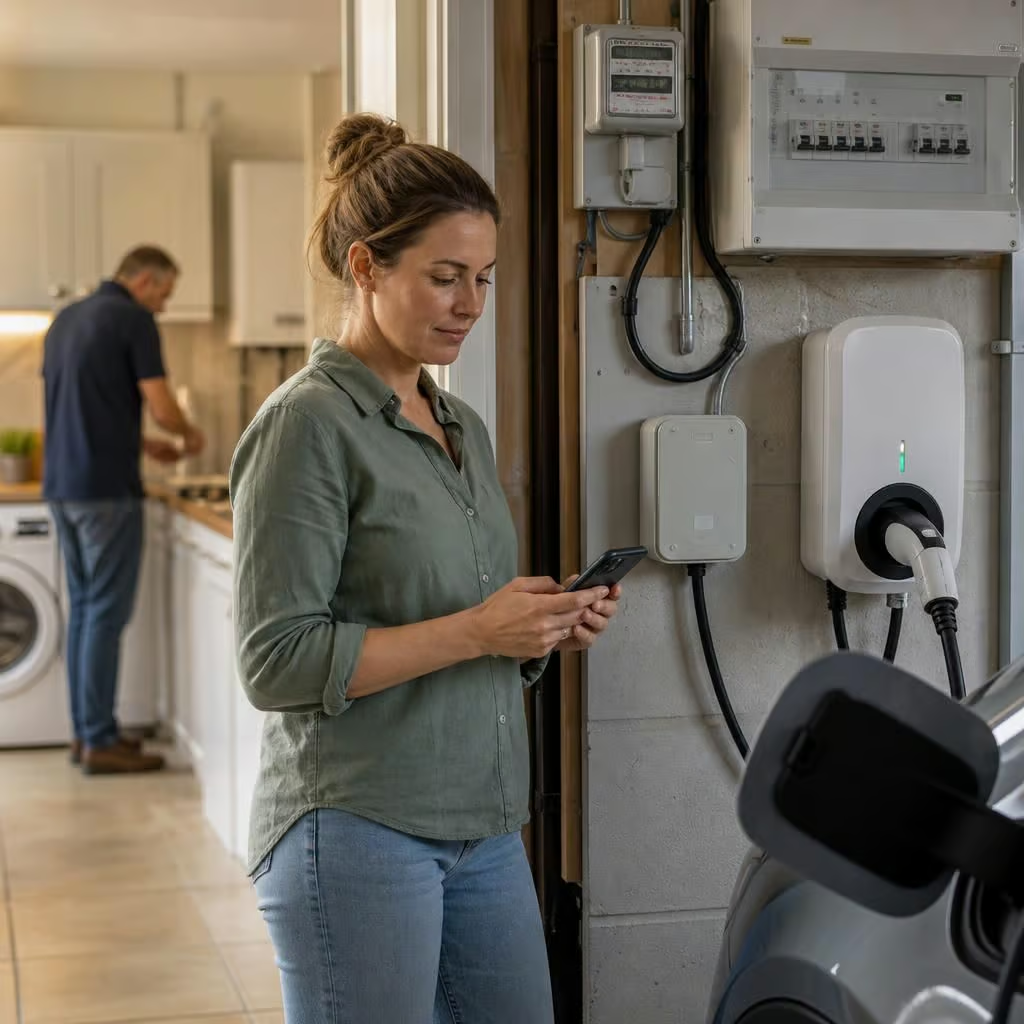
A smart charger manages power rather than simply counting the electricity used by the car. A short period of high household demand may slow charging, even when the home’s total daily use is modest. When demand settles, the charger can increase the rate again.
That means the charger does not need to switch off the oven, immersion heater or heat pump. It adjusts the vehicle’s demand instead, keeping the home’s electrical supply within its available capacity. We set the priority order around the way the property is used, then explain when a manual charge override is appropriate.