
How do I compare home EV charger brands?
No single home EV charger brand is best for every property: compare charging speed, electrical compatibility, smart controls, solar integration, warranty terms and total installed cost. The right choice depends on your car, home supply, charging routine and whether you plan to add solar or battery storage.
The best home EV charger brand is the one that fits your car, electrical supply, charging habits and future plans. A well-known name does not automatically make a charger suitable for your home. Compare the complete installation, including the model, controls, warranty, support and electrical work.
Start with the charging power you can use. A charger may advertise a higher output than your home or vehicle can accept. Your car sets one limit, while the incoming electrical supply, consumer unit and existing demand set another. A survey confirms whether the proposed charger can run safely and whether load management is needed to prevent the supply becoming overloaded.
There is little benefit in paying extra for a faster model if your car cannot use that power or if you normally charge overnight. A lower-powered charger may suit your routine perfectly. If you have two electric vehicles, a second charger planned later or other high-demand equipment, the installation needs to account for that from the start.
Check compatibility with your car and home. The charger must use the correct connection for the vehicle and work with the electrical arrangement at the property. Ask whether the quoted price includes the cable route, protection equipment, mounting surface, isolation and testing. A brand comparison is incomplete if one price assumes a short cable run and another includes the work your home actually needs.
Older properties can have long routes from the consumer unit to the parking space, limited spare capacity or an outdoor supply that needs upgrading. Solid walls, outbuildings and detached garages can also affect the cable route. We inspect these points before recommending a model, so the charger choice reflects the property rather than a catalogue specification.
Compare the controls, not just the box on the wall. Most current chargers offer some combination of app control, scheduled charging, energy monitoring and smart charging. Look at how you will use those controls in practice.
- Scheduled charging: useful if you have a time-of-use electricity tariff or want charging to run at selected times.
- Load management: helps reduce the risk of the charger drawing too much when the cooker, heat pump or immersion heater is operating.
- Solar integration: relevant if you want to divert surplus generation into the car rather than export it. Check whether the system needs compatible monitoring equipment and how it behaves when sunlight changes.
- Remote control: convenient, but check what happens if the app, broadband connection or manufacturer’s online service is unavailable.
- Multiple-user access: worth checking when more than one driver will use the charger.
A simple charger with dependable controls can be a better choice than a feature-heavy model that you rarely use. Ask to see the app before deciding, if possible. Menus, permissions and charging information vary considerably between brands.
Consider the wider energy system. If you already have solar panels, a battery or a planned heat pump, compare how the charger will work alongside them. The important question is not simply whether two products share a brand. It is whether the controls can prioritise your needs without creating unnecessary imports from the grid.
For example, you may want the battery reserved for evening use while the car charges from surplus solar during the day. At another property, using a cheaper overnight tariff may make more sense. We look at the proposed charging pattern, the existing electrical equipment and the available monitoring before discussing the suitable arrangement. SolarEdge, Sigenergy, Fox ESS and Tesla may be relevant names when an existing energy system or vehicle points towards a particular ecosystem, but the individual model still needs checking.
Read the warranty conditions carefully. Compare the length of cover, what parts are included, and who deals with a fault. Some terms may distinguish between the charger hardware, cable, software and installation. Check whether registration is required and whether remote support depends on the manufacturer’s app or account.
Also ask what happens if the charger develops a fault after installation. A clear route for diagnosis matters more than a long warranty statement that leaves responsibility unclear. We explain what is included in our quotation and provide the installation paperwork after testing, so you have a record of the equipment and work carried out.
Look at the total installed cost. The charger is only one part of the price. The final figure can include cable length, wall fixings, trenching, consumer unit work, protective devices, load management, commissioning and certification. Two chargers with similar specifications may have very different installed prices because the electrical work differs.
We inspect the route and supply before giving a written quotation. That lets you compare like with like and see which work is included, rather than choosing a brand from an equipment-only price. If the existing installation needs improvement, we explain why before work starts.
Check who will install and certify it. A suitable charger can still perform poorly if the cable route, protection or commissioning is wrong. Choose an installer with the electrical competence to assess the whole installation, not just mount the unit and connect it. Our NICEIC and ECA recognition relates to the electrical work, testing and certification around the charger.
On installation day, we agree the charger position and cable route with you, protect the working area, complete the connections and test the system. You should receive the relevant certificates, operating information and details needed to use any app or smart function. The finished work should leave the parking area and indoor route tidy.
Use a comparison checklist. Before choosing between brands, ask each installer:
- What charging power can my car and electrical supply actually use?
- Does the price include all protection, cable work, testing and certification?
- Will load management be needed with my existing appliances?
- Can the charger work sensibly with my solar panels or battery?
- What happens if the internet or manufacturer’s app stops working?
- Who handles a warranty fault: the manufacturer, installer or both?
- Can the charger be extended for another vehicle or changed if my needs develop?
- What is excluded from the quotation?
The strongest comparison is therefore between complete, checked installations rather than brand names alone. We assess the supply, parking position, car, energy system and planned usage before recommending a charger. That gives you a clear basis for deciding whether a particular model is worth the cost and whether it will remain useful as your household changes.
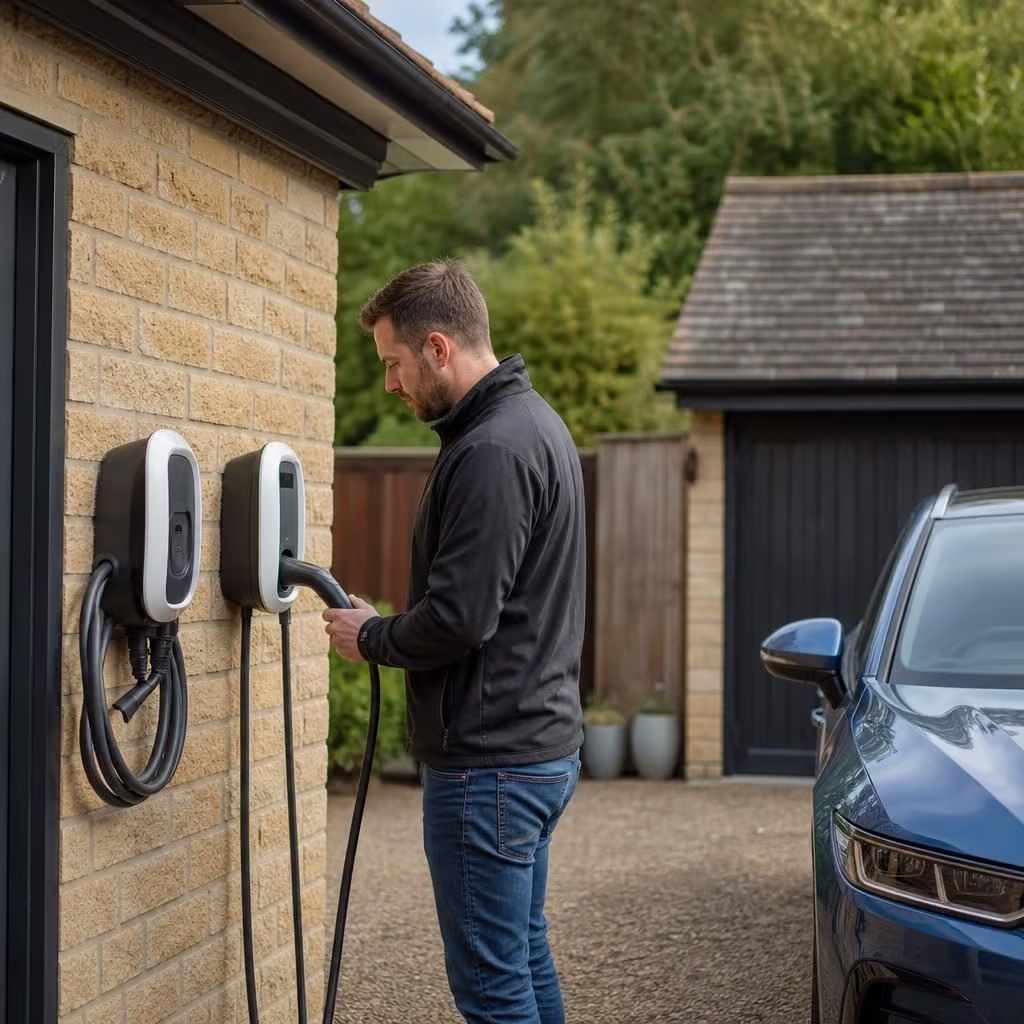
Two chargers from the same brand can suit very different homes. Compare the individual model, not just the manufacturer’s reputation. Check the maximum output, cable arrangement, control options, physical size and the conditions covered by its warranty.
An exposed wall or detached garage may influence the choice. We look at where the charger will sit, how the cable will be stored and whether the unit is suitable for that position. The finished installation should be practical to use in the dark, in wet weather and with the car parked in its usual place.
Model software also matters. Check how the manufacturer provides firmware updates, whether the charger can still operate without an internet connection and what information the app records. Those details affect how useful the charger remains after the initial installation, especially if your charging routine or energy system changes.