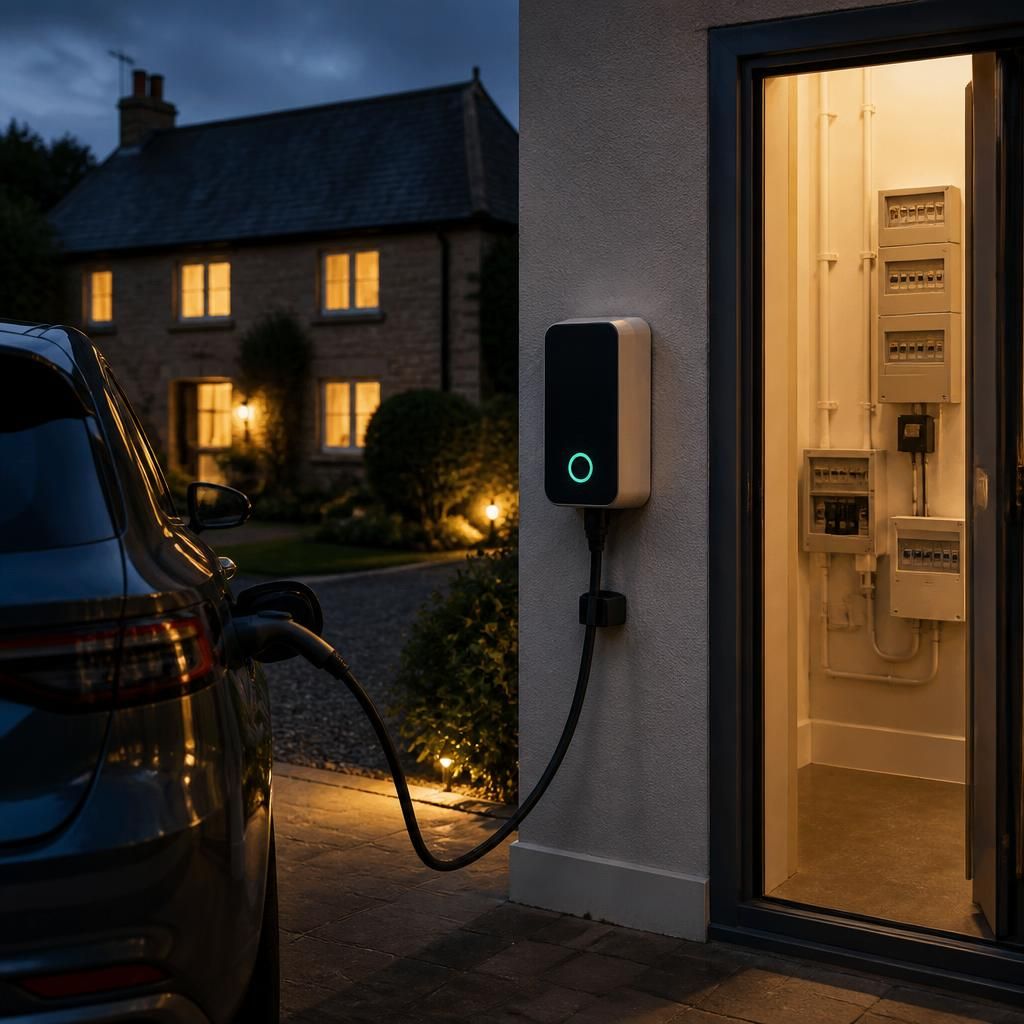
Will a V2H charger keep my home powered during a power cut?
A V2H charger can keep selected home circuits powered during a power cut, but only when the charger, vehicle and home installation support backup operation. The system must disconnect safely from the grid and usually needs a dedicated backup supply, so a standard bidirectional charger will not automatically power the whole house.
A V2H system is not automatically a whole-house generator. In a power cut, it normally supplies a defined group of essential circuits while the rest of the house disconnects. The exact result depends on the vehicle, bidirectional charger, backup hardware and the way the electrical installation is arranged.
When the grid supply fails, the charger must stop exporting electricity towards the network. A certified changeover system isolates the property first, then allows the vehicle to form a separate, temporary supply for the selected circuits. This prevents electricity reaching the faulty network and protects anyone working on it.
Your home needs a suitable backup arrangement at the consumer unit. We may connect essential circuits through a dedicated backup board, such as:
- the fridge and freezer;
- lighting circuits;
- the heating controls and circulation pumps;
- internet equipment and selected sockets; and
- security, medical or other equipment that must remain powered.
High-demand appliances usually need to remain outside the backup supply. An electric shower, immersion heater, cooker, heat pump, tumble dryer or home battery can use substantial power. Running several of them together may overload the charger or drain the vehicle quickly. We agree the essential circuits with you before installation and label the arrangement clearly.
The vehicle also needs enough stored energy for the interruption. A larger battery does not guarantee a longer backup period, because the result depends on the circuits running, their starting loads and the vehicle’s available state of charge. A fridge, pump or motor can briefly draw more power when it starts than it uses once running. The charger and vehicle may limit these loads to protect the system.
We discuss how the backup reserve works before the equipment goes in. Some systems allow a reserve to remain in the vehicle for power cuts, while others may discharge further when the grid is available. The vehicle’s software and warranty conditions determine which settings are permitted. If the car leaves the property, reaches its reserve limit or develops a fault, it cannot provide backup power.
Compatibility needs checking rather than assuming that any electric vehicle can work with any bidirectional charger. The vehicle must support the relevant discharge standard, and the charger must support home backup as well as vehicle charging. We also check the available supply, earthing arrangement, consumer unit, cable route, outdoor equipment position and the capacity of the circuits you want to protect.
An older property may need electrical work before the V2H equipment can operate safely. An outdated consumer unit, inadequate earthing, damaged cabling or poorly divided circuits can affect the design. We explain any required remedial work in the quotation, so the backup capability does not depend on hidden changes after installation.
Solar panels do not necessarily keep the house powered during an outage. Standard grid-connected solar inverters shut down when they detect a failed network supply. Solar can contribute during a power cut only when the inverter, V2H equipment and isolation arrangement support that operating mode. We check the complete system rather than treating the panels and charger as separate devices.
The installation needs testing after connection. We test the changeover, confirm that the property separates from the grid, check the protected circuits and simulate the loss and return of the mains supply. We also show you which circuits remain live, how to read the charger status and what to do if the backup supply does not start.
When the grid returns, the equipment must reconnect in a controlled sequence. The charger checks that the supply has stabilised before it returns the property to normal operation. The vehicle then resumes its agreed charging or energy-management settings, subject to the manufacturer’s controls.
For an accurate answer about a particular home, we need the vehicle and charger details alongside the existing electrical information. We can then tell you whether the arrangement can support backup, which circuits it can cover and what changes the consumer unit or cabling requires.
A V2H system may not provide an uninterrupted supply during the changeover. When the grid fails, the equipment must disconnect safely before the vehicle supplies the protected circuits. Some appliances may briefly switch off and restart.
If an internet connection, alarm system or medical device must stay live without interruption, tell us before the design is agreed. We can identify where separate backup equipment or a different arrangement is needed, rather than treating vehicle power as a substitute for every type of standby supply.