
How much does EV charger installation cost?
EV charger installation costs vary with the charger you choose and the work your home needs, including cable length, access, consumer unit capacity and any trenching or electrical upgrades. We assess those details before giving you a written quotation, so you can compare the full cost rather than a misleading headline price.
There is no single price for an EV charger installation. A straightforward installation costs less than one that needs a long cable route, external groundworks or changes to the home’s electrical supply. The charger itself is only part of the total.
The charger specification affects the starting cost. A basic home unit may charge one vehicle, while a model with app controls, user access settings, solar integration or load management may cost more. Tethered chargers include a permanently attached charging cable. Untethered units have a socket, so the vehicle’s own cable is used. The right choice depends on how the car is parked and how you expect to charge it.
Smart controls can be useful if charging needs to fit around other electricity use. They can also matter when the home has solar panels, battery storage or an electricity tariff with different rates at different times. We discuss those features before recommending equipment, rather than adding functions that the installation does not need.
The cable route often makes the biggest difference to installation labour. A short run from the consumer unit to a charger on the same side of the property is usually simpler. A detached garage, outbuilding or parking space away from the house may need a longer cable route, additional protection and external cable containment.
- Surface-mounted cable can keep the work simpler where its position is acceptable.
- Concealed cable may require lifting floors, opening walls or repairing finishes.
- A route across a driveway or garden may need trenching and suitable protection.
- A charger on an outbuilding may need checks on the cable supplying that building.
Older properties can have more than one cost consideration. The consumer unit may need additional protection, the earthing arrangement may need checking, or the existing supply may not support the proposed charging load alongside cooking, heating and other large appliances. We explain any necessary electrical work separately, so the quotation shows what is needed for safety and what is an optional improvement.
Load management can avoid unnecessary supply upgrades. If several high-demand appliances operate at the same time, a load-management device can control the charger’s demand and reduce the risk of overloading the electrical supply. It is not suitable for every property, so we assess the installation rather than assuming it will solve every capacity issue.
Groundworks can add to the total when the charger is not close to the house. The cost may include digging, ducting, reinstatement and the route into a garage or parking area. A quote should state clearly whether those works are included, excluded or dependent on what is found below ground.
A useful quotation separates the charger from the installation work. It should identify the equipment, protection, cable length or route, mounting method, testing, certification and any required notification. If the consumer unit, earthing or supply needs attention, those items should be listed rather than hidden inside a general installation price.
We look at the proposed parking position, the route into the property and the electrical arrangement before we price the work. That also lets us identify practical details such as a shared driveway, a listed or solid-wall building, restricted access or a garage that is not connected in the expected way.
Installation by a NICEIC-registered and ECA-recognised electrical team means the work is designed, tested and certified against the relevant electrical requirements. You should receive the paperwork needed to show what has been installed and how it was tested.
Compare quotations on what is included, not just the headline figure. Check whether each price covers:
- the charger model and its included cable or socket;
- the full cable route and any external protection;
- consumer-unit work, protective devices and earthing checks;
- load management or other supply-control equipment, if required;
- drilling, trenching, ducting and making good;
- testing, certification and any required notifications; and
- commissioning the charger and explaining its controls.
A low price may exclude the work needed to make the installation safe or suitable. A higher price may include electrical upgrades or groundworks that another quotation leaves out. Asking for the same information from each installer makes the comparison more useful.
There can also be costs after installation. Electricity used for charging will appear on the home’s energy bill, while some charger services or tariff arrangements may have their own terms. Solar and battery charging can change how the system is used, but the financial case depends on the car, driving pattern, electricity tariff and the rest of the property. We can explain the practical options without treating an estimated saving as a guaranteed result.
The final price is confirmed in writing before work starts. If the site needs extra work that could not reasonably be identified beforehand, we explain it before proceeding rather than adding an unexpected charge to the bill.
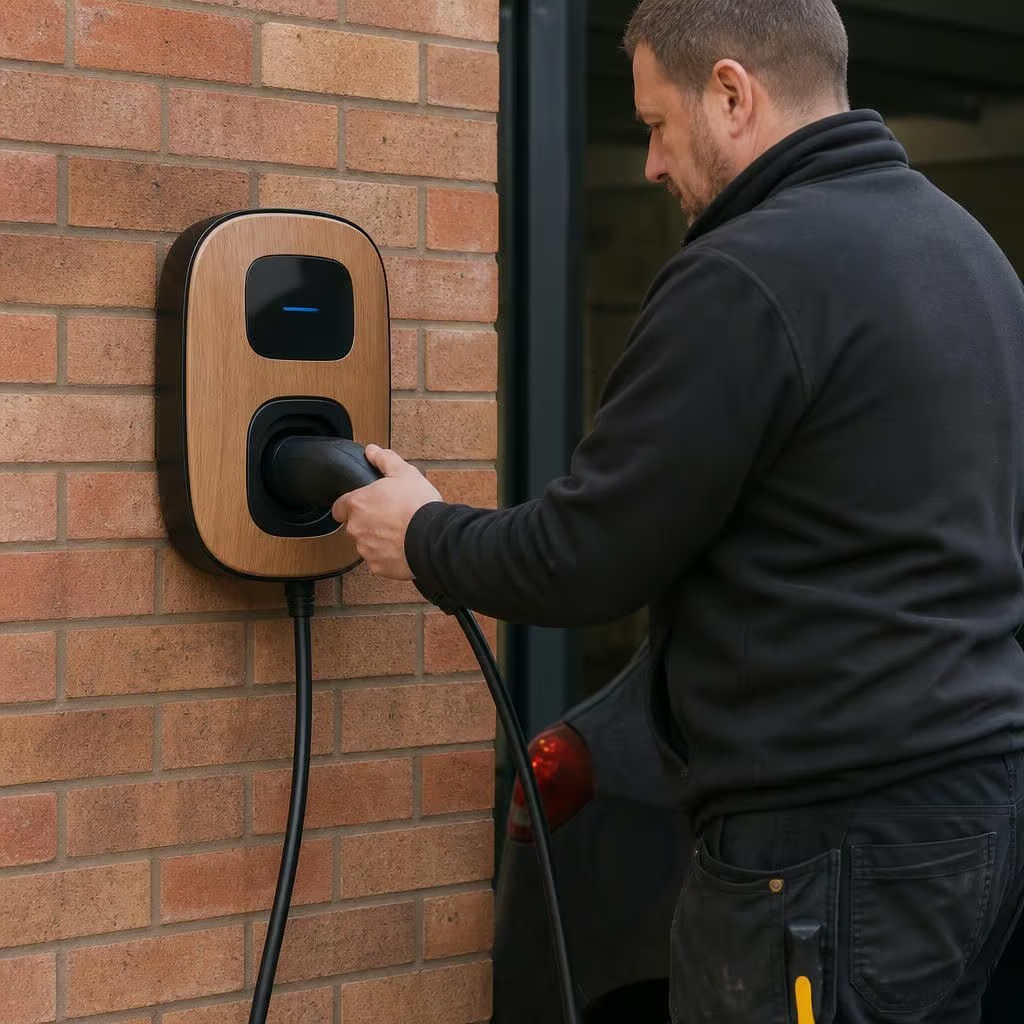
The charger with the lowest price is not always the best fit for the car or the electrical supply. A vehicle can only charge at the rate its onboard system accepts, while the home must safely support the charger alongside other appliances.
We check both before recommending equipment. If the car is parked overnight, a higher-rated unit may add little practical value. If charging needs to happen between journeys, the available supply and cable route may matter more than extra charger features. The quotation then reflects a charger that suits the way the car is used, rather than simply choosing the highest specification.