
Which Zappi or Ohme charger suits my charging needs?
A Zappi usually suits a home with solar panels, while an Ohme may suit drivers who want scheduled charging linked to a smart electricity tariff. We’ll match the charger to your car, daily mileage, solar setup and charging habits before recommending a model.
The right charger depends on what you want it to do. A Zappi is the stronger fit when making use of on-site generation matters most. An Ohme can be the better fit when scheduled charging, tariff control and a simple app-led routine matter more. Your car, electricity tariff, solar and battery setup all affect that choice.
Choose around your normal charging routine
If the car is usually parked at home during the day, solar-led charging may be useful. The charger can make better use of electricity generated on the roof instead of sending as much of it to the grid. That only works as expected when the solar system, household demand and battery settings are considered together.
If the car is normally away during daylight hours, a solar-focused charger may offer less practical benefit. You may use more scheduled overnight charging instead. An Ohme may suit this pattern when you want to set a departure time or charging window through its controls and let the tariff influence when the car charges.
Your mileage also matters. A driver covering short local journeys may not need the same charging routine as someone covering long distances several times a week. We look at how much charge the car normally needs, when it is parked and when it must be ready. That avoids choosing equipment around an occasional long journey.
When a Zappi is likely to make more sense
- Your home has solar panels and you want the charger to respond to surplus generation.
- The car is often parked while the panels are producing electricity.
- You want more control over how charging uses solar, the grid or a combination of both.
- You have a home battery and need the charging arrangement considered alongside its priorities.
Solar generation is not constant. A cloudy day, household appliances and a battery taking its own charge can all change what is available for the car. We therefore consider the system as a whole rather than assuming every unit of solar electricity can go straight into the vehicle.
If the battery is set to charge before the vehicle, or to retain energy for later use, the charger settings need to work with that priority. Otherwise, the car may draw from the battery or the grid when you expected it to use solar generation. We discuss those settings before recommending the arrangement.
When an Ohme is likely to make more sense
- Your main aim is to charge during selected tariff periods.
- The car is away during the day and normally charges overnight.
- You want to set a target departure time rather than manage charging manually.
- Your charging decisions change with work patterns, mileage or electricity prices.
Tariff-based charging depends on the tariff, the car and the information available to the charger. Tariff products and integrations can change, so we check the current arrangement rather than assuming a particular function will remain available indefinitely. A smart schedule is only useful if the vehicle is connected, the charger can communicate and the departure settings are accurate.
Some drivers prefer the charger to manage most of this in the background. Others would rather choose when charging starts and see fewer automated decisions. That preference is part of the recommendation. The technically suitable charger is not necessarily the one you will find easiest to use.
Check the car before choosing the unit
Your car’s onboard AC charging capability sets the practical limit. A higher-rated home charger cannot make the car accept power faster than its own system allows. We check the vehicle details, charging connector and any manufacturer requirements before selecting the equipment.
The cable arrangement also affects everyday use. A tethered charger keeps its cable attached and can be quicker to use at home. An untethered charger leaves the cable stored separately and may suit a driveway where appearance or cable storage matters. The correct option depends on the car, parking position and how often other vehicles may use the charger.
Parking location matters just as much. A short, direct cable route may allow a simpler installation. A detached garage, outbuilding or long drive can affect the route, protection and position of the charger. We consider where the car is actually parked, not just where the nearest wall socket happens to be.
Solar and tariff features can conflict
A home with both solar panels and a smart tariff needs a clear priority. Charging only from surplus solar may mean waiting for suitable generation. Charging only in a cheap overnight window may mean using less of the solar available during the day. We help you decide which outcome matters more, or how the settings should change for different seasons and driving patterns.
The same applies if you are considering a battery now or later. The charger position, cable route and electrical design should leave room for the way the wider system may operate. We do not recommend a control method simply because it sounds more automated; it must match the equipment already installed at the property.
What we need to make a sensible recommendation
- The make and model of the car, including its AC charging capability.
- Your usual mileage and the times when the car is parked at home.
- Your electricity tariff and how you prefer to schedule charging.
- The size and arrangement of any solar panels or battery storage.
- The parking position, cable route and preferred charger location.
- How many people need to use or manage the charger.
We then check the electrical installation and the proposed charging position before confirming the equipment. The wider electrical assessment is important in an older or rural property, especially where the supply also serves electric heating, workshops, agricultural buildings or other high-demand equipment.
There is no universally better choice between Zappi and Ohme. A solar-led home with daytime parking may favour the former. A driver who mainly needs controlled overnight charging may favour the latter. If your circumstances sit between those examples, we compare the charging behaviour you actually need rather than choosing from the brand name alone.
We can also explain how the chosen charger will interact with an existing solar or battery system, what you will control from the charger or app, and which settings will need attention after installation. The result should be a charging routine that fits the way you use the car, not a collection of features you rarely use.
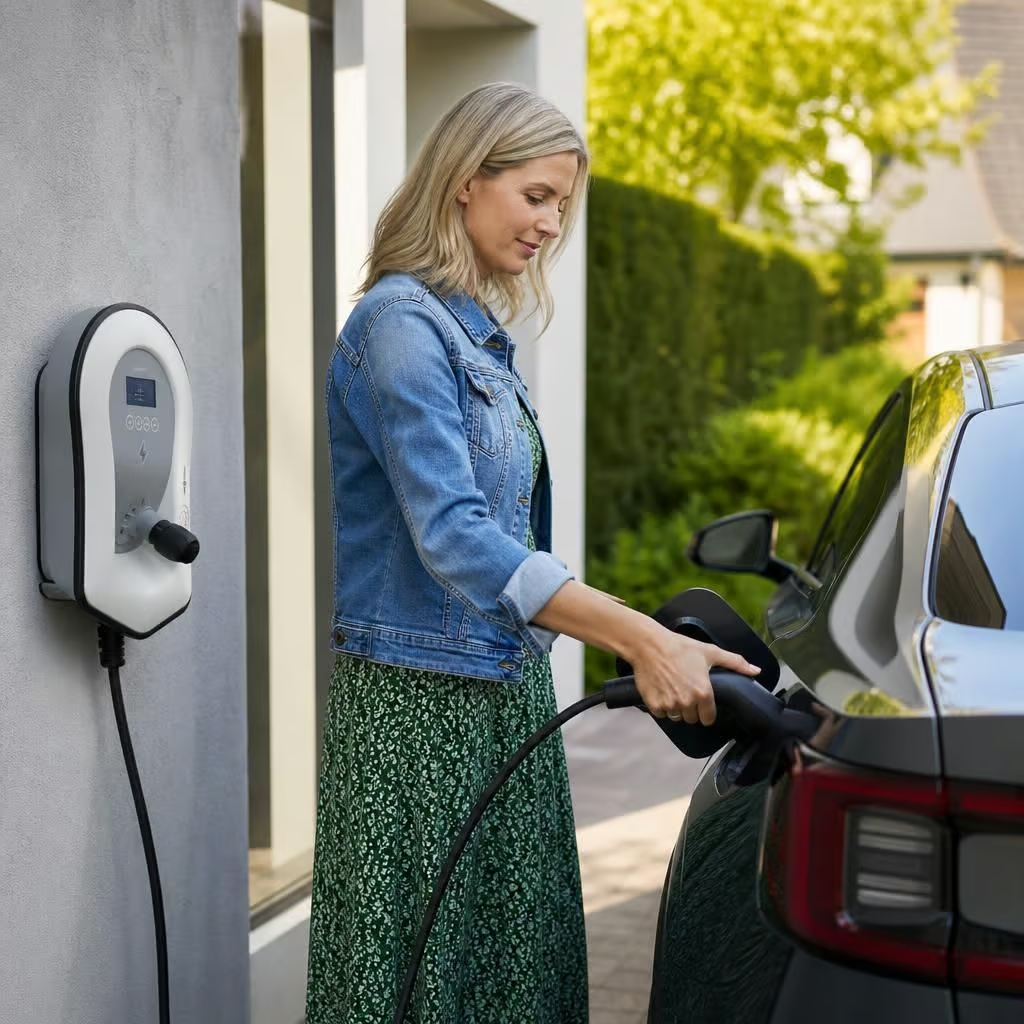
Your charging needs may change with seasons, work patterns or a second electric car. We therefore look beyond the first vehicle and consider how the charger will be used over time.
If another driver will use the charger, simple access and clear charging controls may matter more than having every available feature. If solar panels or battery storage are planned later, we also check that the proposed arrangement will not create an awkward upgrade.