
Do Tesla home chargers need a dedicated circuit?
Yes. A Tesla home charger normally needs its own dedicated circuit from the consumer unit, rather than sharing power with household sockets.
We check the consumer unit, cable route and available supply before confirming the installation requirements for your home.
A dedicated circuit gives the Tesla charger its own electrical supply, with protection selected for the charger and the cable run. It does not mean the charger needs a separate electricity meter or a second connection to the network.
Instead, the circuit runs from the consumer unit to the charging unit. Household sockets, lighting and appliances remain on their existing circuits. This prevents the charger from sharing a cable and protective device with equipment that may already be drawing power.
Why a shared socket circuit is not suitable
A Tesla charger can draw a substantial continuous load for several hours. A circuit designed for occasional use by lamps, televisions or small appliances may not be suitable for that demand. Adding a charger to it could cause nuisance tripping, overheating or inadequate protection.
Plug-in charging from a standard socket is different from installing a fixed home charger. Occasional socket charging may be possible in some circumstances, but it does not turn that socket circuit into a suitable dedicated supply for a wall-mounted charger.
What the dedicated circuit includes
- A suitably sized cable between the consumer unit and the Tesla charging unit.
- A dedicated protective device, such as an RCBO, selected for the installation.
- Residual current protection and direct-current fault protection in the arrangement required for the charger.
- Isolation and labelling so the circuit can be safely switched off for maintenance.
- An earth connection and bonding arrangements suitable for the property.
The exact equipment depends on the Tesla charger, the existing consumer unit and the installation method. Cable length, how the cable is fixed, whether it passes through insulation and the position of the charger all affect the design. A longer or more demanding route may need a different cable size or additional protection.
What happens if the consumer unit has no spare capacity?
A spare way is not always available in an older consumer unit. In that case, we may need to reorganise the board, install suitable additional equipment or replace the consumer unit. The right choice depends on its condition, protective arrangements and the other changes planned for the property.
This is particularly relevant in older houses, converted outbuildings and properties with several extensions. The visible sockets may appear modern while the underlying wiring or consumer unit still needs attention. We explain any necessary electrical work before installation and provide a written quotation before work starts.
Can load management avoid a larger electrical connection?
Load management can reduce the risk of the charger and the rest of the house demanding too much power at the same time. It may reduce the charger’s output temporarily when cooking, heating or other high-load equipment is running. This can help some homes make better use of their available supply.
It does not remove the need for a correctly installed dedicated circuit. The charger still needs its own cable, protective devices and isolation. Load management is a design option, not a substitute for safe wiring.
Does the circuit need to run indoors?
No. The circuit can run internally, externally or through a combination of both, provided the cable is protected against damage and installed in a suitable position. The route may pass through a wall, under a floor or along an outside elevation. We discuss how visible the cable will be, where it enters the building and how the charger will be isolated.
On a detached garage or driveway, the distance from the main house matters. A separate outbuilding supply may need its own assessment rather than simply extending a socket circuit. Buried cables require suitable protection and a route that remains safe if the driveway or garden is altered later.
What if the property has solar panels or a battery?
The Tesla charger can be considered alongside existing solar PV, battery storage and other large electrical loads. The dedicated circuit remains necessary, while the control strategy may determine when charging takes place or how available generation is used. We assess the arrangement as a whole rather than treating the charger as an isolated appliance.
Our NICEIC-registered electricians design and test the electrical installation, then issue the relevant certification when the work is complete. The final arrangement should leave the charger separately protected, clearly identified and ready for safe everyday use.
A survey is worthwhile before choosing the charger position. It confirms how the circuit can reach it, what work the consumer unit needs and whether the proposed location creates any practical problems. You can then compare the installation options with the likely disruption and cost understood before making a decision.
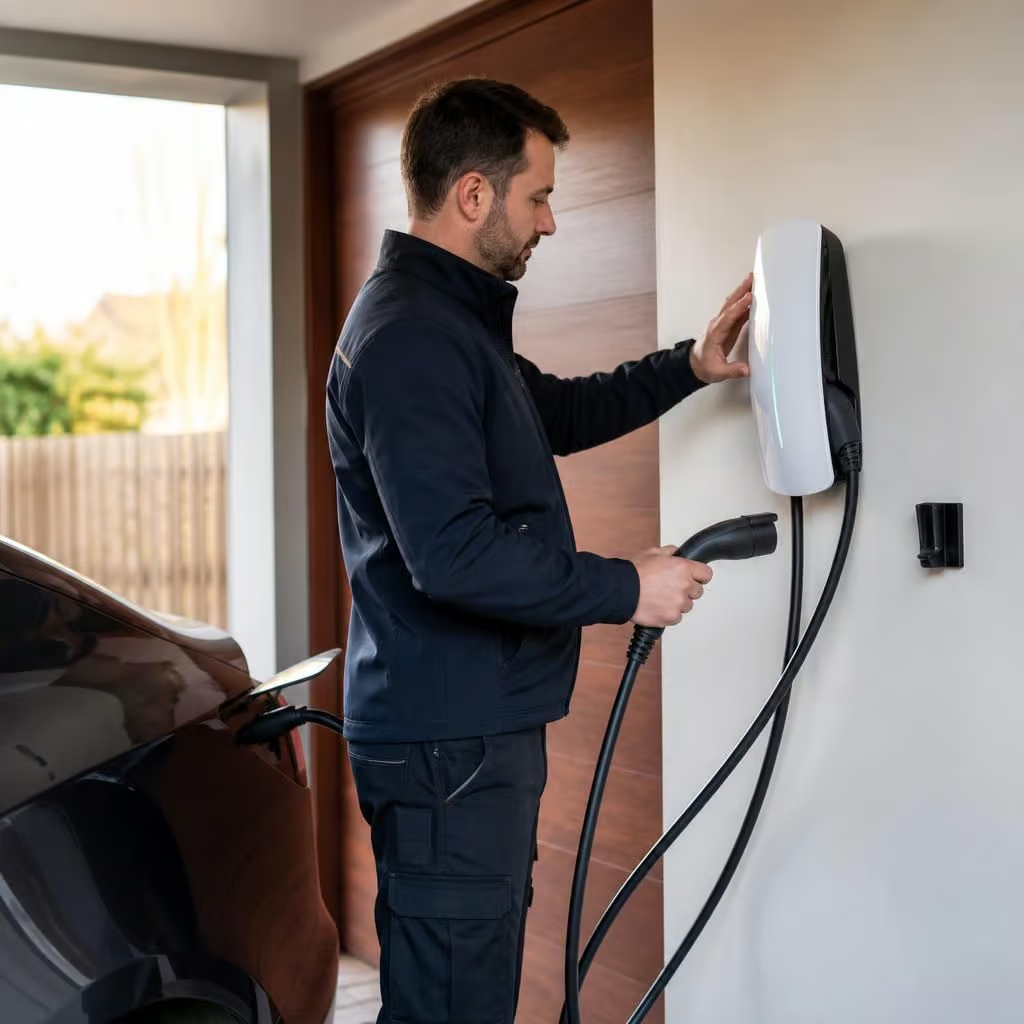
Reducing the Tesla charger’s current setting doesn’t turn a shared socket circuit into a suitable supply. The wiring still needs to be planned as a dedicated circuit, even if the charger is configured to charge more slowly.
This gives you flexibility later if your charging needs change. We can set the charger within the limits of the property’s electrical supply, rather than relying on an extension lead or an existing indoor socket.