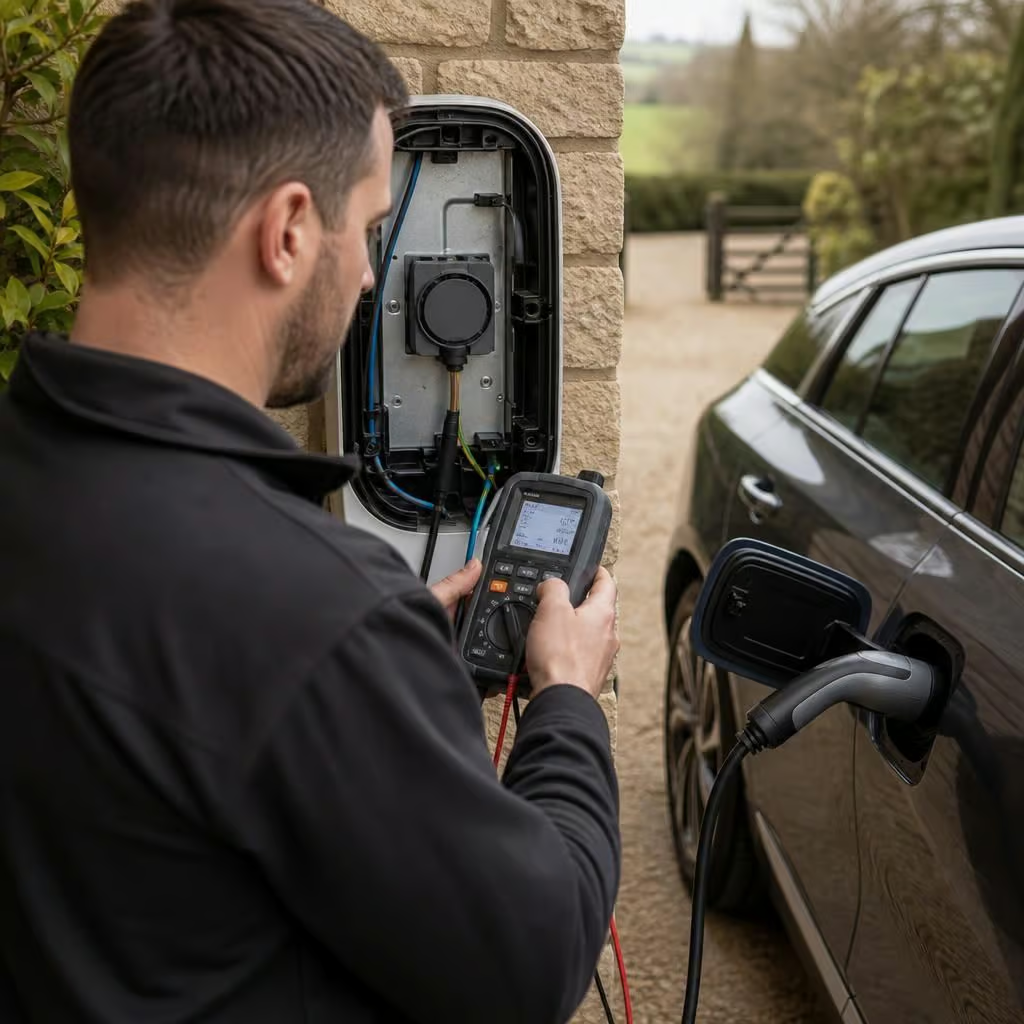
How do you test an EV charger installation?
Before you use the charge point, we test the wiring, earthing, protective devices and RCD operation, then check that the unit charges correctly. We record the results, commission the charger and provide the electrical installation paperwork for your records.
An EV charger installation is tested in stages: we check the existing supply, test the new circuit, verify the protective devices and then commission the charger with the vehicle. The tests confirm that the installation is electrically safe, correctly protected and ready for everyday charging.
Before the charger is connected
Your home’s existing electrical system determines how the charge point can operate safely. We inspect the consumer unit, earthing arrangement, cable route and available capacity before finalising the installation. An older consumer unit or an inadequate earthing arrangement may need work before the charger can be connected.
We also check the proposed cable route and termination points. This helps us identify loose connections, damaged equipment, unsuitable cable sizes or access problems before they become faults during commissioning.
Tests on the new circuit
Once the cable and protective equipment are installed, we carry out electrical tests with the charger isolated. These typically include:
- continuity testing, to confirm that the circuit conductors and protective conductor are complete;
- insulation resistance testing, to identify unwanted leakage between conductors or to earth;
- polarity testing, to confirm that live, neutral and earth are connected to the correct terminals;
- earth fault loop impedance testing, to check that fault current can return through the protective path;
- testing of the circuit protection, including the RCD or RCBO where fitted; and
- verification of cable connections, torque settings and enclosure protection.
These checks are carried out with test equipment rather than by relying on the charger’s display. A charger can appear to power up while the cable, earthing or protective arrangements still need attention.
Protection against electrical faults
The protective devices must suit both the charge point and the property’s earthing arrangement. We test that the RCD or RCBO responds correctly and that the charger’s built-in protection, where applicable, works with the rest of the installation.
Properties with older earthing systems or PME supplies need particular care. We assess the risk from a broken protective neutral conductor and install the appropriate protective arrangement where the design requires it. We do not treat every house as electrically identical.
Checking the charger itself
After the fixed wiring passes its tests, we energise the charge point and check its operating functions. We confirm that it starts and stops correctly, indicates its status clearly and responds to the connected vehicle.
For a connected or app-controlled charger, we check the communication between the unit, the vehicle and the relevant control system. We also confirm any configured charging limits or load-management settings. If the property has other high-load equipment, the charger must not be set up in a way that places unnecessary demand on the incoming supply.
We test with the vehicle connected
A charger can pass its electrical tests but still need a functional check under charging conditions. We connect the vehicle, confirm that charging begins, and check that the unit stops when charging is ended. We then check the indicators and controls so you know what normal operation looks like.
If the vehicle does not start charging, we work through the charger settings, cable connection, protective devices and communication link. A fault may sit with the vehicle or its cable rather than the fixed installation, so testing the complete charging process helps separate those causes.
What happens if a test fails?
We stop before commissioning the charger if a safety test gives an unacceptable result. We explain what we have found and what needs correcting. That might involve repairing a connection, improving the earthing, replacing unsuitable protection or carrying out work at the consumer unit.
We do not bypass a protective device or leave a known fault in place simply to get the charger working. If additional work is needed, we provide the cost before starting it.
The paperwork after testing
When the installation passes, we complete the relevant electrical certification and record the test results. The paperwork identifies the circuit, protective equipment and measured results, giving you a record of how the installation was tested.
We also explain the charger’s controls, isolation point and basic fault indications. Keep the certificate and charger information with the property records. They can be useful if the electrical system is altered later or the property changes hands.
For an older or rural property, the testing is especially important because the existing consumer unit, earthing and cable routes may have been installed for a different level of electrical demand. Checking those parts first means the new charge point is assessed as part of the whole installation, not as an isolated piece of equipment.
If the charger shares the home’s available electrical capacity with other equipment, charging must adjust safely when demand changes. We test the load-management function while the property is operating normally, checking that the charge rate responds correctly rather than overloading the supply.
This matters in homes with electric heating, an electric cooker, solar panels or battery storage. The final checks show how the charger behaves alongside those systems, so you know what to expect when several appliances are running together.