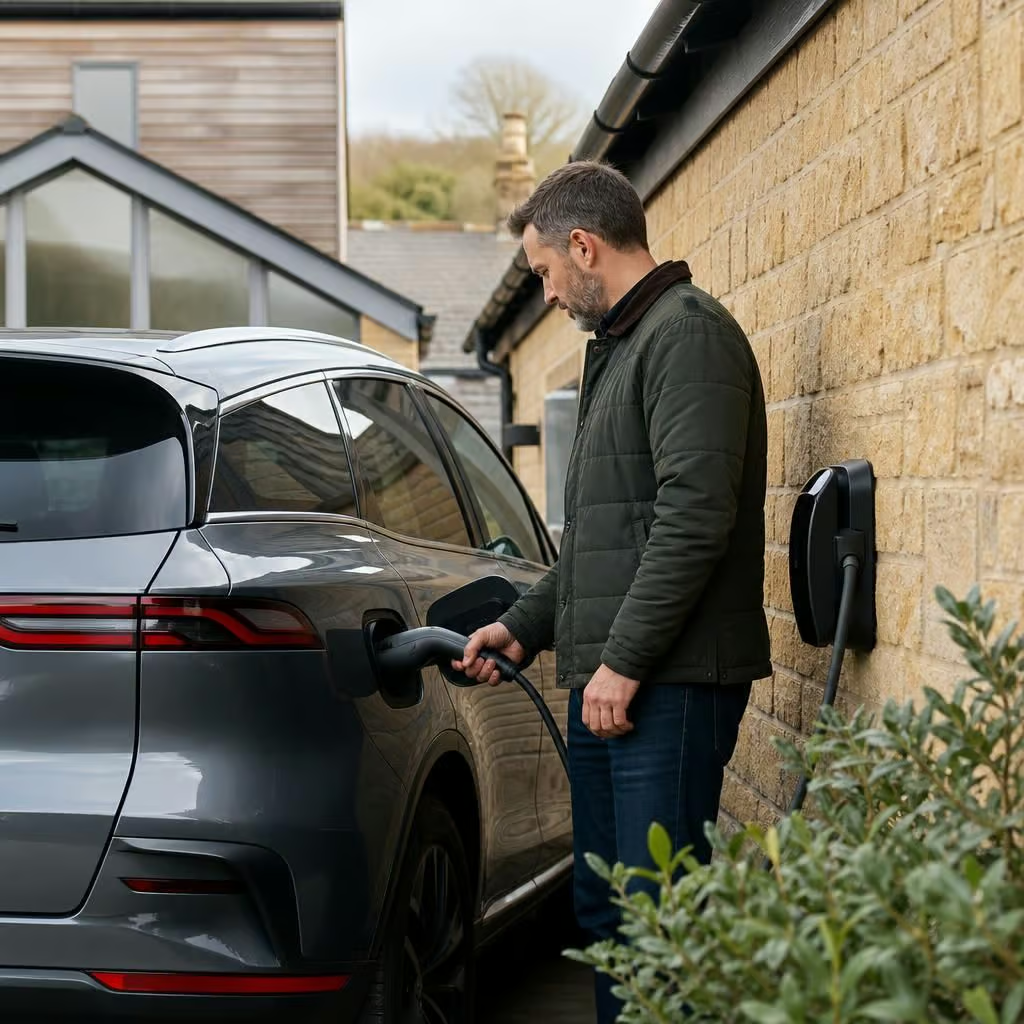
Does my car brand affect my home charger choice?
Usually, no: the car brand does not determine which home charger you need. The model’s charging connector, maximum AC charging rate and any smart-charging features matter more, so we check those details alongside your home’s electrical supply before recommending a charger.
Car brand is rarely the deciding factor. The important details are the car’s charging connector, its maximum AC charging rate and the features you want from the charger.
Your car converts the charger’s AC electricity into the DC electricity stored in its battery. That conversion happens through the car’s onboard charger, so fitting a higher-rated home charger won’t make the car charge faster than its own AC limit.
- Connector: Most electric cars sold for the UK market use a Type 2 connection for home charging. Older imports and some earlier models may use a different connector, so we confirm the exact model before specifying the equipment.
- AC charging rate: Your car may accept a lower rate than the charger can provide. We check the manufacturer’s stated AC limit so the installation matches the way the car can actually charge.
- Cable arrangement: A tethered charger has a cable attached to it, while an untethered charger uses the cable supplied with the car. The better option depends on where you park, how far the charger is from the vehicle and whether more than one car may use it.
- Charging controls: Some drivers use the car’s own timer and charge limit. Others prefer to control charging through the charger. We look at both systems so they work together rather than delaying or interrupting a charge.
- Solar or battery use: If you already generate electricity at home, the charger may need suitable controls to make use of surplus generation. We consider this alongside the car, inverter and home battery rather than treating the vehicle brand in isolation.
The car brand can still matter in a few cases. A particular model may have a lower AC limit, unusual charging settings or a connector used mainly on imported vehicles. Some manufacturers also place more controls in the car’s own software, which can affect how you schedule charging. These are model-specific points, not reasons to choose a charger simply because its name matches the car.
Your home’s electrical installation matters just as much. The consumer unit, earthing arrangement, cable route and available capacity all affect the installation design. If the charger is going on an older property, we check the existing wiring rather than assuming it can accept a new high-load circuit. Where the installation needs electrical work first, we explain that before any equipment is ordered.
A charger that suits one car may still be a sensible choice if you change vehicles later. We consider the cars you expect to charge, the available supply and any solar or battery plans. That helps avoid choosing equipment that works for today’s vehicle but restricts the next one.
For a quotation, we use the exact make, model and version of the car, not just the manufacturer’s name. We also need to know where you park, where the electricity meter and consumer unit are, and how the cable could reach the charging position. We can then recommend a charger based on the vehicle’s limits and the practical needs of the home, with the work and equipment set out before installation.
A car’s trim level and model year can matter more than its badge. The same model name may be sold with different charging equipment, particularly across imported vehicles or revised versions. We use the vehicle’s handbook or charging specification to confirm the correct details before recommending equipment.
That check prevents you paying for features the car cannot use. It also gives you a clear explanation of any limitation, so the charger you choose reflects the vehicle you actually own rather than its manufacturer’s name.