
Do I need three-phase electricity for home EV charging?
No. Most homes can charge an electric car using a single-phase supply and a suitable home charger. Three-phase electricity can support faster charging, but your car, charger and available supply must all support it.
A three-phase supply isn’t normally required for home EV charging. A suitable single-phase charger will cover most domestic charging needs, provided the property’s supply has enough capacity for the charger alongside the rest of the home.
What three-phase electricity changes
Your home may currently receive electricity through one phase, with the available power shared between the charger, cooker, heat pump, immersion heater and other large loads. A three-phase supply divides the incoming electricity across three phases. That can support a higher total charging rate, or allow several substantial electrical loads to operate with less demand placed on any one phase.
That benefit only applies when the car and charger can use three-phase power. Some electric cars accept single-phase AC charging only, so connecting one to a three-phase supply will not automatically make it charge faster. The vehicle’s onboard charger remains one of the limits. The charger itself, the incoming supply and the cable run also affect the result.
When a single-phase supply is usually enough
Your car is normally parked at home for several hours, so a single-phase charger can often replace the energy used during a typical day without needing a supply upgrade. The important question is not simply the charger’s maximum rating. We look at how much energy the car needs, how long it is parked and which other appliances may run at the same time.
A home with an electric shower, induction cooking, storage heaters, an air source heat pump or a battery system may place greater demands on the supply. That does not automatically rule out single-phase charging. A suitable charger can manage its output when the property is using more electricity elsewhere. This reduces the chance of the charger adding too much demand at the same time as another large appliance.
When three-phase may be worth considering
- Your car supports three-phase AC charging and you regularly need to add a large amount of charge in a shorter parking period.
- The property already has three-phase electricity, perhaps because it has a workshop, agricultural equipment or a commercial-style electrical installation.
- Several high-demand systems need to run together and spreading the load across the phases would make the installation more practical.
- You are planning a larger electrical upgrade and want the future demand assessed before choosing the charger and supply arrangement.
Even then, three-phase electricity may not be the best answer. The network connection, the main fuse, the consumer unit and the cable route all need to support the proposed installation. A charger with load management may meet the need without changing the incoming supply.
What happens if the property does not have three phases
Your existing supply can sometimes be upgraded, but this is not a change we can assume will be available or worthwhile. The electricity network operator may need to assess the local network and approve the alteration. Depending on the property, the work may involve changes to the service cable, meter position or intake equipment, as well as work within the home.
An upgrade can therefore add cost and disruption beyond the charger installation itself. We first establish whether the vehicle will benefit from three-phase charging and whether the current supply can support a sensible charging arrangement. If it cannot, we explain what the network operator’s involvement means before you commit to the work.
What we check before installing the charger
Your parking position and consumer unit determine more than the charger’s location. We check the incoming supply, earthing arrangement, consumer unit capacity, cable route and the protection needed for the charger. We also consider solar panels, battery storage, electric heating and other equipment that may share the supply.
If your consumer unit is older or does not have suitable spare capacity, we explain any electrical work needed rather than treating it as an afterthought. The installation must include the correct protective devices and comply with the requirements for EV charging equipment. Our NICEIC and ECA electrical work gives you the certification needed for the completed installation.
For a property with a long cable run, outbuilding or detached garage, the route can affect the choice of charger and the amount of work involved. We discuss where the cable will run, how it will be protected and what will happen where it passes through walls or external areas. You receive a written quotation before work starts, so any supply or consumer-unit changes are clear in advance.
The practical answer for your home
Three-phase electricity is useful in some homes, but it is not a prerequisite for charging an electric car at home. The right choice depends on the car’s AC charging capability, your parking routine, the property’s available electrical capacity and the other equipment connected to the supply.
We assess those points together rather than specifying three-phase equipment simply because it offers a higher theoretical charging rate. You can then choose between a suitable single-phase installation, managed charging on the existing supply or a three-phase upgrade where the extra capacity has a clear benefit.
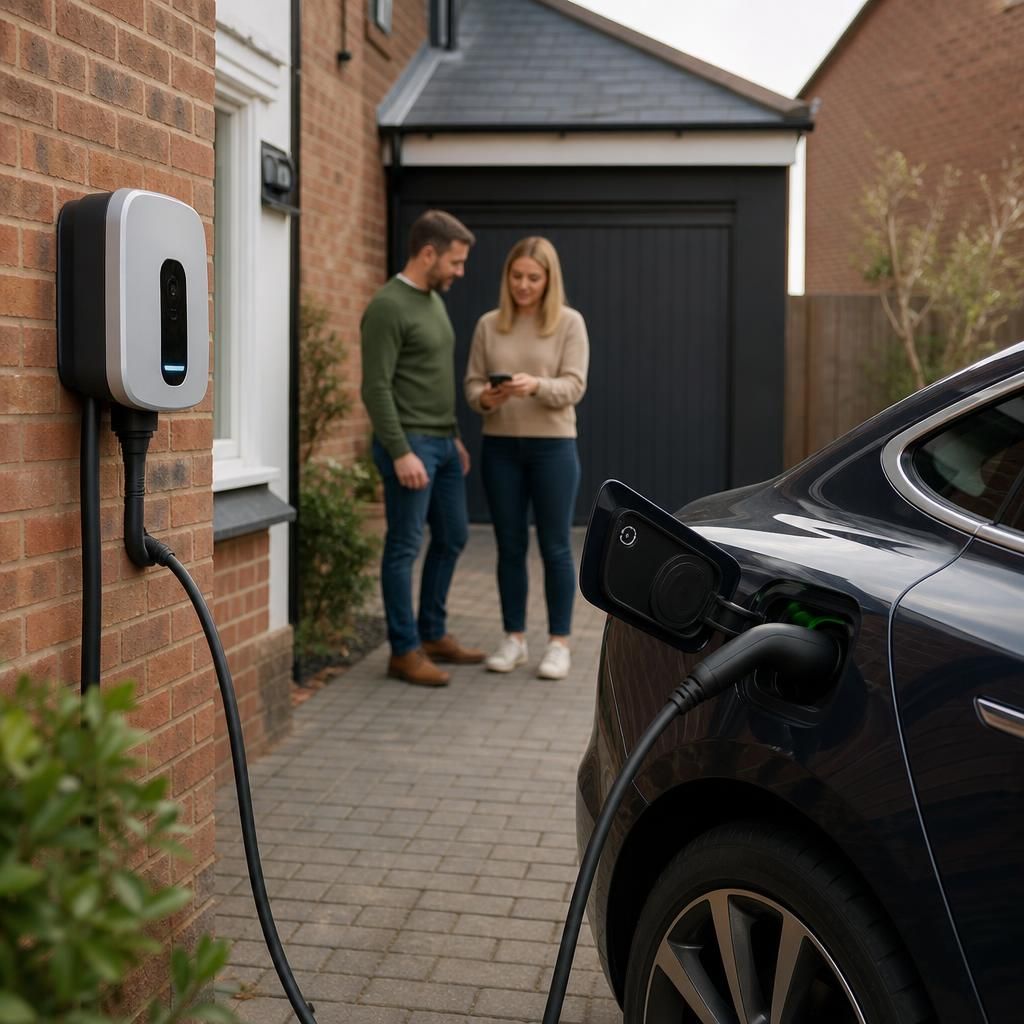
If two electric cars may charge at the same property, the supply needs assessing for both chargers rather than one at a time. We look at how the chargers would share available capacity and whether managed charging could prevent them drawing full power together. A three-phase supply may make that arrangement more practical, but only if both vehicles can use the available charging method. Planning for both cars at the outset can avoid replacing electrical equipment later.