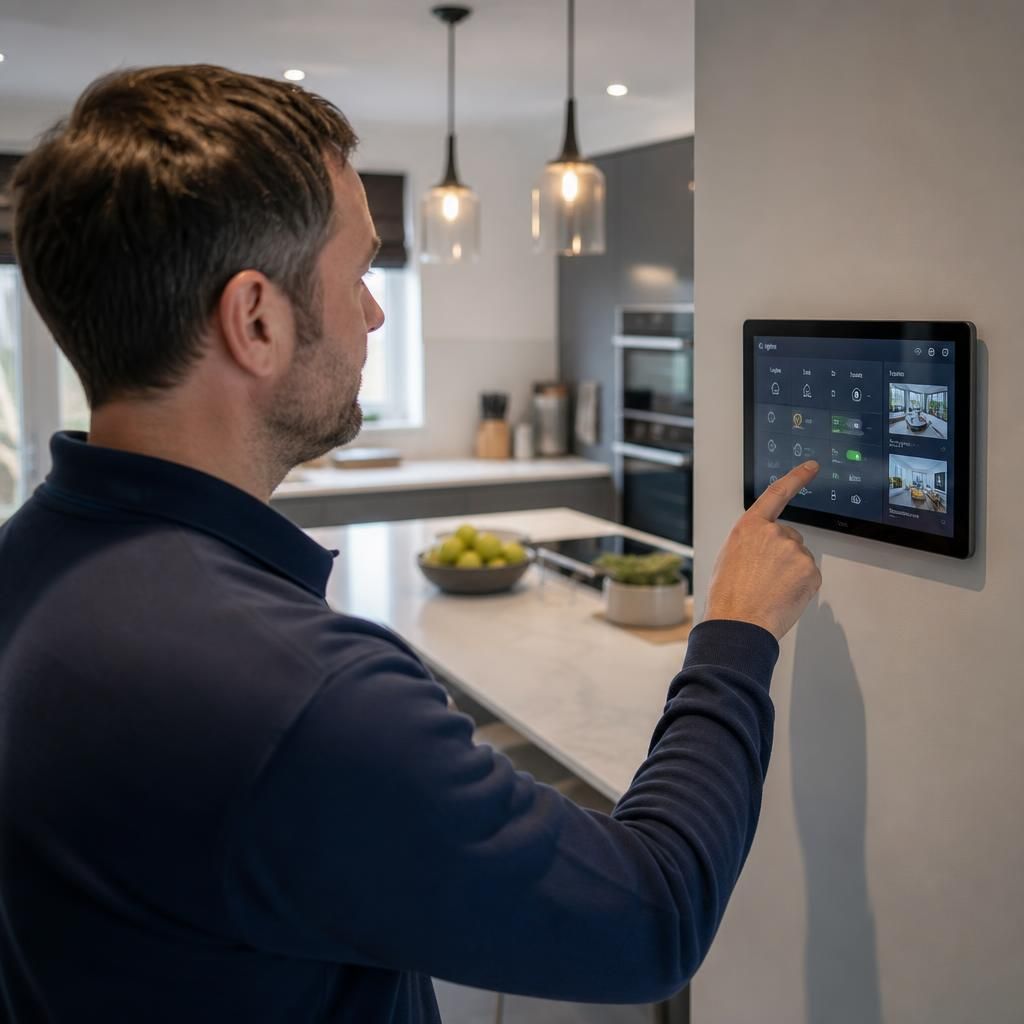
What do I need to prepare for smart home automation installation?
Prepare a reliable Wi-Fi connection, a list of the devices and functions you want, and access to the relevant rooms, wiring and consumer unit. We’ll review compatibility, check the existing electrical installation and agree any wiring, network or access changes before installation begins.
The most useful preparation is to decide how the system should behave, check which people will use it, and gather information about the existing controls. We use that information to separate essential functions from optional additions, identify compatibility issues and avoid installing equipment you will not use.
Set priorities before choosing equipment
Smart home automation can cover lighting, heating, blinds, security, access control, energy monitoring and entertainment. Start with the routines that would make the clearest difference. For example, you may want lights to respond to movement, heating to follow occupancy, or several controls to work from one app.
Write down any rules you already use. “Turn the heating down when everyone leaves” is more useful than simply asking for a smart thermostat. We can then explain which parts can work together and which need separate controls.
Bring details of existing controls
Photographs of switches, thermostats, heating programmers, alarm panels and distribution boards help us understand what is already installed. Keep the instruction manuals if you have them. Model numbers can show whether an existing device can be retained, connected or replaced.
Older homes often have several generations of wiring and controls. A wall switch may not have the conductors needed for a particular smart device, while a heating control may use a different connection method. We check this during the survey rather than asking you to buy equipment first.
Consider the building, not just the app
Thick walls, solid floors, outbuildings and detached rooms can affect how signals travel. Metal cabinets, foil-backed insulation and the position of the router can also create weak areas. Tell us about garages, garden rooms, workshops or other spaces that need control.
If a wireless route is unreliable, we can discuss a suitable alternative during planning. That may involve relocating equipment, improving the network arrangement or using wired connections where the installation calls for them. The aim is consistent control, not a system that works only in one room.
Check who needs access
Decide who should control the system and what each person should be able to change. A household may need shared access, while a cleaner, tenant or property manager may need limited access. Include anyone who will rely on manual switches or controls if the internet or an app is unavailable.
Have the relevant email addresses available for account setup. Keep passwords private and enter them yourself where possible. We can explain the access structure without needing to retain personal login details.
Think about privacy and security
Cameras, doorbells, locks and occupancy sensors collect more sensitive information than automated lighting. Decide where devices may be positioned and who should receive alerts. Consider whether audio recording is necessary, particularly in shared or rented properties.
Use strong, separate passwords and enable multi-factor authentication where the system provides it. We can show you which accounts control the equipment and how to remove access if someone no longer needs it.
Allow for electrical and heating checks
Some automation involves more than fitting a sensor. New lighting controls, powered blinds, heating interfaces and access equipment may need suitable power, safe connections or changes to existing controls.
If the installation affects fixed electrical wiring, our NICEIC and ECA-registered electricians check the relevant circuits and leave the work safe and properly documented. If it connects with heating equipment, we consider the existing boiler, controls and heating zones before recommending a change.
Your consumer unit, wiring arrangement and available space may limit where equipment can go. We explain any remedial work before it starts, so the quotation reflects the actual installation rather than an assumed setup.
Prepare for the survey
Make the main controls accessible, including the consumer unit, boiler controls, router and any equipment in cupboards or loft spaces. Tell us about rooms that cannot be entered, listed-building restrictions, recent electrical work and planned alterations.
If you rent the property or manage it for someone else, obtain the required permission before equipment is specified. This matters particularly for drilling, changes to fixed wiring and devices that affect access or security.
Allow for ongoing costs and future changes
Some systems may involve subscriptions, replacement batteries or manufacturer account requirements. We identify these during planning rather than treating the installation price as the whole long-term cost.
It is also worth deciding what you may add later. Leaving suitable capacity or choosing a system that can expand may avoid replacing the central equipment when you add another room, heating zone or security device.
What we confirm before work starts
- Which functions the system will control and which remain manual.
- Where sensors, switches, hubs and control equipment will be positioned.
- Whether existing devices can remain in service.
- Any wiring, access or building work needed.
- How the system will respond if the internet, power or a device fails.
- Who will receive access and alerts.
- What the quoted work includes, along with any equipment or account costs.
After installation, we test each control and routine with you. We show you the manual controls, app settings and basic fault checks, then leave the relevant information with the completed work. You should understand what the system does, how to change it and what still works if one part is unavailable.
If you already know where you want switches, sensors or screens, mark those positions with removable tape before the survey. Check that controls are easy to reach, sensors have a clear view and devices won’t be hidden by curtains, furniture or opening doors.
We use those proposed positions to discuss appearance, cable routes and access for future servicing. This helps avoid placing a sensor where it misses movement or mounting a control where everyday use becomes awkward.