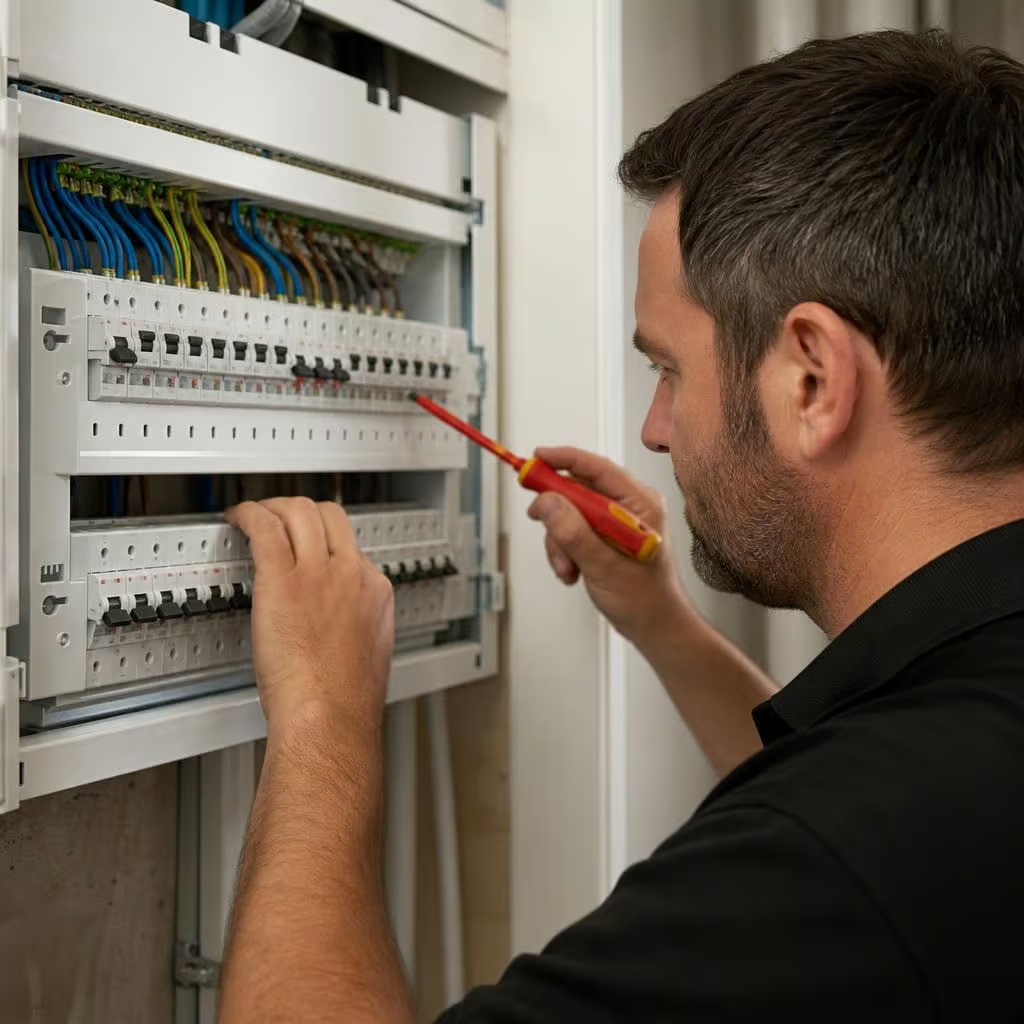
Will circuit breaker repair affect power elsewhere in the house?
Usually, repairing a circuit breaker only interrupts the faulty circuit, so other parts of the house keep their power. We may isolate the consumer unit briefly to work safely and test the repair, which can affect all circuits for a short time.
The main distinction is between the individual circuit and the protective devices supplying several circuits. If the fault is limited to one outgoing circuit, we can usually work on that circuit without affecting the rest of the house for long. If the fault involves the consumer unit, the main switch or a shared RCD, we may need to isolate a wider part of the installation while we investigate.
A circuit breaker protects one electrical circuit, such as sockets, lighting, an electric cooker or an outbuilding supply. Replacing a failed breaker normally means switching off the relevant supply, removing the faulty device and testing the circuit before restoring power. The other circuits should remain available once the isolation point is secured again.
The consumer unit’s layout affects what happens elsewhere. Some installations have separate RCD-protected groups, while older boards may have less separation between circuits. An RCD trip can disconnect several circuits together, even when the original fault is on only one of them. We identify which devices have operated rather than repeatedly resetting them and hoping the fault clears.
We may switch off the main supply briefly if we need to remove the consumer unit cover, check connections or replace a device inside the board. That interrupts lighting, sockets and fixed equipment throughout the property. Before doing this, we can help you identify anything that should be shut down safely, such as computers, heating controls, pumps or other equipment that should not lose power unexpectedly.
Testing can also involve isolating circuits individually. This helps us establish whether the breaker is defective or is correctly responding to a fault elsewhere, such as damaged cable, water ingress, a failed appliance or a loose connection. Power may return to some parts of the house while another circuit remains isolated until the underlying problem is safe to address.
Older properties need particular care because circuit labels may be incomplete, wiring may have been altered over time and a single board may supply later additions. We trace the relevant circuit rather than relying only on the labels. If the breaker has operated because of a wider installation fault, fitting a replacement alone would leave the cause unresolved.
Once the work is complete, we test the affected circuit and confirm that the protective devices operate correctly. We explain what was isolated, which parts of the house should have power again and whether any circuit needs further remedial work. Electrical work is carried out by our NICEIC-registered electricians, with the installation left safe and clearly identified.
If you notice a burning smell, scorching, buzzing, heat at the consumer unit or repeated tripping, do not keep resetting the breaker. Unplug equipment only if it is safe to do so, avoid touching damaged fittings and arrange an electrician’s inspection.
When only part of the house has lost power, note which rooms, sockets or lights are affected before you call. Tell us about any recent appliance installation, building work, water ingress or electrical alteration. That detail helps us distinguish a failed breaker from a fault on the circuit it protects.
If the breaker trips again, leave it off rather than repeatedly resetting it. Don’t remove the consumer unit cover or move wiring yourself. We can then investigate the cause without creating a further fault or extending the interruption to other parts of the house.