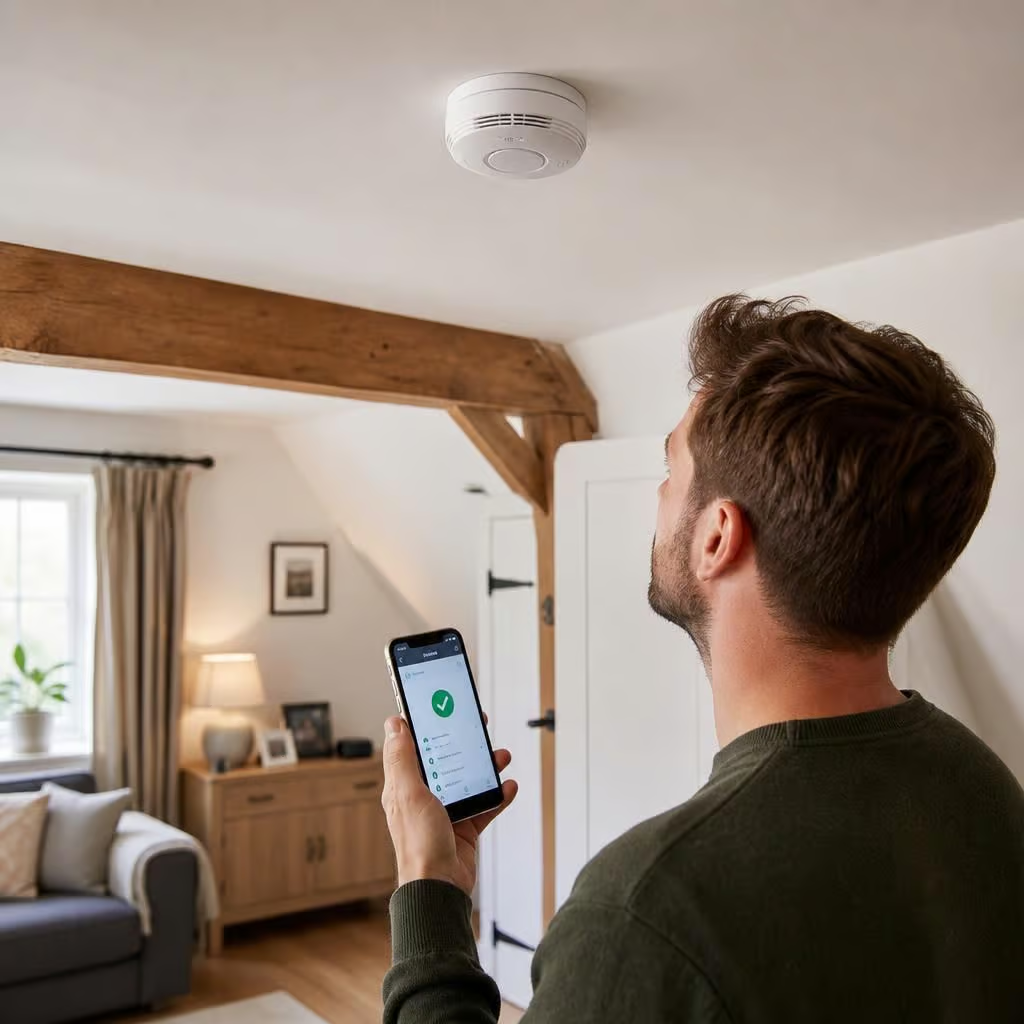
Are smart fire alarms suitable for rental properties?
Smart fire alarms can be suitable for rental properties, provided they meet the required safety standards, are correctly installed and give tenants reliable local alarms. Remote alerts can help landlords respond to faults or alarms, but they supplement rather than replace the landlord’s duty to provide, test and maintain suitable fire detection.
For most rental homes, a smart alarm is an optional management feature rather than a separate compliance category. It can help a landlord identify an alarm activation, low battery or fault, but the property still needs the correct alarms in the correct locations and a practical inspection routine.
Start with the legal baseline. In England, a rented home generally needs a smoke alarm on each storey used as living accommodation. A carbon monoxide alarm is also required in a room used as living accommodation where there is a fixed combustion appliance, apart from a gas cooker. The landlord must check that the alarms work at the start of a new tenancy and arrange repairs or replacement when a fault is reported.
Additional requirements may apply to HMOs, licensed properties and buildings covered by a fire risk assessment. Scotland and Wales have different rules, so the property’s location and tenancy type matter. A smart alarm does not remove those wider obligations.
Check what the smart function actually does. Some alarms send an alert when they detect smoke or carbon monoxide. Others report a low battery, loss of power or a system fault. The alert may depend on mains power, a working internet connection, a hub, an app account and a supported mobile device. If the broadband service fails, the alarm must still sound locally.
That makes connectivity part of the maintenance plan. We check the signal and equipment location rather than assuming that a phone notification will reach the landlord. A tenant also needs clear instructions for testing the alarm, dealing with false alarms and reporting a fault. The landlord remains responsible for arranging the necessary action.
Interconnection can be more useful than the app. When one alarm detects smoke, linked alarms can sound throughout the property. This matters in homes with several floors, closed doors or bedrooms away from the kitchen and living areas. Wireless interconnection can reduce chasing and cabling in an older house, although the selected equipment still needs to be suitable for the building and installed according to its instructions.
Smart equipment should not be chosen solely because it has an app. We look at the alarm type, approval markings, location, power supply, backup provision, interconnection method and replacement requirements. Smoke and carbon monoxide alarms serve different purposes, so one device should not be assumed to cover both unless it is specifically approved as a combined alarm.
Older rental properties need a practical assessment. Thick walls, several extensions, loft rooms and outbuildings can affect wireless communication. A listed property or barn conversion may make surface wiring preferable to chasing walls, while a reliable hardwired system may suit a larger property better than several standalone devices. The layout, heating appliances and sleeping arrangements all affect the design.
Cost also goes beyond the purchase price. A landlord may need to allow for a hub, installation, replacement batteries, broadband dependency, app access and any subscription attached to the service. We explain those ongoing requirements before work starts, so the landlord can decide whether the remote feature is worth maintaining.
Tenant changes need planning. A new tenant may not use the same phone, email address or internet service. We agree who receives alerts, how access is transferred at a change of tenancy and what happens if the connection is cancelled. Personal data and access permissions should be limited to the people who need them. Tenants should also know that an alert is not a substitute for leaving the property safely and calling the emergency services when appropriate.
Records support the landlord’s ongoing management. We can provide details of the alarm locations, equipment installed, test arrangements and any relevant electrical work. For mains-powered alarms, our NICEIC-registered electricians can complete the electrical work and leave the property with the instructions needed for future checks. This paperwork supports a sensible maintenance record, but it does not by itself confirm that every fire-safety duty has been met.
A smart system is usually suitable when the landlord can maintain it. It should continue to give a clear local warning without an app, remain accessible for testing and cleaning, and have a defined process for faults and replacement. If the internet connection is unreliable or nobody will monitor the alerts, a simpler compliant interlinked system may be the more dependable choice.
We assess the property, discuss how it is managed and recommend the alarm arrangement that fits the building. The result should be a system tenants can use and a maintenance routine the landlord can keep up, rather than technology that only appears useful during installation.
A smart alarm is most useful when it gives the landlord clear information without making the tenant responsible for managing the system. We set out who receives notifications, who arranges repairs and how the arrangement transfers when the tenancy changes.
That keeps the technology tied to a workable landlord fire-safety process. The property still has alarms that occupants can test and hear locally, while the landlord has a defined way to act on a reported fault or activation.