
How much does solar inverter repair cost?
Solar inverter repair cost depends on the fault, the inverter’s age and whether parts are available. We diagnose the system first, then explain the repair cost clearly and tell you when replacing the inverter is the more sensible option.
There is no reliable standard price for solar inverter repair. The final cost depends on the type of failure, the inverter model, the condition of the surrounding installation and whether the required part can still be sourced. A straightforward component fault may be repairable, while an older inverter with a failed control board may make replacement the more sensible option.
The quotation should separate the main costs. These may include fault-finding, labour, replacement components, testing and any work needed to reconnect or reconfigure the system. If the inverter is no longer supported, we will explain that before recommending a repair that could leave you paying for unavailable or short-lived parts.
Your monitoring app may show a fault code, but that does not always identify the failed component. We compare the display or monitoring information with readings from the installation, check the inverter’s electrical connections and look for signs of heat, moisture or physical damage. This helps prevent a new part being fitted when the underlying issue is elsewhere.
Common faults have different cost implications.
- A communication fault may relate to the internet connection, monitoring equipment, cabling or the inverter itself.
- A shutdown caused by the grid supply may need checks beyond the inverter, rather than an inverter repair.
- A failed fan, display or connection can sometimes be dealt with using a replaceable component.
- A damaged power stage or control board can be uneconomical to repair, particularly when the manufacturer no longer supports the model.
- Repeated tripping may point to an issue with the AC or DC side of the system, so replacing the inverter without testing the rest of the installation would be poor practice.
Age matters because repair is not always the cheapest decision overall. A repair may be appropriate when the inverter is otherwise sound and parts are available. Replacement may be better when the unit has had several faults, has limited manufacturer support or would need a major internal assembly. We set out both options where they are practical, so you can compare the immediate cost with the likely service life of the equipment.
The quotation should also make clear whether the proposed work restores monitoring, export metering and normal system operation. If replacement is needed, the new inverter must match the panel arrangement, battery equipment if present and the property’s electrical supply. A cheaper unit is not necessarily suitable if it cannot work correctly with the existing system.
Do not open the inverter to reduce the repair bill. Solar panels can continue producing DC electricity in daylight, even when the inverter appears switched off. If you notice burning smells, unusual heat, water ingress, damaged cables or repeated shutdowns, leave the equipment isolated only if you can do so safely using the manufacturer’s normal controls. Do not remove covers or handle damaged cables.
Solar inverter work involves both the generating system and the property’s electrical installation. Our NICEIC- and ECA-backed electrical experience means we can test the relevant electrical equipment rather than treating the inverter display as the whole diagnosis. We provide a written quotation before work begins, with the proposed repair or replacement and the costs clearly set out.
The useful information to have ready is the inverter make and model, the fault message, when the problem started and whether the panels or battery are still producing or charging. A photograph of the display and any warning lights can also help us understand the fault before arranging the next step.
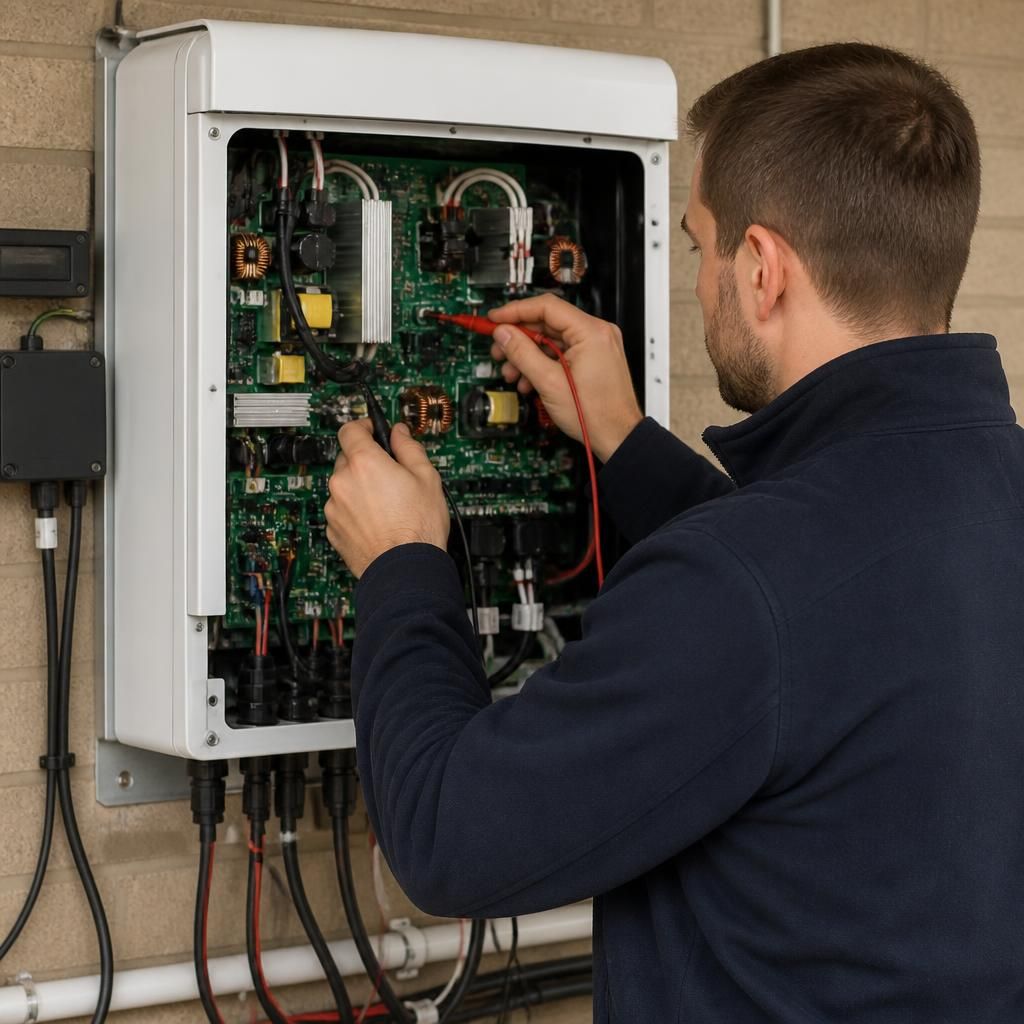
A replacement part is only part of the cost. The inverter must be tested afterwards to confirm that the panels are generating correctly and that the system is communicating with its monitoring equipment. If a battery is connected, we also check that charging and export settings still match the installation.
That is why we price the work around the complete repair, rather than quoting for a component from a fault code alone. You receive a clear figure for the work needed to return the system to normal operation.