
How long can different energy storage technologies store electricity?
Home batteries generally store electricity for several hours, helping shift solar power into the evening. Larger technologies such as pumped hydro, flow batteries and hydrogen can store energy for longer periods, from many hours to several days, depending on their design and scale.
The storage time can range from seconds to several months, depending on the technology. Most home batteries are designed to cover part of a day or shift solar electricity into the evening. Large grid-scale systems can store energy for much longer.
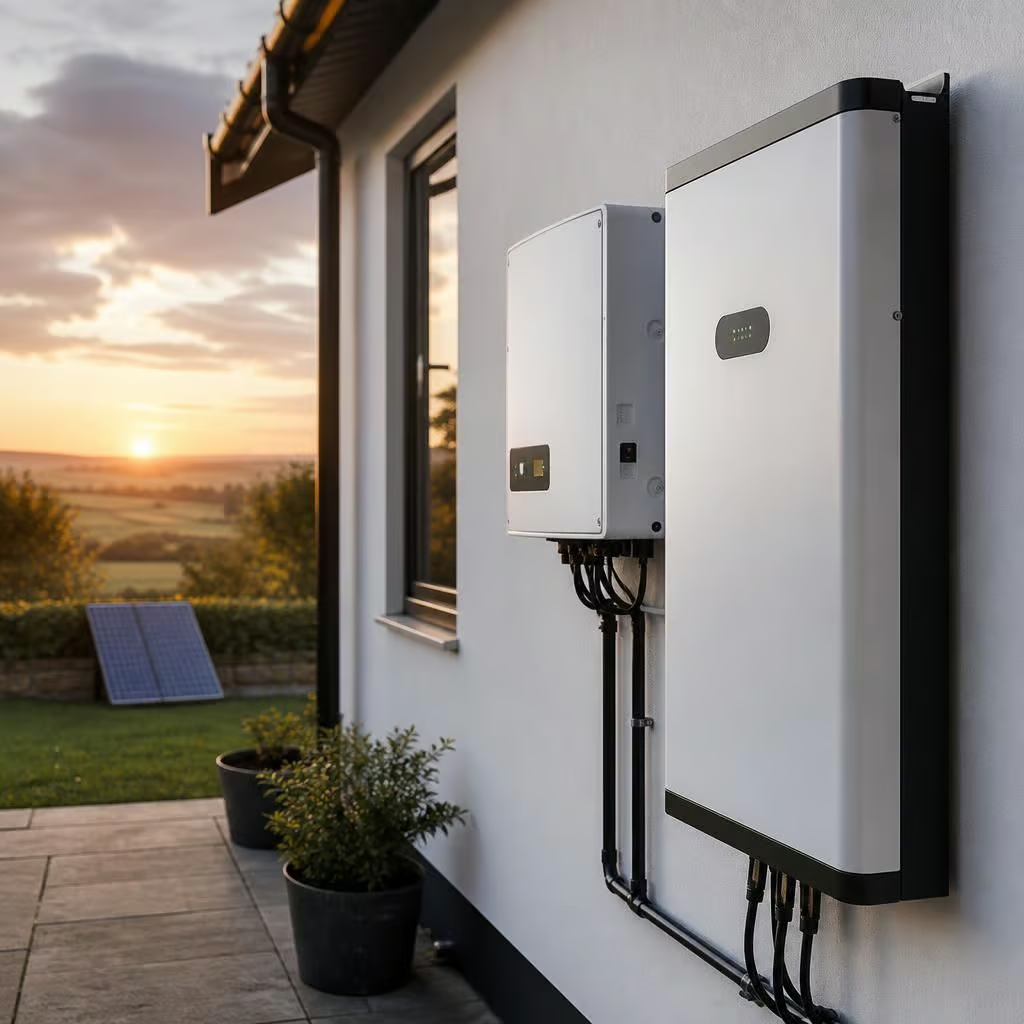
Lithium-ion batteries are the most common choice for homes. They usually store electricity for several hours, depending on the battery capacity and the demand from the property. A battery may cover evening lighting, refrigeration and selected appliances, but it may not run a whole house through several days of heavy use.
A battery’s stated capacity does not tell you exactly how long it will last. Your usable capacity is affected by the reserve kept for backup, the battery’s charge and discharge limits, and the power being drawn at the time. Running an oven, immersion heater or electric vehicle charger can empty the battery much sooner than running lights and smaller appliances.
Lead-acid batteries can also provide several hours of storage. They are less suited to frequent deep cycling than many newer battery types, so their usable capacity and expected service life need careful consideration. They may still appear in particular off-grid or specialist systems.
Flow batteries store energy in liquid electrolytes held in tanks. Increasing the tank size increases the amount of energy stored, while the power output depends more on the cell stack. This makes them suitable for longer-duration storage, potentially lasting from many hours into days. Their size and installation requirements generally make them more relevant to commercial or grid projects than ordinary homes.
Pumped hydro storage uses electricity to pump water uphill, then releases it through turbines when electricity is needed. It can store energy for many hours or days, and some schemes can hold it for longer. The storage duration depends on the size of the reservoirs and the generation equipment. It needs suitable land, water and infrastructure, so it is not a domestic installation.
Compressed-air energy storage stores energy by forcing air into a suitable underground space or pressure vessel. The air is released later to drive generation equipment. These systems can provide storage for hours or days, but they depend on large-scale engineering and suitable geology or structures.
Hydrogen storage can hold energy for days, months or longer. Electricity makes hydrogen in an electrolyser, and the hydrogen is stored before being used in a fuel cell or generator. This can support seasonal storage, but converting electricity into hydrogen and back again loses more energy than using a battery for a short daily cycle. It also requires specialist equipment and safety controls.
Flywheels and supercapacitors work at the short-duration end of the range. They can release power very quickly, often for seconds or minutes. They are useful for stabilising electricity supplies and covering brief interruptions, rather than storing solar power overnight.
Thermal stores need a separate explanation. A hot-water cylinder or other heat store holds energy as heat rather than storing electricity for later use. It can reduce the need to run a heat pump or immersion heater at a more expensive time, but it cannot directly power lights, sockets or other electrical appliances.
For a home, the useful comparison is not simply the longest storage time. A system that stores electricity for days may cost more, occupy more space and lose more energy during conversion. A smaller battery may suit a property that produces surplus solar electricity during the day and uses most of it in the evening.
Your electricity demand also changes the result. A rural home with an electric heating system, water heating and vehicle charging may need more capacity than a smaller property with gas or oil heating. An off-grid home may need storage for poor weather as well as overnight use, often alongside backup generation and careful control of demand.
We work out the likely storage duration from the electricity profile, the generation system, the proposed battery capacity and the circuits that need to remain powered. We also allow for winter production, periods of low sunlight and the reserve needed if backup operation matters. That gives you a practical estimate for your property rather than a duration based only on the battery’s headline capacity.
For a planned installation, the survey should therefore establish two separate requirements: how much power the system must deliver at once, and how much energy it must hold over time. A battery may have enough stored energy for overnight use but still be unable to start or run a high-power appliance. Equally, a high-power system may run demanding equipment briefly without lasting through a longer outage.
Most domestic systems are intended for regular daily cycling, not for storing electricity from summer until winter. If you need longer-duration or seasonal storage, the design may involve a different technology, additional generation or a change in how the property uses energy.
Storage duration is not a fixed number for every technology. It depends on the rate at which the stored energy is released. A system may last much longer when supplying a light background load than when running heating, cooking or vehicle charging.
That makes headline comparisons difficult. We compare usable energy with the property’s actual demand, while allowing for reserve capacity and conversion losses. The result shows how long the system is likely to support the intended loads, rather than repeating a laboratory duration that does not match daily use.