
Is a portable solar generator safe to use indoors during a power cut?
Yes, a portable solar generator can usually be used indoors during a power cut if the manufacturer states that it is suitable for indoor use. Keep it dry and away from heat, leave ventilation around the unit, inspect it for damage, and never use a petrol or diesel generator indoors because of carbon monoxide.
A battery-based portable solar generator is generally suitable for indoor use during a power cut, but the way you connect and position it matters. It should supply selected appliances through its own sockets, not feed electricity back into the house wiring. A portable unit is not a substitute for a properly installed home battery or backup circuit.
Keep the unit on a solid, level surface with clear space around its vents. Do not put it inside a cupboard, under bedding or behind furniture where warm air cannot escape. Avoid damp rooms, condensation, direct sunlight and places where it could be knocked over. A utility room may be suitable if it stays dry and the unit has adequate ventilation.
Battery equipment can become warm while supplying power or charging. Check it from time to time during use. A burning smell, unusual noise, smoke, leaking fluid, a damaged casing or rapid swelling means you should stop using it if you can do so safely. If it is smoking or appears to be on fire, leave the property, keep away from the unit and call 999. Do not pour water over a suspected battery fire.
Use the unit for the loads it can realistically handle. Lights, broadband equipment, phones, laptops, televisions and some refrigeration equipment are usually the sort of appliances people prioritise. Electric showers, immersion heaters, kettles, cookers, fan heaters and other high-power appliances can overload a small unit or drain it quickly. Check the continuous output and surge rating against each appliance before connecting it.
Fridges, freezers, pumps and other motor-driven equipment can draw more power when they start. The running wattage alone may not show whether the portable unit can start them reliably. If the unit trips, shuts down or repeatedly alarms, disconnect the load and check the instructions rather than repeatedly resetting it.
Do not connect a portable unit to a wall socket with a plug-to-plug lead. That can energise parts of the fixed wiring and create a serious shock risk for anyone working on the supply. If you want backup power at selected sockets or circuits, we can assess the installation and specify a proper changeover arrangement. That keeps the portable equipment electrically separate from the grid when required.
Extension leads also need care. Use only a suitable, undamaged lead with the correct rating, keep it fully uncoiled where applicable, and route it away from walkways, doorways and sources of heat. Do not run cables through damp areas or under rugs. Keep the unit and its connections away from children and pets.
During a power cut, the mains supply may return without warning. Leave the portable equipment connected only as described by its instructions, and unplug appliances before moving or inspecting them. Once normal power returns, check the unit before charging it. If the charger, cable or casing has been wet or damaged, do not put it back into service.
Solar charging does not make indoor panel use safe or practical. The panels themselves need to be outside in suitable conditions, with the cable brought indoors without creating a trip, water-ingress or damage risk. Never use a damaged cable or connector, and do not improvise connections between panels and the power station.
For a planned backup arrangement, we look at the appliances that must remain available, the unit’s output, the proposed cable routes and the separation from the household supply. That is more reliable than choosing a unit by battery capacity alone. A portable battery can be useful for essential devices, while a fixed battery system and backup circuit may be more appropriate if you need selected home circuits to continue operating automatically.
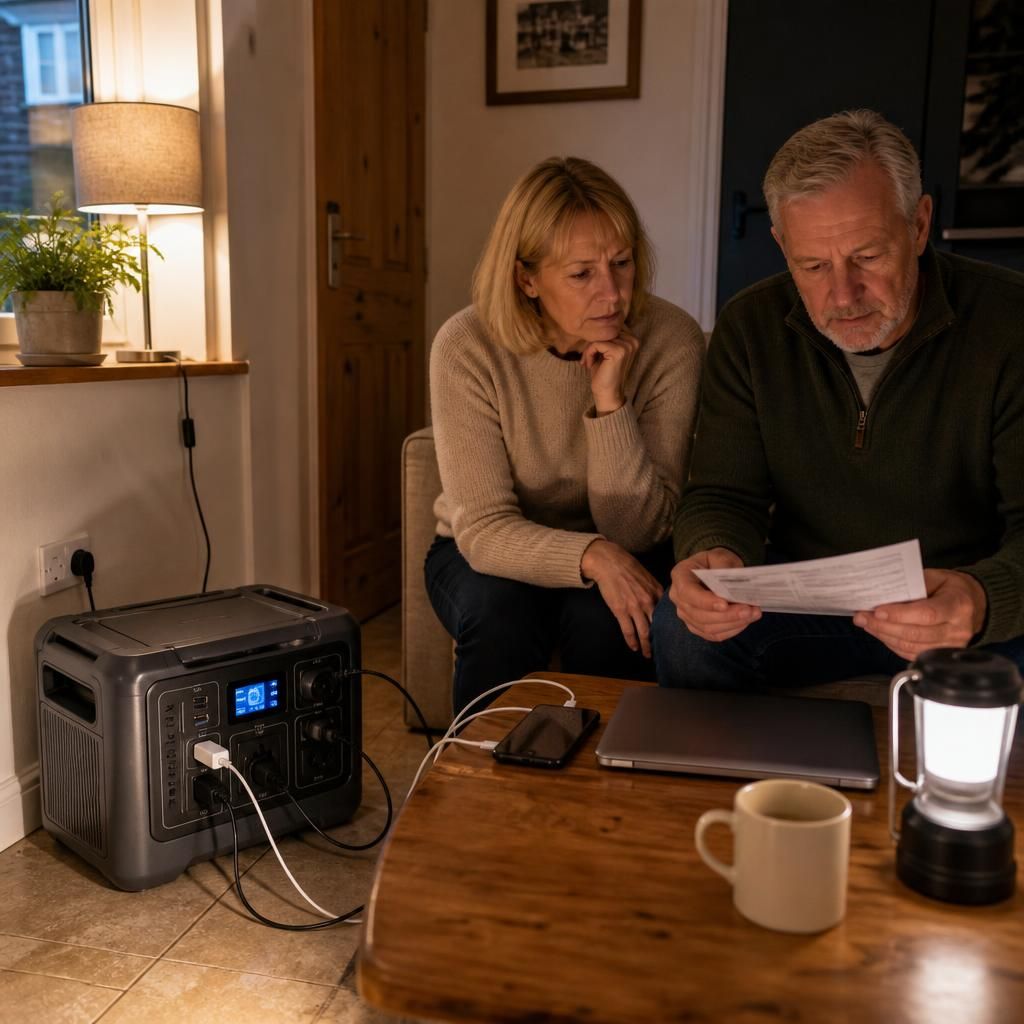
Check what the product actually is before bringing it indoors. A battery power station has no engine or exhaust, but some products sold as portable generators use petrol, diesel or a hybrid system. Those must remain outside because their fumes can contain carbon monoxide.
Read the rating plate and instructions for indoor operation, charging conditions and required clearances. If the manufacturer does not clearly allow indoor use, don’t assume it is safe. Keep smoke and carbon monoxide alarms unobstructed, and move the unit outside if its condition or behaviour changes.