
How much does an Enphase microinverter replacement cost?
There isn’t a fixed Enphase microinverter replacement cost: the price depends on the failed unit, panel access and the work needed to test the installation. We diagnose the fault, confirm the compatible replacement and provide a written quotation before work starts.
The cost of an Enphase microinverter replacement is normally made up of the replacement unit, the labour to reach it, and the testing and commissioning needed afterwards. We cannot give a reliable figure from the panel count alone, because two apparently similar faults can involve very different work.
The main costs are:
- The replacement microinverter. We identify the failed model and check that the replacement is compatible with the panel, cabling and monitoring system already installed.
- Access beneath the panel. A unit beneath an easily reached panel takes less work to access than one beneath a tightly packed array, a roof obstruction or a panel that must be temporarily removed.
- Fault finding. A monitoring alert does not always prove that the microinverter itself has failed. We test the panel, connectors, cabling and AC circuit so you do not pay for a part that will not cure the fault.
- Testing and commissioning. After the replacement, we check the electrical connections and confirm that the unit is communicating correctly with the monitoring system.
Your final price can also change if the fault has damaged a connector, exposed a cable problem or affected more than one microinverter. Corrosion, water entry and heat damage may need additional remedial work before the replacement can be commissioned safely. We explain any such finding before carrying out extra work.
Why access has such an effect on the price
Microinverters sit beneath solar panels, so the electrical part of the job may be straightforward while physical access takes most of the labour. We assess the array layout, roof surface, panel position and safe working requirements before deciding how to reach the unit.
If the panel can be lifted and refitted safely, the work may involve removing the panel, disconnecting the faulty unit, fitting the replacement and reconnecting the panel. If the panel cannot be accessed safely without further equipment or preparation, the quotation will reflect that additional work. We do not treat roof access as an afterthought, because rushing this part risks damage to the panel, fixings or roof covering.
What we check before recommending replacement
A loss of output can come from shading, a tripped protective device, a damaged cable, a panel fault or a communications problem. We use the available monitoring information alongside on-site electrical tests to narrow down the cause.
If the microinverter has failed, we check the model, electrical ratings, connectors and installation requirements before selecting a replacement. An apparently similar unit is not automatically suitable. The replacement must work with the existing panel and system configuration, and it may need adding to the monitoring account or commissioning process.
Where a model is no longer available, we discuss the practical alternatives. That may mean using a compatible replacement, changing more than one unit, or reviewing whether a larger section of the installation needs attention. The right choice depends on the equipment already on the roof and the nature of the fault.
What the quotation should show
A useful quotation separates the replacement equipment from the labour and access work. It should also make clear whether testing, reconnection and monitoring checks are included. We set out the work in writing before it starts, so you can see what is included and what would only arise if further damage is found.
We do not recommend replacing a microinverter solely because the monitoring app shows one panel producing less power. The investigation should establish whether the unit is the cause. This can prevent an unnecessary replacement and gives you a clearer basis for deciding how much work the installation needs.
If you are comparing an Enphase microinverter replacement cost with the cost of a wider solar repair, ask what testing is included and how access will be handled. A low initial figure may not include the work needed to reach the unit or confirm that the system is operating correctly afterwards.
We can inspect the fault, confirm the compatible replacement and provide a written quotation for the work. If the inspection shows that replacement is not the sensible option, we explain why before you commit to it.
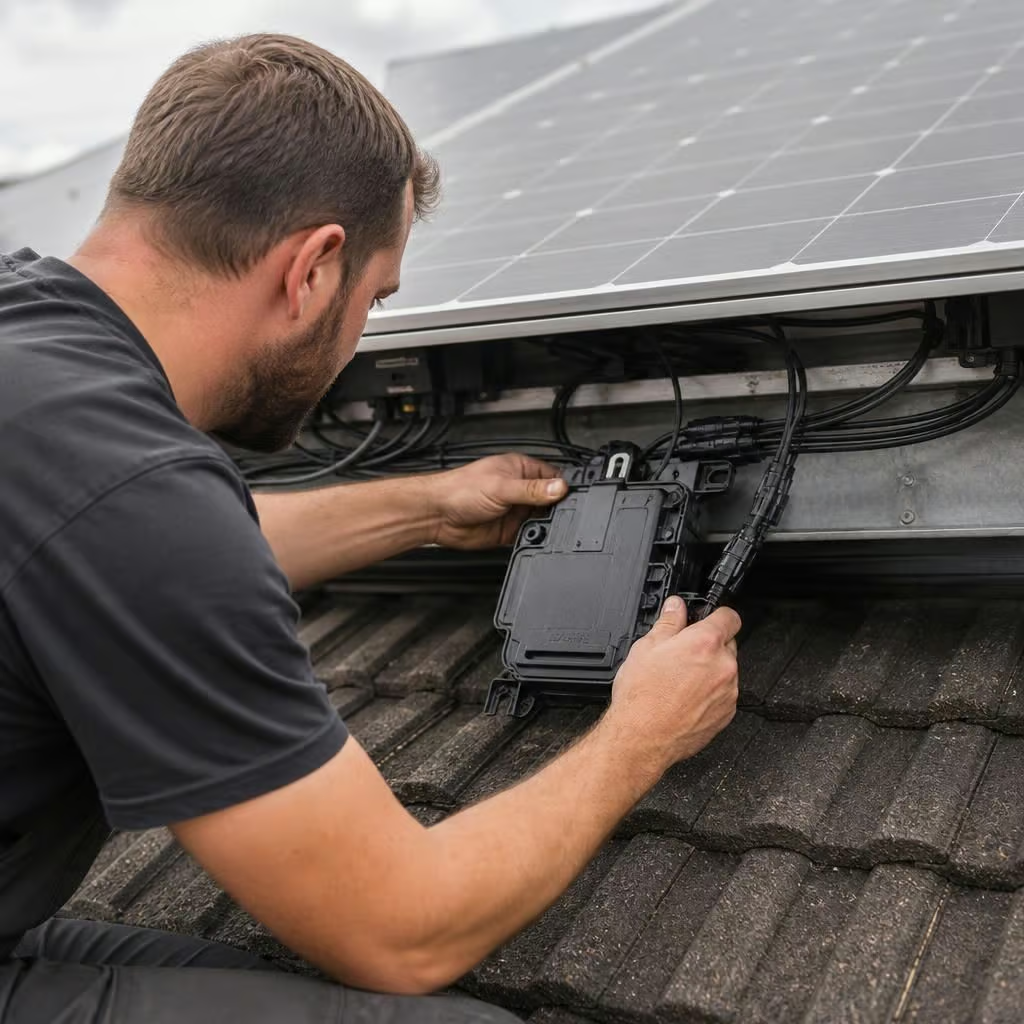
A lower Enphase microinverter replacement cost may not mean a lower overall cost if the quotation excludes the inspection needed to confirm the fault. A monitoring alert can identify the affected panel, but it cannot by itself confirm which component has failed.
We allow for diagnosis before recommending parts. That means the final quotation reflects the actual fault rather than an assumed replacement, and you can decide whether the proposed work is worthwhile before anything is fitted.