
How much will repairing my heat pump cost?
Heat pump repair costs depend on the fault, the system’s age and whether parts or electrical work are needed. We diagnose the problem first, explain the repair clearly and provide a written quotation before work starts.
Heat pump repair costs vary from a straightforward control or sensor fault to a larger repair involving electrical components, pipework or the refrigeration circuit. The main cost depends on what has failed, whether replacement parts are available and how much work is needed to reach and test the affected equipment.
A repair bill commonly reflects several parts of the job:
- Fault-finding: We check the heat pump, controls, wiring, water circuit and system readings rather than replacing parts on guesswork.
- Labour: The time needed to isolate the fault, carry out the repair, recommission the system and confirm that it is operating correctly.
- Parts: The price varies considerably between a small sensor, a circulation pump, a control board, a valve or a larger electrical component.
- Additional work: Some faults involve more than the outdoor unit. Pipework, radiators, thermostats, consumer unit components or internet-connected controls may also need attention.
A system that has stopped heating completely is not always suffering from a failed heat pump. The fault may be caused by a tripped protective device, a control setting, poor water circulation, low system pressure or a failed sensor. These can be less involved than replacing a major component, but the cause still needs to be established before anyone can price the repair properly.
Common faults that affect the price
A heat pump that runs but produces little heat may have a flow-temperature problem, restricted circulation, an issue with the weather compensation settings or a fault within the refrigerant circuit. If the system repeatedly stops during cold weather, we look at the defrost cycle, sensors, airflow around the outdoor unit and any ice build-up.
Electrical faults can involve the isolator, protective devices, wiring, controls or components inside the heat pump. A plumbing fault may involve pressure loss, air in the system, a seized valve, a circulation pump or a leak. Each requires different testing and parts, so two systems showing the same fault code may not have the same repair cost.
Fault codes are useful, but they do not always identify the failed part. A code may indicate a circulation or temperature problem without showing whether the cause is a sensor, pump, blocked filter or wiring issue. We use the code alongside physical checks and system readings.
Why older systems can cost more to repair
Parts for an older or discontinued heat pump may take longer to source, or the original component may no longer be available. In that situation, we check whether an approved replacement is compatible and whether other parts of the system will remain reliable.
Access can also affect the bill. An outdoor unit behind a narrow passage, pipework concealed in a wall or controls located in several parts of an older house can add testing and removal time. A solid-wall house, barn conversion or property with several extensions may have more complicated pipe runs and control zones than a modern installation.
Some repairs reveal an underlying design issue rather than a single failed component. Radiators that are too small, restricted pipework, poor insulation around external pipes or unsuitable control settings can make a working heat pump appear faulty. Correcting the cause may cost more than changing a sensor, but it can prevent the same symptoms returning.
Repair or replacement?
Repair is often sensible when the fault is isolated, the equipment is supported and the rest of the system is in reasonable condition. Replacement becomes more worth considering when several major components have failed, parts are obsolete or the system has ongoing installation or sizing problems.
We compare the proposed repair with the condition of the wider system. That includes the outdoor unit, indoor hydraulic components, controls, cylinder, electrical supply, pipework and emitters. You can then weigh the immediate repair against the likely cost of further work, rather than judging the decision on the failed part alone.
What happens during a repair visit
- We take details of the symptoms, error codes, recent changes and any unusual noises or leaks.
- We inspect the electrical supply, controls, water circuit and outdoor unit.
- We test the likely causes instead of treating the displayed fault code as a diagnosis.
- We explain which part has failed, what the repair involves and whether related work is advisable.
- We provide the repair cost before work proceeds, unless further investigation is needed to identify a concealed or intermittent fault.
- After the repair, we run the system and check that the relevant temperatures, pressures, flow and controls are behaving as expected.
For a more useful estimate, have the heat pump make and model, installation date, fault code, photographs of the indoor and outdoor units and details of when the problem started. Tell us if the system still produces hot water, if the radiators are warm, whether the outdoor unit is iced up and whether any electrical protection has tripped. Those details do not replace testing, but they help us understand the likely scope of the visit.
A written quotation separates the cost of the recommended repair from optional improvements. If the equipment is not economical to repair, we explain why and identify which parts of the existing system may be reusable. That gives you a practical basis for deciding what to do next.
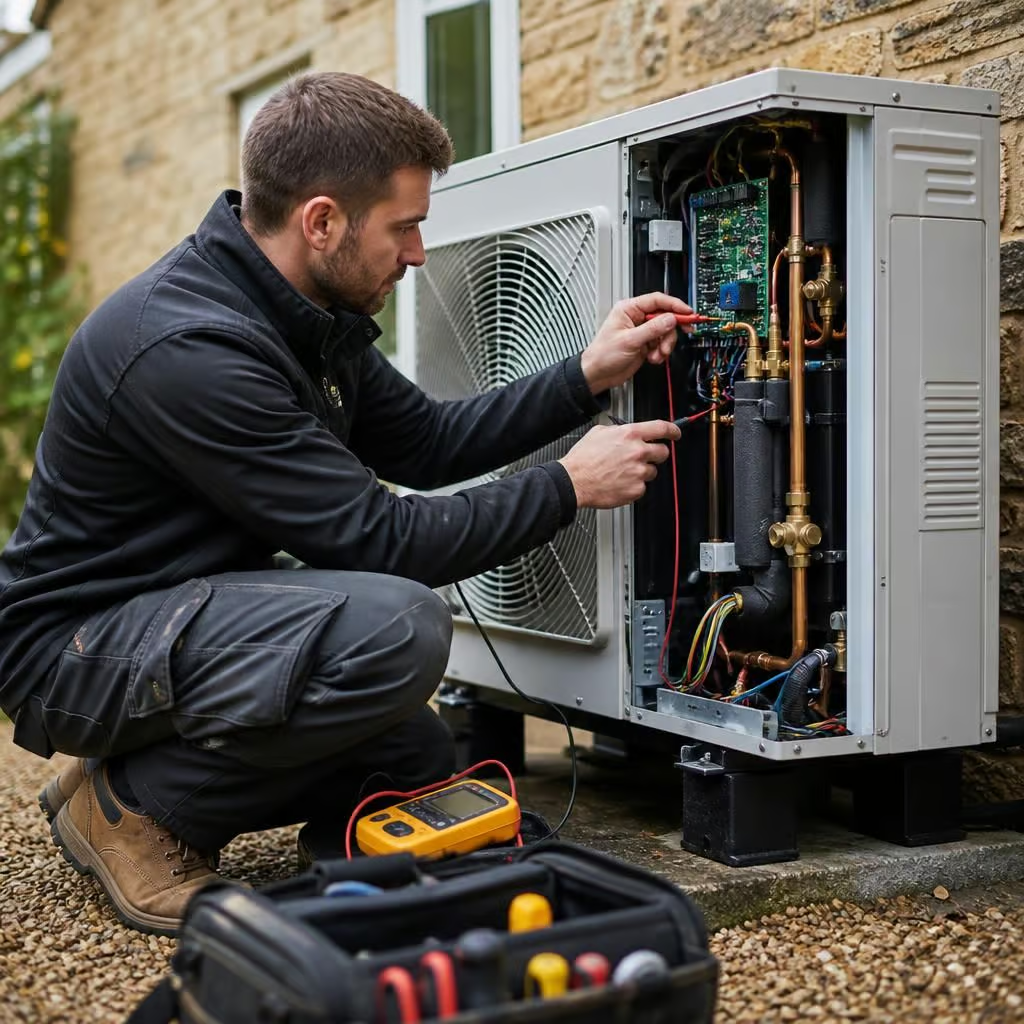
If one heat pump repair quote is much lower than another, check what each price actually includes. A figure for replacing a part may not include fault-finding, system testing or recommissioning.
Ask whether the repair is expected to restore heating, hot water or both, and whether the quoted work includes checking the cause of the failure. This helps you compare like with like rather than choosing a price that leaves further investigation or testing to pay for later.
Where the fault is intermittent, the final diagnosis may depend on readings taken while the system is operating. We explain any uncertainty before work starts, including what could change the price if the initial fault is not the underlying cause.