How long does warm air heater replacement take?
A straightforward warm air heater replacement can often be completed in one working day, but older systems, difficult access or changes to ductwork, flues and controls can make it longer. We confirm the expected timescale after checking the existing system and the proposed replacement.
A like-for-like warm air heater replacement is normally completed during one planned installation visit. The work can take longer if we need to alter the flue, ductwork, fuel supply, electrical connection or controls.
Before we book the installation, we assess the existing heater and the space around it. We check the heater type, flue route, duct connections, combustion air, access, controls and fuel arrangement. On an LPG system, we also consider the location and condition of the supply pipework and regulator. This gives us a realistic programme rather than relying on the heater model alone.
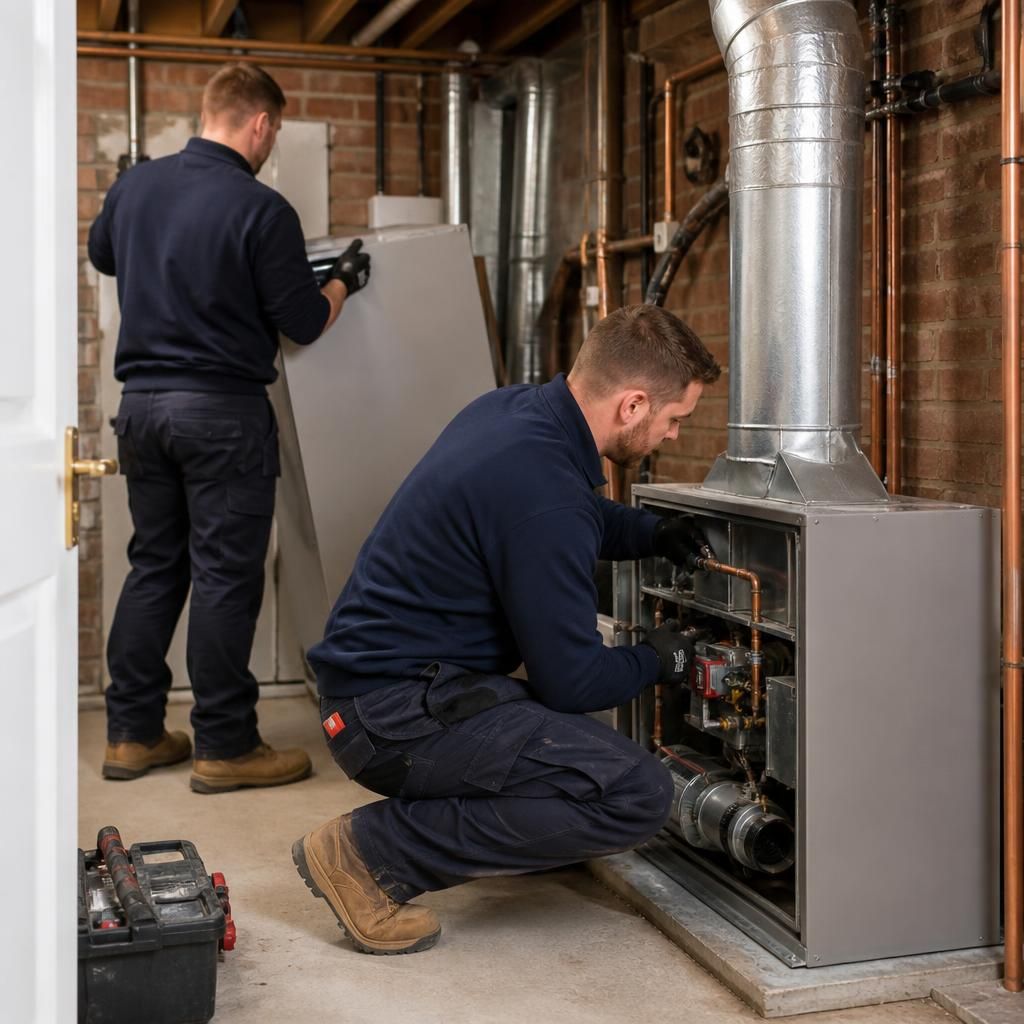
On the installation day, we isolate the old heater and remove it carefully. The replacement then needs to be positioned, connected to the ductwork and linked to the fuel, flue and electrical systems. A direct replacement usually keeps this process relatively contained. If the new heater has different connection points, we may need to adapt short sections of ductwork or pipework.
Access affects the time as much as the heater itself. A unit in a plant room with clear access is simpler to replace than one in a tight cupboard, loft space or enclosed utility area. Narrow doorways, stored items and difficult access routes can add preparation and handling time. We explain any access issue before work starts.
The flue can also change the programme. If the existing flue route suits the replacement, we can usually retain the arrangement after checking it is safe and appropriate. A new route, a change in terminal position or work through a wall or roof requires additional preparation and making good. We do not treat an unsuitable old flue as something to work around without explaining the consequences.
Once the heater is connected, we test the installation rather than simply switching it on. We check combustion, flue performance, airflow, temperature output, safety controls and the operation of the thermostat. We also check that warm air reaches the rooms properly and that the system starts and stops as it should. Gas work is carried out by Gas Safe registered engineers, which is the legal requirement for work on a gas boiler or heater.
Most disruption comes from removing the old unit and making any necessary changes around it. We protect the working area, keep dust and debris under control and remove the old equipment when the work is complete. If parts of the ductwork or building fabric need alteration, we set that out in the quotation so the scope and expected timing are clear before you decide.
A replacement can take longer when:
- the new heater does not match the existing duct or flue connections;
- the flue needs rerouting or replacing;
- the LPG pipework, regulator or isolation arrangements need attention;
- the electrical supply or controls need upgrading;
- access is restricted or the old unit is difficult to remove;
- additional ventilation or building work is required.
If the existing system is in poor condition, we will explain whether replacement alone is sensible or whether associated work should be included. You receive a written quotation before work starts, with the expected installation scope and any factors that could affect the programme. The final handover includes an explanation of the controls and the paperwork for the completed installation.
During the changeover, the old heater stays isolated while we remove it and connect the replacement. Heating remains off until commissioning is complete, so the installation programme includes final safety checks rather than ending when the new unit is physically in place.
We then show you how to use the controls before we leave. That handover helps prevent a second visit caused by unfamiliar settings, particularly where the replacement thermostat or control arrangement differs from the old one.