
What should an air source heat pump installation quotation include?
An air source heat pump installation quotation should set out the heat-loss calculation, proposed system and controls, radiator or pipework changes, electrical and external works, labour, commissioning, guarantees and any grant paperwork. It should also explain what is included, what is excluded and the total price, so you can compare quotations without uncovering extra costs later.
A useful air source heat pump quotation should show how the system has been designed for your home, not just name a heat pump and give a total price. You should be able to see the main assumptions, the equipment proposed, the work required and the conditions that could change the cost.
Check the heat-loss calculation
Your home may have solid walls, extensions, high ceilings or rooms with different levels of insulation. We calculate the heat loss room by room, then use it to size the heat pump and heating emitters. The quotation should confirm that this calculation has been completed and explain any assumptions about insulation, windows and design temperature.
A system that is too small may rely heavily on its electric backup during cold weather. An oversized system can cost more and may cycle inefficiently. The quote should therefore give the proposed heat pump output and the design conditions used, rather than simply stating the model name.
Look for the proposed flow temperature
The flow temperature is the temperature of the water sent to the radiators or underfloor heating. A lower flow temperature generally allows a heat pump to operate more efficiently, but the emitters must be large enough to heat each room at that temperature.
Your quotation should state the design flow temperature and identify any radiators that need changing. It should also explain if pipework needs enlarging to carry the required water flow. A statement that your existing radiators will be reused is not enough without the room-by-room calculations behind it.
Check the full equipment schedule
The price should identify the main components, including:
- the air source heat pump and its proposed output;
- the hot water cylinder, if the system will provide domestic hot water;
- the controls, thermostats and weather compensation sensor;
- the expansion vessel, pumps, valves and other essential heating components;
- any immersion heater or backup heating arrangement; and
- the base, supports, pipe insulation and external weather protection.
If the quotation offers more than one configuration, it should explain the practical difference between them. For example, a larger cylinder may suit a home with several bathrooms, while a different control arrangement may affect how you use the heating.
Make sure the hot water arrangements are clear
A heat pump usually heats hot water more slowly than a boiler. Your household’s bathing pattern and cylinder location therefore affect the design. We establish the required cylinder size, recovery arrangements and available space before pricing the installation.
The quotation should state whether the cylinder is included, where it will go and what happens to the existing cylinder or hot water system. It should also identify any changes to the airing cupboard, loft boarding, doors or access routes.
Check the outdoor unit’s position
The outdoor unit needs suitable airflow, a stable base and a route for the heating and electrical connections. Its position can also affect noise, appearance, condensate drainage and maintenance access.
Your quotation should show the proposed location and explain how condensate will drain safely in cold weather. It should also state whether wall brackets, a ground stand, acoustic treatment or screening are included. If the property is listed, in a conservation area or close to a boundary, ask who will check the relevant planning requirements.
Ask what electrical work is needed
A heat pump may need a dedicated electrical circuit and changes to the consumer unit. Older installations may also need earthing, bonding or other remedial work before the system can be connected.
We assess the existing electrical installation and identify this work in the quotation. The price should say whether it includes new circuits, isolation equipment, cabling, consumer unit work and testing. It should also explain what happens if the incoming electrical supply is not suitable.
Separate included work from exclusions
Disruption often comes from work that was missing from the original scope. Your quotation should say who will remove the old boiler, cylinder, oil tank or other equipment, and how we will dispose of it. It should also cover making good after radiator changes, drilling, pipework and electrical work.
Common exclusions can include asbestos removal, structural repairs, upgrading insulation, redecorating, alterations to the electricity supply and work required after concealed defects are found. These exclusions do not necessarily make a quotation unsuitable, but they should be visible before you compare prices.
Check the installation and commissioning stages
The quotation should describe how the existing system will be drained, altered and tested. It should include flushing or cleaning where required, balancing the radiators, setting the controls and checking the hot water cycle.
Commissioning matters because the system needs to run at the temperatures used in the design. We record the commissioning information and explain the controls, heating schedule and temperature settings before handing the system over. Ask whether the price includes user instruction and the documents you need for future servicing.
Understand the grant and certification position
If you are considering grant support, the quotation should state which scheme is being considered, what conditions apply and whether the price shown is before or after any approved contribution. Grant rules can change, so the document should not treat funding as automatic.
For eligible renewable installations, MCS certification allows us to apply for the Boiler Upgrade Scheme grant on your behalf. It also supports eligibility for the Smart Export Guarantee where the wider installation meets the tariff requirements. Your quotation should explain who submits the application, what evidence is needed and what happens if the application is declined.
Ask how the running cost has been estimated
A running-cost estimate is only useful when it relates to your property. We base any comparison on the heat-loss calculation, proposed flow temperature, electricity tariff and the way you expect to heat the home.
The quotation should show its assumptions and avoid presenting a saving as guaranteed. If your home needs insulation or radiator improvements first, those costs should be separated from any predicted energy benefit. This gives you a clearer basis for deciding whether the complete project is worthwhile.
Check guarantees, servicing and paperwork
The quotation should identify the equipment guarantee, installation cover and any conditions attached to them. It should also state what servicing is recommended, who carries it out and whether registration with the manufacturer or scheme administrator is included.
You should receive the final system information, commissioning records, electrical certificates and relevant compliance documents. Ask when these will be provided and who you contact if the system develops a fault.
Check the commercial terms
The final page should give the total price, VAT treatment, payment stages, quotation validity period and any circumstances that could alter the price. A deposit should be linked to a clear stage of the work, not an unexplained amount.
We provide a written quotation before work starts. If the survey identifies a necessary change that was not included, we explain it before proceeding rather than adding a surprise charge. That gives you a meaningful comparison between quotations and leaves you able to make the decision with the technical and financial information in front of you.
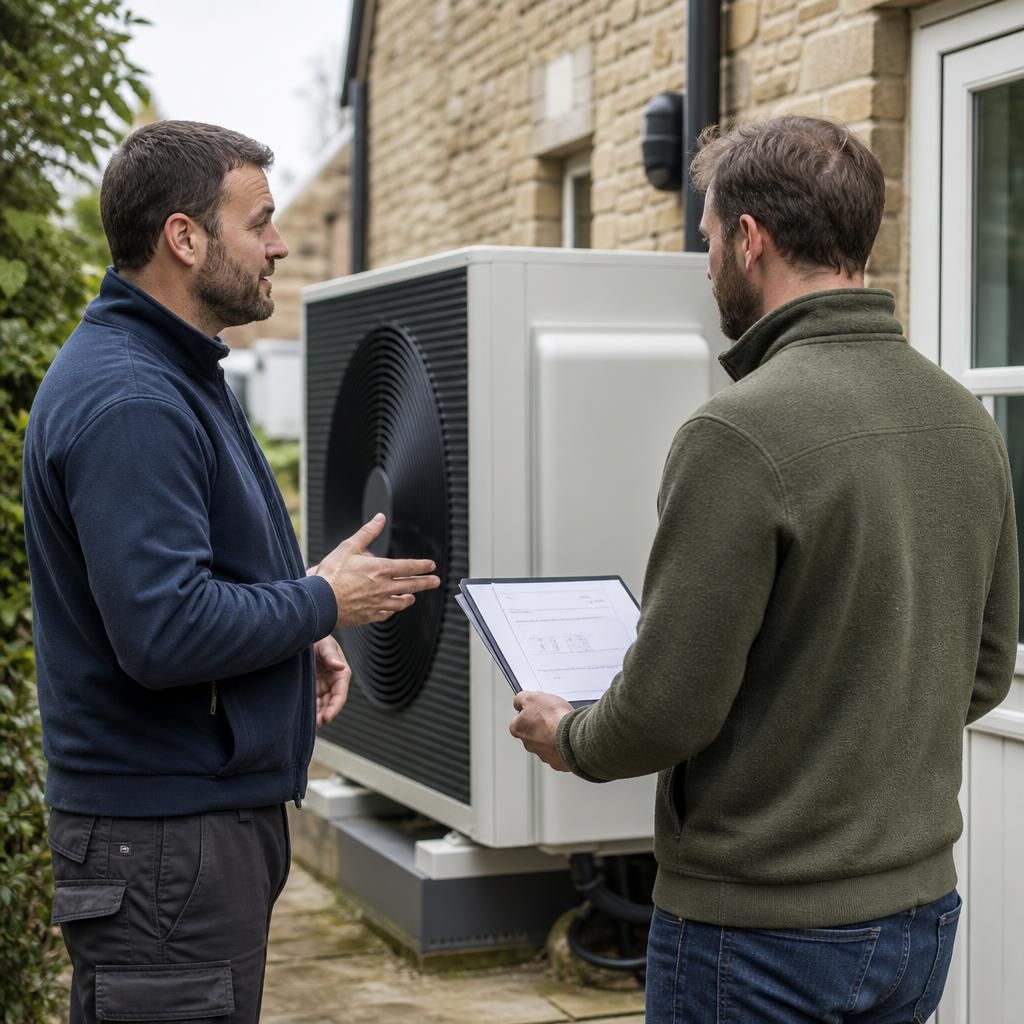
If the outdoor unit sits near a bedroom window or a neighbouring boundary, the quotation should address noise at the proposed position. We assess the location, airflow and separation distances before fixing the layout, then explain any screening, acoustic treatment or relocation that the design requires. This gives you a practical answer about where the unit will go, rather than leaving an important decision until installation day.