
How much does it cost to install an electric car charger at home?
Home electric car charger installation cost depends on the charger, cable route and whether your consumer unit needs upgrading. We assess the property first, then provide a written quotation covering the equipment, installation and any electrical work required.
There is no single price for a home electric car charger installation. The total depends on the charger you choose, the distance to the consumer unit, the condition of the electrical installation and any work needed to run the cable safely.
A straightforward installation may involve mounting the charger close to the consumer unit and routing the cable through accessible spaces. A more involved installation may need external cable runs, drilling through walls, trenching across a driveway, consumer unit work or an upgrade to the incoming electrical supply. These differences can change the cost more than the charger itself.
The main parts of the cost are:
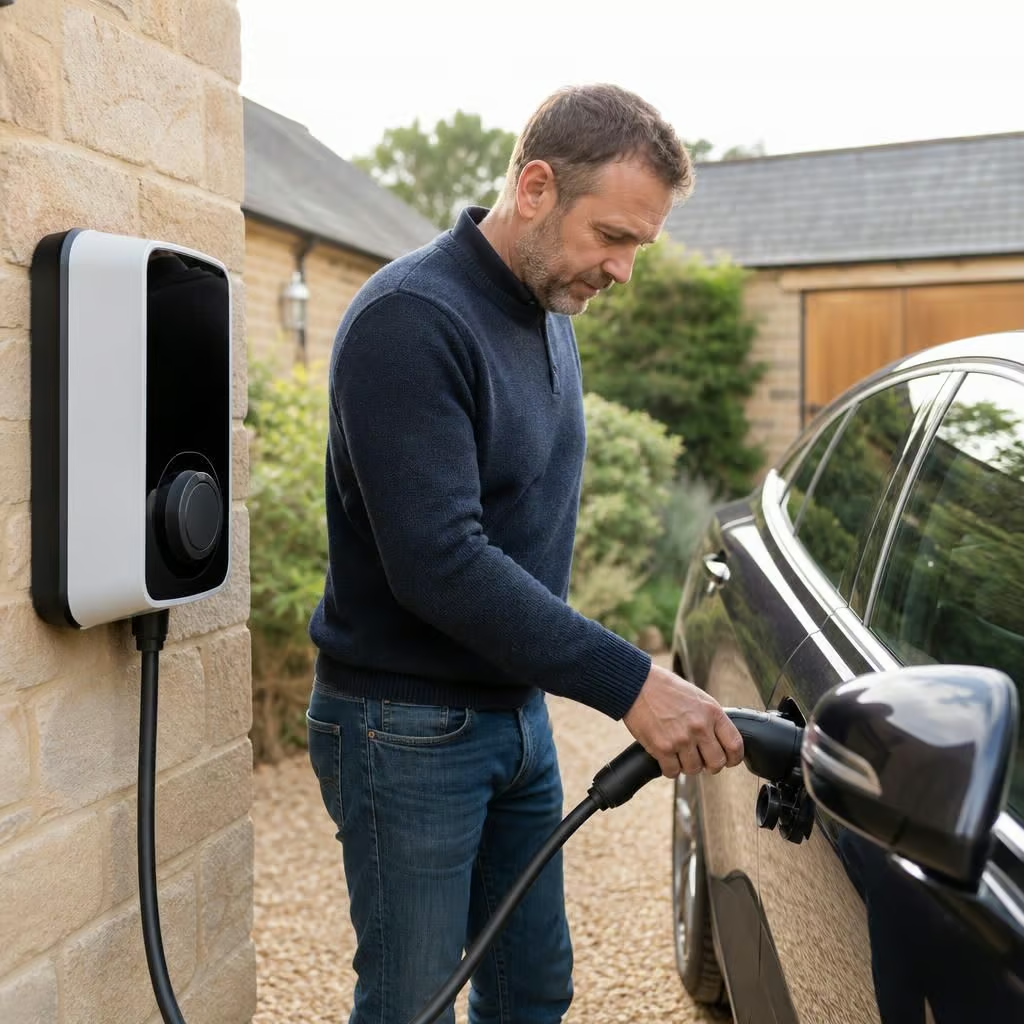
- The charge point: tethered chargers include a permanently attached charging lead, while untethered models use a separate cable. Features such as scheduled charging, solar integration, app control and load management can also affect the price.
- The cable route: A short internal route is usually simpler than a long route around the outside of the house. We may need to protect the cable, pass it through walls or bury it beneath a driveway.
- Electrical protection: The installation needs the correct protective devices and earthing arrangements. The existing consumer unit may need additional equipment or modification before the charger can be connected.
- Supply capacity: Your home may already have enough capacity, but we check this rather than assume it. Where several high-demand appliances operate together, load management may be appropriate. In some cases, the electricity supply itself may need an upgrade.
- Making good: The quotation should make clear whether it includes sealing wall penetrations, securing external cables and restoring any surfaces disturbed during the work.
We assess the proposed charger position, the consumer unit, the cable route and the available supply before pricing the work. That matters in older houses, where the wiring may have been extended over several decades, and in rural properties where the supply arrangement and distance between buildings can differ from a modern estate home.
A written quotation should show what you are paying for. Ours sets out the charger, installation work, cable route, protective equipment and any recommended electrical upgrades separately. If the survey finds an issue that changes the price, we explain it before work starts rather than adding an unexpected charge later.
The charger does not always need to be installed on the same wall as the parking space. We can discuss positions that keep the lead accessible without leaving it across a walkway or vehicle route. If the parking area is detached from the house, the cable may need extra protection or underground ducting. That is one reason a site assessment is more useful than a price based only on a photograph.
Your existing electrical installation may also affect the final cost. We check the consumer unit, bonding, earthing and the condition of relevant wiring. If the board cannot safely accommodate the charger, we explain whether a limited upgrade is suitable or whether wider remedial work is needed. Electrical work is carried out by our NICEIC-registered team, with the appropriate certification provided for the completed installation.
Load management can avoid unnecessary supply work in some homes. It monitors demand from appliances such as an electric shower, cooker, heat pump or immersion heater and adjusts the charging load when required. It is not automatically needed, and we only recommend it where the property and charging pattern make it useful.
Grants and other support schemes can affect the amount you pay, but eligibility and terms change. They may depend on the property, the way it is occupied, the charger and the applicant. We can discuss the current position during the quotation process rather than assume that a scheme applies to every homeowner.
There may also be a difference between the cost of installing a charger and the cost of using it. Your electricity tariff, charging schedule, vehicle battery size and charging frequency determine the running cost. A charger with timed charging can help you use the tariff and schedule that suit your household, but it does not by itself reduce the electricity unit price.
If you have solar panels, the charger may be able to use surplus generation, depending on the equipment already installed and the chosen charging system. We check compatibility before including that function. Solar charging can be useful, but it should be assessed alongside your normal driving and charging needs rather than treated as an assumed saving.
The installation process normally follows these steps:
- We discuss the car, preferred charger position and how you expect to charge.
- We inspect the electrical supply, consumer unit and proposed cable route.
- We identify any access, drilling, trenching or making-good requirements.
- We provide a written quotation with the equipment and electrical work explained.
- After approval, our electricians install, test and certify the charger and associated work.
The installation may take longer or cost more if access is restricted, the cable must cross a driveway, the consumer unit needs work or the supply requires attention. We explain those points in advance so you can compare quotations on the same basis.
When comparing prices, check whether each quotation includes the same charger specification, cable length, protective devices, testing, certification and remedial work. A lower headline price may exclude the electrical upgrades or surface work that another quotation has included. The useful figure is the total for a safe, compliant installation at your property.
A higher-powered charger isn’t automatically the better choice. If the car is parked at home for several hours, a standard unit may meet your charging needs without paying for capacity you rarely use. We consider the vehicle, driving pattern and available electrical supply before recommending the specification.
That keeps the quotation focused on what the household will use, rather than adding features or charging capacity without a clear reason. If your needs change later, we can also consider how solar generation, battery storage or a second vehicle might affect the choice.