
How long does commercial EV charging station installation take?
Commercial EV charging station installation can range from a straightforward electrical installation to a longer project involving several charge points, supply upgrades or groundworks. We establish the programme through a site survey, then allow for any approvals, equipment lead times, installation, testing and handover paperwork.
Commercial EV charging station installation can take anything from a single planned visit to a longer project with several stages. The deciding factors are the available electrical capacity, the number and type of charge points, cable routes, groundworks and any approval needed from the electricity network operator.
A small installation is usually the quickest. If the existing supply can support the chargers, the parking bays are close to the electrical intake and the cable route is straightforward, we can complete the physical installation in one planned visit. We still need to test each charge point, configure any network functions and provide the handover paperwork before the system is ready for use.
A larger site takes longer because the work becomes a construction project as well as an electrical installation. Multiple bays may need trenching, ducting, new distribution equipment, protective barriers, signage and reinstatement of paving or tarmac. A site with several charge points may also need load management so simultaneous charging does not exceed the building’s supply capacity.
The main stages are:
- Site survey: we inspect the incoming supply, distribution boards, earthing, parking layout and proposed cable routes. We also consider how vehicles will use the bays and where equipment can be positioned safely.
- Electrical design: we calculate the expected demand and decide whether the existing installation can support it. This may involve a new circuit, distribution board, protective equipment, metering arrangement or load-management system.
- Permissions and approvals: if the building’s supply needs an upgrade, we submit the required information to the electricity network operator. Their assessment and connection work sit outside the physical installation and can extend the overall programme.
- Groundworks and preparation: where cables cross a car park, we arrange the required excavation, ducting and surface reinstatement. This stage is not needed when suitable routes already exist.
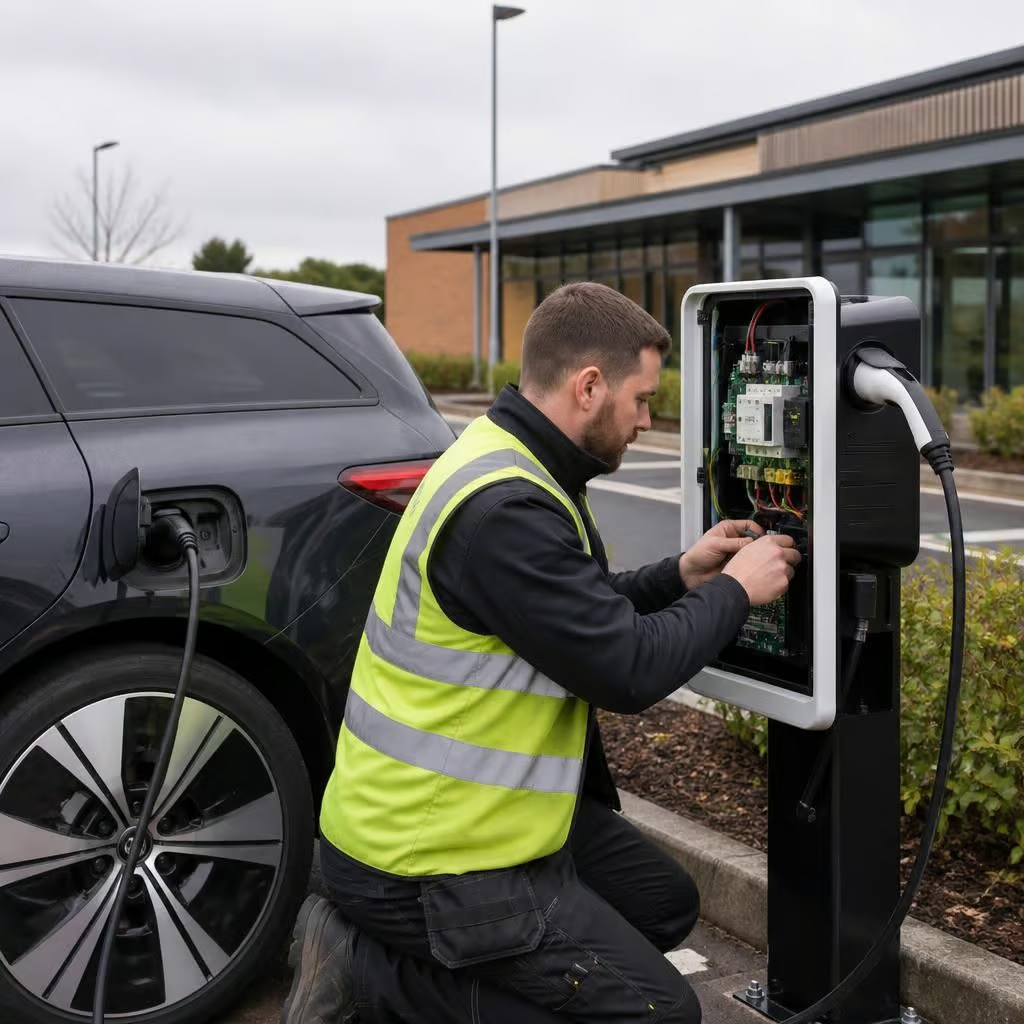
- Charger installation: we install the charge points, cable protection, isolation equipment and any associated distribution equipment. The work may be completed in stages where the site needs to remain operational.
- Testing and commissioning: we test the electrical protection, charging function and communications. If the system includes user access controls, payment facilities or remote monitoring, we configure and check those features before handover.
Your building’s electrical capacity is often the first point to settle. A charger can be physically close to a distribution board but still require a supply upgrade if the site’s existing demand leaves little spare capacity. We check the maximum demand rather than assuming that a nearby board can support additional charging.
The number of vehicles matters too. A single charge point has a different impact from a group of chargers serving staff, visitors, tenants or a commercial fleet. We can assess whether chargers need to operate at full output simultaneously or whether managed charging would meet the site’s needs without an unnecessary supply upgrade.
Ground conditions can change the programme considerably. A cable route through a plant room may be relatively simple, while a route beneath a public access area, concrete slab or landscaped area needs more preparation. We identify these constraints during the survey so the quotation separates electrical work from civil work and shows what the project involves.
Occupied premises need additional planning. Your business may need parking bays kept available, pedestrian routes protected and noisy work limited to agreed parts of the project. We can plan the installation around the site’s operation, but restricted access or phased working can lengthen the programme.
Networked chargers also need a reliable communications route. We check the available mobile signal, wired connection or wireless network and confirm how users will authenticate and pay, if those functions are required. Poor connectivity does not always prevent installation, but it needs resolving before the system can operate as intended.
At handover, we provide the test results and relevant installation documentation, explain the controls and show the responsible person how to use the system. For landlords, agents and facilities teams, clear paperwork matters as much as the equipment because it records what was installed and helps with future maintenance or compliance checks.
We provide the likely programme after the survey, once the supply, charger layout and access requirements are known. A written quotation sets out the work before it starts, including any electrical upgrades or groundworks identified during the design.
Our commercial EV charging installations are carried out by NICEIC- and ECA-registered electricians. That means the electrical work is assessed against the relevant standards, with testing completed as part of the installation rather than left as an assumption.
Commercial sites often need a planned electrical shutdown before we connect new equipment. We identify that requirement during the design and agree it with the responsible person before the installation date. This prevents the work from being held up because a distribution board cannot be isolated safely while the building is occupied.
We also confirm who will provide access to plant rooms, car parks and locked areas. If several people control different parts of the site, agreeing those arrangements in advance helps the installation follow the planned sequence. The result is a clearer programme and fewer interruptions for staff, tenants or visitors.