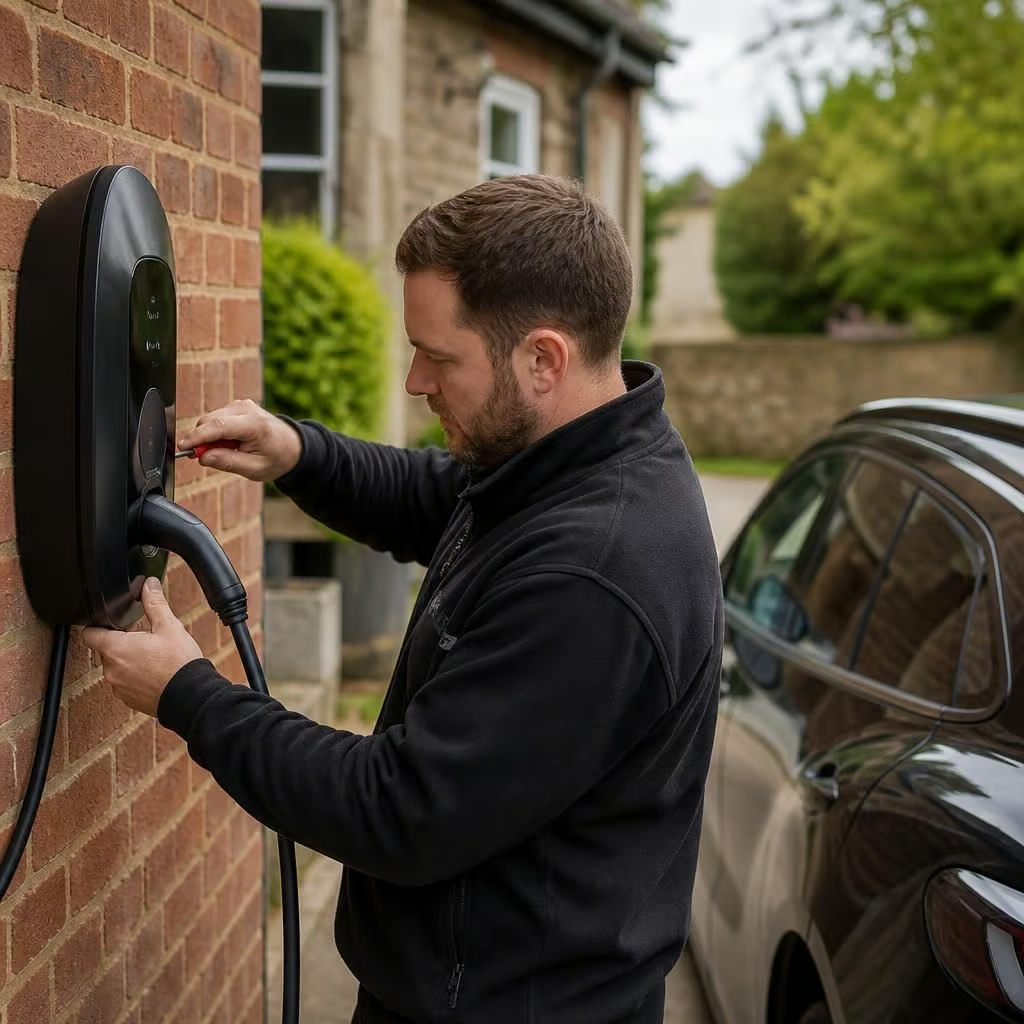
How much preparation does an EV charging station installation require?
An EV charging station installation usually needs a suitable parking position, a clear cable route and an electrical survey of the property. We check the supply, consumer unit, earthing and charger location before quoting, so any required electrical work is identified in advance.
Most EV charging station installations need only practical preparation rather than major building work. You’ll need to decide how you’ll park, provide access to the relevant electrical equipment and arrange any permissions that apply to the property. We then use the survey to confirm the installation method and identify anything that needs changing before work begins.
Start with how you use the parking space
The best charger position depends on where the car normally sits, not simply where the nearest wall socket is. Think about whether you park nose-in, reverse onto the drive or change spaces between vehicles. The cable should reach the charging socket without crossing a main walking route or creating a trip hazard.
If more than one vehicle may charge at home, tell us before we prepare the quotation. That can affect the charger specification, cable route and the way available electrical capacity is managed. It’s easier to account for this at the design stage than to adapt the installation later.
Check who needs to give permission
Homeowners can usually make the installation decision themselves, but other arrangements may need approval first. Tenants should ask the landlord. Leaseholders may need consent from the freeholder or managing agent, particularly where the cable crosses a communal area or serves a parking space away from the property.
Listed buildings and properties in conservation areas can have additional planning considerations. The charger itself, the cable route and any external equipment may need to meet conditions set by the local authority or property owner. We can discuss the proposed position, but the owner remains responsible for obtaining permissions that apply to the property.
Make the electrical information available
Our engineer will need access to the consumer unit, meter position and the proposed route through the property. Clear the area around these points before the survey if it is stored behind boxes, furniture or equipment. If the consumer unit is in a locked cupboard or outbuilding, arrange access for the appointment.
Useful information includes the age of the electrical installation, any previous electrical work and details of solar panels, batteries, electric heating or other high-load equipment. These systems can affect how the charger operates alongside the rest of the property. Tell us about any known faults or nuisance tripping as well, rather than treating them as separate from the charging installation.
Be ready for possible remedial work
An older installation may need work before it can safely supply an EV charger. This could involve improving the consumer unit, correcting an earthing issue, replacing unsuitable cable or making changes to the bonding. We’ll explain the reason for any remedial work instead of adding it without context.
A charger is a dedicated high-load appliance, so we won’t treat an existing outdoor socket as a substitute for the correct circuit. If the installation needs an upgrade, the quotation will set out what that involves and how it affects the work. You can then decide whether to proceed with the full installation or deal with the electrical issue separately.
Consider the cable route before the appointment
Some routes pass through a wall and run directly to the parking space. Others need cable to travel around a building, through a garage or along an external wall. The route may need surface-mounted containment, a concealed run or a carefully planned entry point.
Tell us if you want the cable hidden, if the wall has architectural features that must be preserved or if digging across a path or driveway would be unacceptable. We can then assess the practical options. Drilling, chasing walls, lifting paving or installing external containment can create more disruption than a straightforward wall-mounted route.
For a detached garage or parking area away from the house, the preparation may include checking how power can reach that building. A separate structure can require a longer cable route, additional protection or work to the supply between the buildings. We’ll identify that during the design rather than assuming the house circuit can simply be extended.
Choose the charger features you’ll actually use
Decide whether you need app control, scheduled charging, tariff-based charging or integration with solar generation. A basic charging setup may suit a driver who plugs in whenever the car is parked. Someone with solar panels may want a charger that can coordinate with generation and household demand.
Smart functions may depend on a reliable internet connection at the charger location. Check whether the home network reaches the proposed position, especially if the charger will sit at the end of a long drive or on a detached garage. We can discuss the electrical installation, but improvements to the home network may need a separate arrangement.
Prepare for the installation day
Keep the parking space clear and make sure the vehicle can be moved if the engineer needs access around the charger position. Remove fragile items from areas where cable may pass through walls or cupboards. If the route crosses a garage or utility space, clear enough room for safe working.
Some installations involve drilling, cable fixing or short periods without power while connections are tested. We’ll explain the planned work and leave the area tidy afterwards. You’ll receive the relevant installation paperwork and test information when the work is complete, so keep it with the property’s electrical records.
Our NICEIC- and ECA-recognised electrical work is tested before the charger is put into use. That gives you a clear record of what was installed, which protective devices were used and what checks were completed. Good preparation helps us produce an accurate design, avoid preventable changes and leave you with a charging point that fits the way you use the property.
Have the car details ready before choosing the charger. Your vehicle may accept less AC power than the charger can provide, so a higher-rated unit won’t always reduce charging time. We use the car’s charging specification, along with how far you drive each day, to discuss a suitable setup rather than adding capacity you won’t use.
If you’re replacing the car soon, tell us that at the survey. A different vehicle may have different charging requirements, and planning for that change can avoid altering the installation later. This is usually a matter of making the right decisions before the quotation, not preparing the property for major construction.