
Can my existing electrical supply support an EV charger?
Often, yes, but an electrician must check the incoming supply, consumer unit and the other electrical loads before confirming it. We assess the available capacity and specify load management or an electrical upgrade if the existing supply cannot safely support the EV charger.
Most homes can support an EV charger, but the charger must be matched to the incoming supply and the demands already placed on it. A charger that looks suitable on paper may not be safe to add without checking the main fuse, consumer unit, earthing arrangement and cable route.
Your electricity supply has a limit. The limit is set by the incoming service and the equipment that connects the property to the distribution network. Your usual electricity use may be modest, but the charger adds a substantial continuous load while the vehicle is charging. An electric cooker, immersion heater, electric heating, workshop equipment, hot tub or heat pump can all affect the assessment.
We start by looking at the service head, main fuse, meter position and incoming cables. We then review the consumer unit and the circuits that are likely to operate at the same time as the charger. This shows whether the existing supply can accommodate the proposed equipment, rather than relying on the age of the house or the size of the existing consumer unit.
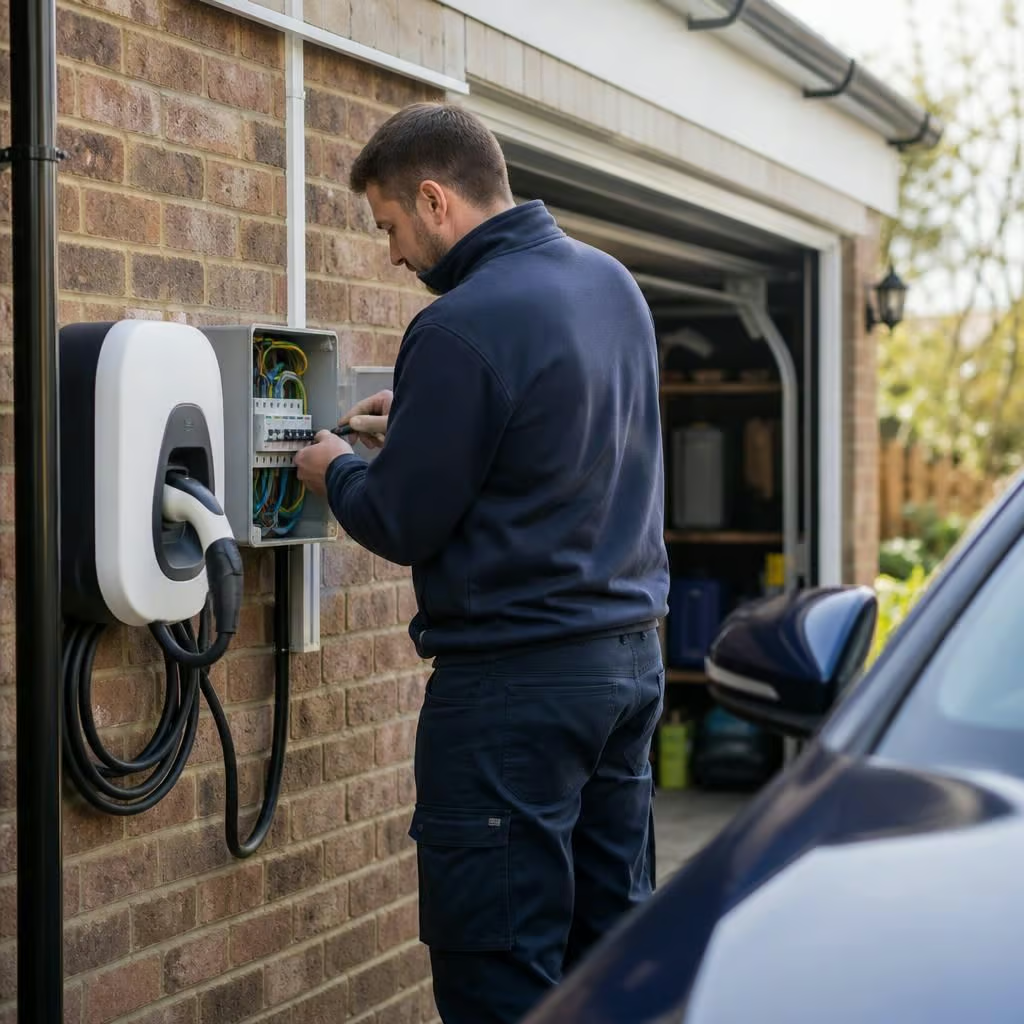
A suitable supply is only part of the installation. The charger needs its own correctly rated circuit from the consumer unit, with the required protective devices and suitable cable. We check the distance to the proposed parking space, the route through the house or outside, and where the cable will need mechanical protection. A long route, outbuilding or detached garage can affect the cable size and installation method.
Older properties need a closer look because the consumer unit may not have the protection required for a modern EV charger. Some homes also have older wiring, limited space in the board or an earthing arrangement that needs further assessment. If the existing equipment cannot support the charger safely, we explain what needs changing before installation goes ahead.
Several charging loads may be managed without upgrading the incoming supply. A load management system can reduce the charger’s output when other high-demand appliances are running. It can then allow more charging capacity when the rest of the home’s demand falls. This can be useful where the supply is adequate for normal household use but has limited spare capacity for every appliance operating together.
Load management is not a way to ignore an inadequate supply. We first confirm that the incoming service, protective devices and wiring are suitable. The control system must also be installed and set up correctly, so the charger responds to the home’s demand rather than allowing the supply to be overloaded.
A supply upgrade may be needed in some properties. If the existing service cannot support the additional load, we identify the restriction and explain the available route. This may involve work to the service or main fuse by the local distribution network operator, rather than simply fitting a larger charger or changing a circuit breaker. The network operator decides what work is required and provides its own costs and timescales.
We do not recommend increasing a protective device to make a charger fit. That can leave the cable or supply inadequately protected. If an upgrade is not practical, a lower-demand charger or managed charging arrangement may be more appropriate for the property.
The survey gives you a clear installation plan. We confirm:
- Whether the incoming electrical supply has enough capacity for the proposed charger.
- Whether the consumer unit can accept the required protective equipment.
- Whether the earthing and bonding arrangements need attention.
- What cable route and cable size the installation requires.
- Whether load management would be suitable.
- Whether the distribution network operator needs to be involved.
- Which parts of the work are included before we provide the quotation.
Where other electrical work is necessary, we explain why it matters to the charger installation. That might mean improving the consumer unit, correcting an existing wiring issue or preparing the route to a detached garage. You can then decide whether to proceed with the complete installation or deal with the preparatory work separately.
Our NICEIC and ECA electrical work covers the assessment, circuit and protective equipment needed for the installation. The result is a charger connected to a supply that has been checked for its actual capacity, rather than one added on the assumption that every domestic property is the same.
If your home has electric heating, solar panels, battery storage or several high-load appliances, mention this when arranging an assessment. Those details help us consider how the charger will work alongside the rest of the property and whether managed charging should form part of the installation.
If you’re planning electric heating, a heat pump or a battery later, tell us during the EV charger assessment. We can consider those future demands before we agree the cable route and protective equipment.
That avoids treating the charger as an isolated addition when it will become part of a larger electrical system. We’ll explain which work is needed now and which improvements can wait until you’re ready for the next upgrade.