
Can smart EV charger controls use surplus solar power?
Yes. Smart EV charger controls can detect surplus electricity from your solar panels and adjust charging so more of that energy goes into your car instead of being drawn from the grid.
We check the solar generation, home energy setup and charger compatibility, then configure the controls around how you use electricity.
Solar-aware charging can use surplus generation, but it cannot guarantee that every charging session will be powered entirely by the panels. The result depends on household demand, battery settings, weather, the charger’s control features and the car’s charging behaviour.
When the panels produce more electricity than the house is using, a meter or current clamp identifies the direction of power flow. The control system can then increase charging from the available surplus. This helps use more of the electricity on site instead of exporting it to the grid.
What happens as household demand changes?
Your surplus can disappear when the kettle, oven, immersion heater or heat pump starts. The control system responds to that change rather than treating solar generation as a fixed supply. It can reduce the car’s charging rate, pause charging or allow some grid electricity, depending on the mode selected.
When the appliance switches off, available solar power can rise again. The charger then resumes or increases charging if the car and the control system support that adjustment. This prevents the system from repeatedly treating normal changes in household demand as faults.
Some systems offer different charging preferences. A solar-only setting waits for suitable surplus and may pause when generation falls. A solar-and-grid setting uses surplus where possible but draws additional electricity when you want the car to charge more consistently. A scheduled setting can charge at a chosen time, regardless of whether the panels are producing enough power.
Those choices matter in winter and during overcast weather. Solar generation can vary quickly, so a solar-only setting may leave the car with less charge than expected. We discuss how much flexibility you have before we set the controls. The right setting depends on when the car is needed, how far it normally travels and whether charging speed matters more than avoiding grid electricity.
How does a home battery affect solar charging?
If the property has battery storage, the control priorities need checking. The battery may be set to charge before the car, or the car may be given priority once household demand is met. A battery may also be holding energy for later use, so sending every available unit to the car is not always the intended result.
We check the battery, inverter and energy-monitoring arrangements before changing the charger controls. The aim is to avoid two systems competing for the same surplus or charging the car from the battery when that is not what the household expects.
What needs to work together?
The charger needs a reliable way to measure import and export at the property’s electrical supply. The solar inverter must provide compatible information, or an additional energy monitor may be needed. The charger, monitoring equipment and control platform also need a stable connection so that readings reach the control system.
Compatibility is not determined by the solar panel brand alone. We look at the inverter, battery, consumer unit, meter position, communications equipment and charger model as one installation. An older solar installation may need different monitoring equipment if it cannot share data directly with the charger.
We also check the electrical capacity available for the charger. Solar generation does not remove the need for suitable cabling, protective devices, earthing and isolation. If the existing consumer unit or supply arrangement needs work, we explain that before installation rather than treating it as an unexpected extra.
Can the car charge at a low solar output?
There is a practical limit to how finely charging can follow small changes in generation. The car and charger need to maintain a stable charging session, and some vehicles do not respond immediately to every change in available power. A solar-aware control may therefore wait until there is enough usable power, use grid electricity to maintain charging or pause for a defined period.
This is why the system should be judged by how it behaves over an ordinary day, not by whether the panels are producing power at one particular moment. We check the readings during commissioning and confirm which charging mode is active.
What happens if the internet connection fails?
Many smart controls use an online platform for monitoring and settings, but the charger still needs safe local electrical operation. If communication is interrupted, the system may pause smart charging, continue with a preset schedule or fall back to a basic charging mode. The exact behaviour depends on the equipment.
We explain the available manual override before handing the installation over. That means you can still make a practical charging decision if the app or solar readings are temporarily unavailable.
After installation, we test the energy monitoring, solar response, charging modes and isolation arrangements. We check that the system recognises import and export correctly, then show you how to select solar-only, combined or scheduled charging. Your written quotation sets out any required changes before work starts, so the controls are based on the actual equipment at the property.
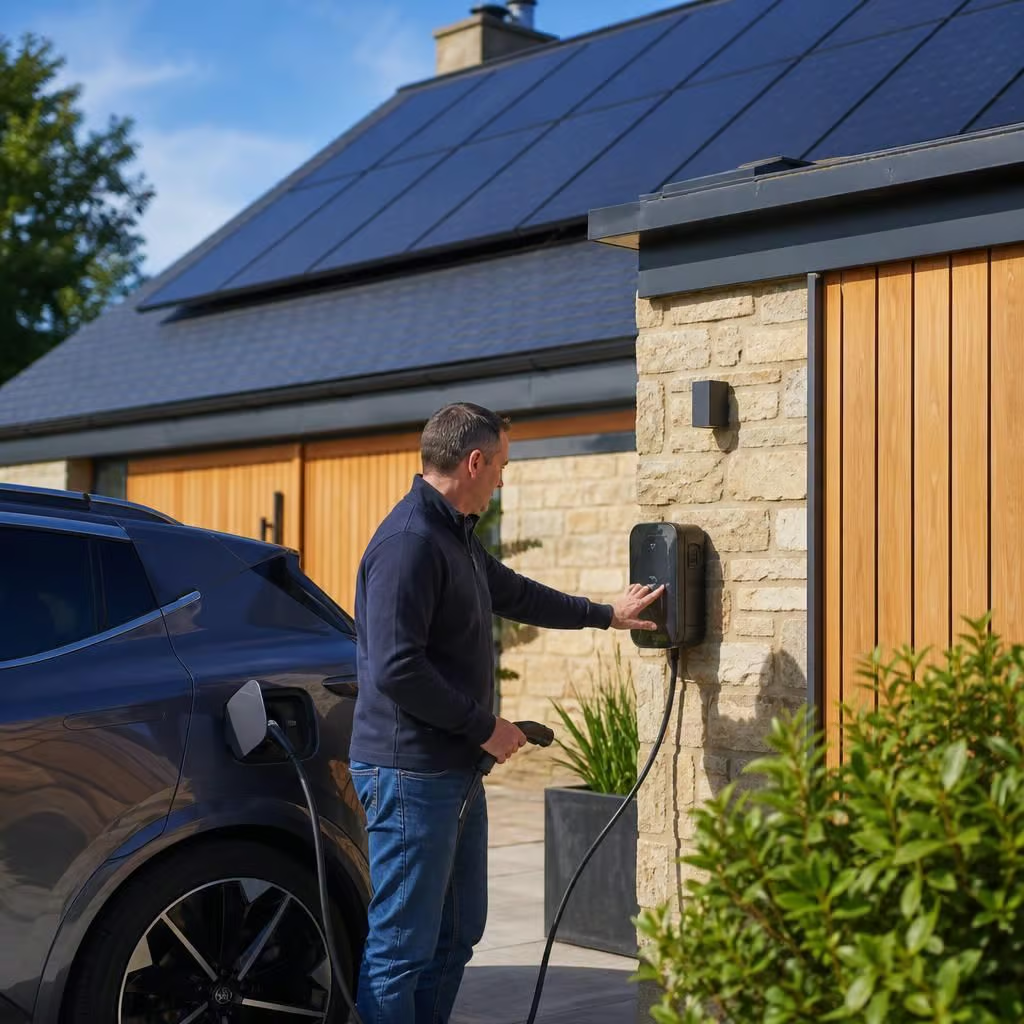
Smart controls can only direct electricity that is available. They do not increase solar generation or make the car charge faster than the charger and vehicle allow. A cloudy afternoon may therefore produce only a small amount of useful charging, even when the system is working correctly. We explain this during handover so the charging record makes sense when solar output is low.