
Should I choose a tethered or untethered EV charger?
Choose a tethered charger for the simplest everyday use, with its cable permanently attached and ready to plug in. An untethered charger keeps the cable separate, giving a tidier appearance and more flexibility if you change vehicles or need different cable lengths.
For most drivers with one regular car, a tethered charger is the simpler everyday choice. An untethered charger suits households that want to change cables between vehicles, store the cable indoors or keep the charger visually neater when it is not in use. The charging speed and smart features depend on the charger and the car, not on whether the cable is attached.
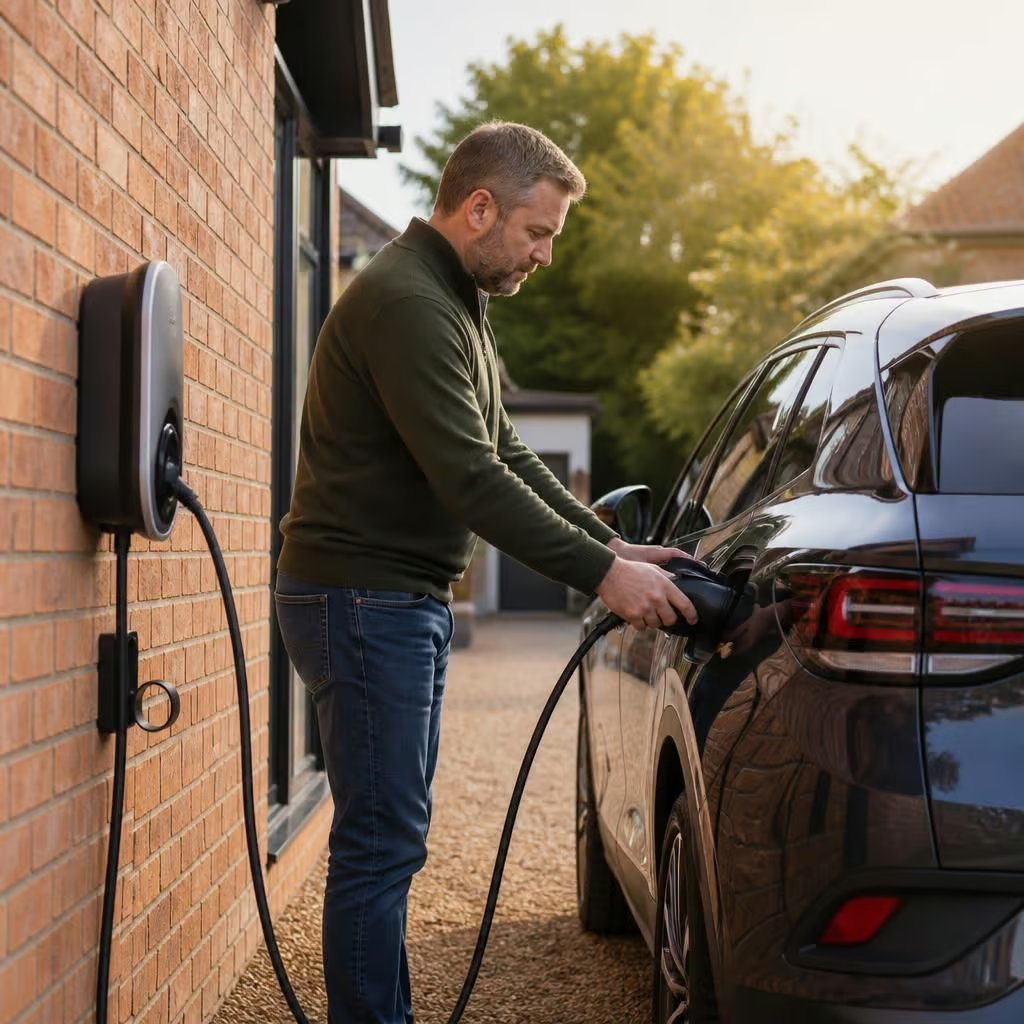
A tethered charger has a permanent cable fixed to the unit. You take the cable from its holder, plug it into the car and put it back when charging finishes. An untethered charger has a socket instead. You keep a separate charging cable and connect it to the charger and the car each time.
Choose tethered if convenience matters most. The cable is always ready at the charging point, so there is no need to fetch it from the boot or carry it between cars. This works well when one vehicle uses the charger most of the time and the parking space is close to the house.
- Fewer steps: the cable stays with the charger, rather than being stored elsewhere.
- No separate cable to buy for everyday use: the fixed cable forms part of the charging setup.
- Easy routine charging: you can plug in as soon as you park.
- Less flexibility: the cable length and connector are fixed, so you need to choose the position carefully.
- More equipment on the wall: the cable needs a holder or hook, particularly outside.
The fixed cable does not have to be left lying on the drive. We can plan its route and fit suitable storage so it stays off the ground. That reduces the chance of it being driven over, caught by a gate or left where someone could trip.
Choose untethered if flexibility matters more than the quickest connection. You can remove the cable when the charger is not being used and keep it in a dry, secure place. This can make sense where the charging point is visible from the road, where more than one vehicle uses it or where you want the wall unit to look less cluttered.
- Shared between vehicles: you can use another suitable cable if the cars have different connector arrangements.
- Easy to store: the cable can stay indoors or in the vehicle rather than outside.
- Less cable exposed: removing it can reduce exposure to weather, accidental damage and unauthorised use.
- More to remember: you must have the cable with you and connect both ends before charging.
- An extra purchase: the charger does not include a permanently attached lead, so the correct cable must be bought separately if you do not already have one.
An untethered charger is not automatically the better option for two cars. If both vehicles use the same suitable cable, sharing is straightforward. If they need different cables, you gain flexibility but must keep the right one available for each car. Check the vehicle connection before choosing the charger, rather than assuming that every cable will fit every model.
Think about where the charger will sit. A tethered unit works well beside a private driveway when the cable can reach the car without crossing a walkway. An untethered unit may be preferable on a front wall or exposed parking area because the cable can be put away after use. If the car sometimes parks in a different position, we can assess the cable route and charger position before installation.
Outdoor charging brings the same practical question for both types: how will the cable be kept safe and dry? A tethered cable needs a proper holder. An untethered cable needs suitable storage and should not be left permanently on wet ground. Neither arrangement removes the need for a safe installation and sensible cable management.
Do not choose between them based only on the charger’s appearance. The important questions are how often you charge, who uses the point, where the car parks and whether you are prepared to carry a cable. A tidy socket may be inconvenient if the cable lives in a distant garage. A fixed cable may be convenient at home but awkward if a second vehicle needs a different connection.
The type of cable also affects what happens if it becomes damaged. With a tethered charger, the attached lead is part of the unit and may need specialist replacement. With an untethered charger, you can replace the separate cable without replacing the wall-mounted charger, provided the replacement is suitable. We can discuss storage, cable length and future vehicle changes before recommending an arrangement.
The charger still needs to be matched to the electrical supply and the installation location. Your consumer unit, cable route, earthing arrangement, parking position and available capacity all affect the work. We check these points during the survey so the cable does not become an afterthought. We also explain where the unit will sit, how the lead will reach the car and what the finished installation will look like before work starts.
Electrical work for an EV charger should be carried out by a competent, registered installer. Our NICEIC and ECA-registered electricians assess the supply, install the protection and test the completed circuit. You receive written details of the work, with the tethered or untethered choice made around how you actually use the car.
In simple terms, select tethered for a fixed, grab-and-charge routine. Select untethered for a removable cable, shared use or a cleaner wall when charging is finished. If you are unsure, consider where the cable will live on an ordinary day, not just where the charger will be mounted.
Consider how long you expect to keep the car. A tethered charger ties the fixed lead to the vehicle connection you use today. If a future car uses a different connector, that lead may no longer fit.
An untethered charger gives you the option to replace the separate cable instead, provided the new cable suits both the vehicle and the charger. That flexibility can matter if you expect to change cars, share the point with another driver or use different vehicles over time.
If the same car will use the charger for several years, a tethered lead may be the more convenient choice. We can check the present vehicle connection, likely future use and cable storage before you decide.