
Will installing a Zappi or Ohme charger require changes inside the house?
Not necessarily: many installations need only the charger, cable and an appropriate protective device, with no changes to indoor rooms. We’ll check the consumer unit and cable route first; if either needs upgrading, the work may involve a new RCBO, isolator or a small consumer-unit alteration inside the house.
Most indoor work is limited to the electrical intake area, the consumer unit and the route taken by the charger cable. A Zappi or Ohme installation does not normally require changes throughout the house. We identify the specific work during the survey, then show it clearly in the quotation before anything starts.
Your charger needs its own suitably rated circuit rather than sharing an ordinary socket circuit. We usually take this from the consumer unit and install the required protective equipment there. The exact arrangement depends on the board, the earthing system and the charger model. We do not assume that an older consumer unit is suitable simply because it still powers the rest of the property.
An older house may need more than a connection at the board. We check the main earthing and bonding, the condition of the consumer unit and the available space for the new circuit. If an improvement is needed, we explain why it matters for safe EV charging. You can then decide whether the charger installation should proceed alongside that work.
The charger’s smart functions can also require a small indoor component. A Zappi or Ohme may use a current sensor, often called a CT clamp, to measure electricity flowing into the house. This helps the charger adjust its demand and can allow it to work alongside solar generation or other significant electrical loads. We position the sensor near the meter or consumer unit, where it can read the supply accurately.
That sensor does not usually mean installing a new control panel inside the house. It is a compact part of the charging system, but it needs a suitable cable route and enough access around the meter position. If the meter cupboard is tightly packed, we will explain the practical options rather than forcing extra equipment into an unsuitable space.
Your home’s internet connection can affect the smart features, but it does not usually require new fixed wiring inside the property. The charger may need Wi-Fi or its own mobile connection to use an app, receive software updates or respond to a tariff schedule. We check the proposed charger position and discuss connectivity if the signal is weak there. A charging cable can still supply the car even when an app feature is unavailable, although some smart functions may not operate as intended.
The route between the consumer unit and the outside wall determines how much indoor disruption you will see. A short route through a utility room, garage or cupboard may need little more than local access. A charger on the opposite side of the house may require cable through walls, under floors or through a loft space. We choose a route that protects the cable and keeps visible internal work to a sensible minimum.
Listed buildings, solid-wall homes and barn conversions can make that route less straightforward. Thick walls, exposed beams, finished floors and restricted meter cupboards all affect the installation method. We take these features into account during the survey, so the quotation reflects the actual access rather than an assumed standard layout.
Some indoor changes are not caused by the charger itself. For example, a damaged board, poor earthing or an outdated intake arrangement may need attention before a new high-load circuit can be connected. We separate those findings from the charger price and explain which work is essential, which is recommended and what would happen if you chose not to proceed with an optional improvement.
We also consider other equipment that may run at the same time, such as an electric cooker, immersion heater, heat pump, solar inverter or battery. The charger may need load management so the property does not draw more electricity than the supply can safely provide. That can reduce the need for a larger supply upgrade, but we confirm the arrangement from the site conditions rather than promising it in advance.
On installation day, we need access to the consumer unit, meter position and any internal route agreed in the quotation. We protect working areas while drilling or lifting access panels, keep cable runs secure and leave the indoor areas tidy. Any changes to the electrical installation are tested before the charger is put into use, and we provide the relevant electrical paperwork when the work is complete.
As NICEIC and ECA electrical contractors, we design the indoor part of the installation around the existing property rather than treating every home the same. The result may be a small addition beside the consumer unit, or it may include wider electrical work where the house needs it. The survey and written quotation will set out that difference before you commit to the installation.
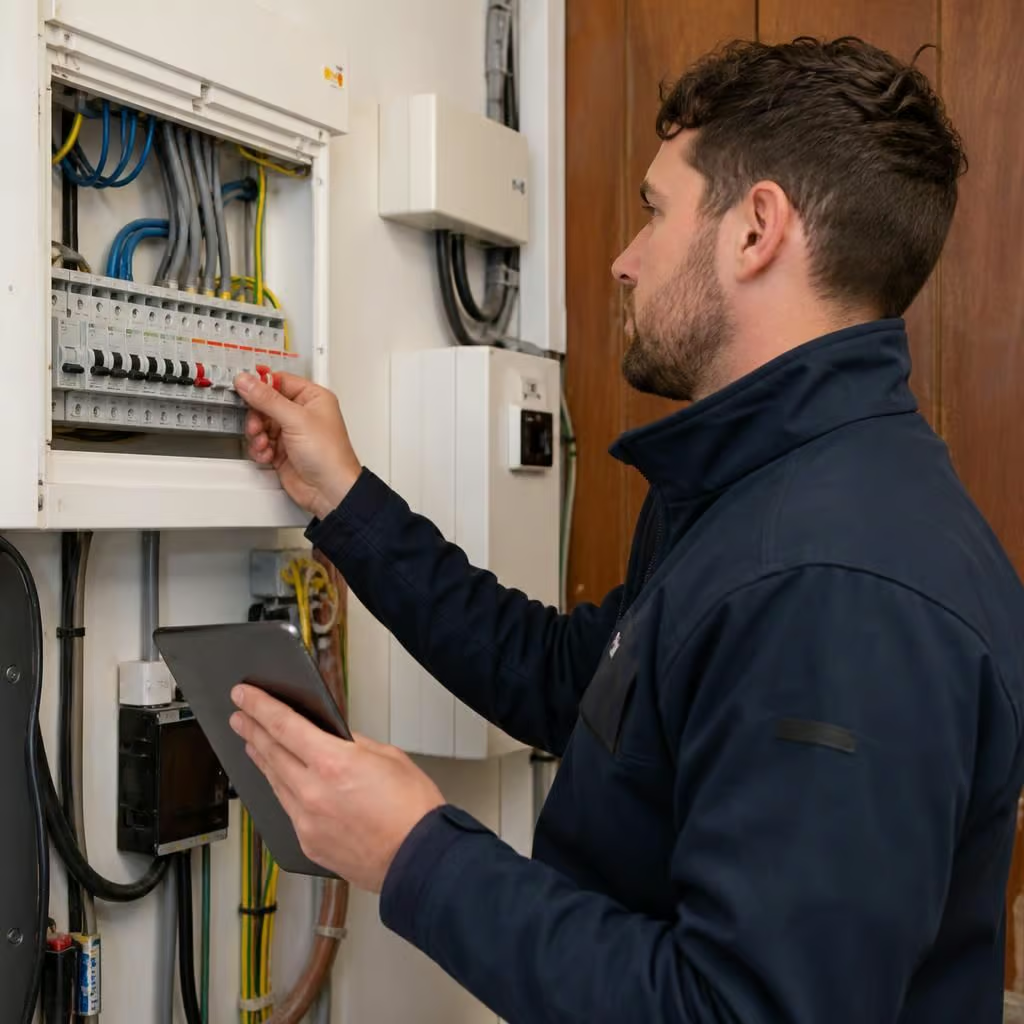
The main charger stays outside, so indoor work is usually limited to the electrical point where the new circuit connects. A change inside the house does not automatically mean a full rewire or alterations to other rooms.
During the survey, we distinguish charger-related work from existing defects in the electrical installation. This gives you a clear choice about any additional remedial work, without bundling unrelated improvements into the installation.