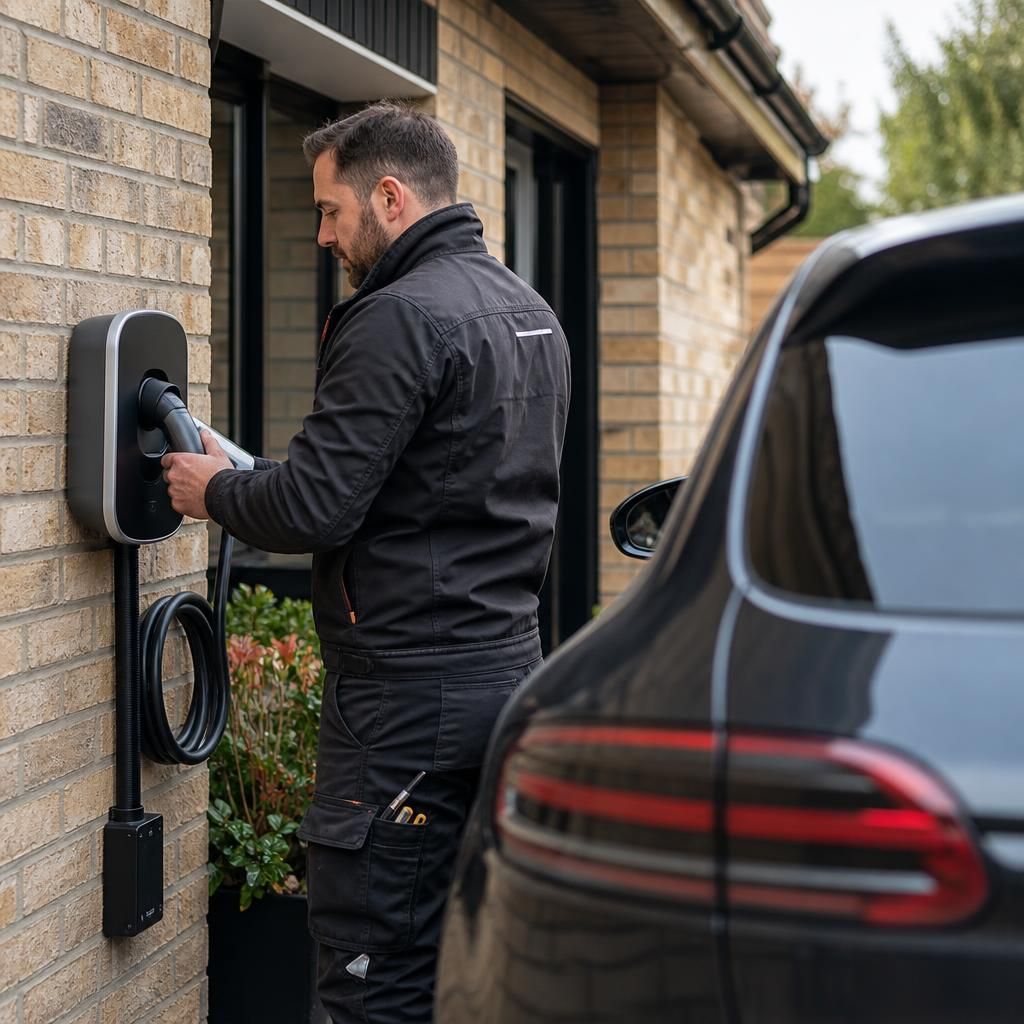
What does an EV charger installation cost?
EV charger installation cost depends on the charger, cable route, consumer unit and any electrical work needed at the property. We assess those factors before providing a written quotation, with commercial installations also priced around the number of charge points and site requirements.
There is no single EV charger installation cost that applies to every home. A straightforward installation costs less than one that needs a long cable route, electrical upgrades or groundworks. The charger itself is only part of the total, so a proper quotation must account for the property as well as the unit you choose.
For a typical home installation, the main cost areas are:
- The charger: basic units cost less than models with features such as solar integration, scheduled charging, energy monitoring or dynamic load management.
- The cable route: a short route through an attached garage or directly across an external wall usually involves less work than a route around the house or beneath a driveway.
- The electrical connection: we may need to extend the existing circuit, fit protective equipment or make changes at the consumer unit.
- Groundworks: trenching beneath paving, tarmac or a garden adds labour and reinstatement work.
- Testing and certification: the finished installation needs electrical testing and the correct paperwork.
A charger mounted close to the consumer unit, with a clear cable route and no excavation, is usually the simplest type of installation. Costs rise when the charge point sits away from the house, when the cable must be concealed, or when the existing electrical installation needs attention first.
The property’s electrical capacity matters. An older consumer unit may not have the required protection for an EV charge point. A consumer unit upgrade can therefore form part of the work. If the incoming supply or existing circuits cannot support the expected demand, we may recommend load management rather than an unnecessarily large supply upgrade.
Load management reduces the risk of several high-demand appliances operating at full power together. For example, the charger can reduce its output while an electric cooker, immersion heater or heat pump is drawing power. That can affect the installation cost, but it may avoid more disruptive electrical work. We assess this from the actual equipment in the property rather than assuming every home needs the same arrangement.
The distance between the charger and the consumer unit is another important factor. A cable inside a garage may be easy to route. A detached garage, outbuilding or parking space at the far side of the property can require armoured cable, additional protection and excavation. Listed buildings, solid-wall houses and older properties may also need a more careful route to avoid unnecessary damage to the building.
Groundworks are often treated separately because the surface and route make a significant difference. A short trench through soil is different from cutting and repairing a paved drive. We explain this part of the price before work starts, so the quotation shows whether excavation, ducting and making good are included.
Charger features can change the price as well as the way the charger is used. A tethered unit includes a permanently attached cable, which is convenient for regular charging. An untethered unit usually leaves a cleaner appearance and lets you use a cable suited to different vehicles. Smart charging, tariff scheduling, solar diversion and consumption monitoring may be useful, but they are not necessary for every driver.
If the home has solar panels, the charger may need additional controls to use surplus generation. That can make sense where the aim is to charge from the property’s own electricity, but the right arrangement depends on the existing inverter, battery and household demand. We check how the equipment works together rather than adding features that the installation cannot use properly.
Commercial EV charger installation has a wider cost range. A landlord, workplace or business may need several charge points, longer cable runs, protection across more than one distribution board, parking-bay markings or groundworks across a larger site. The available electrical supply and the number of vehicles charging at once become central to the design.
Commercial pricing may also include access controls, usage records and arrangements for assigning electricity costs. A small installation serving one vehicle is assessed differently from a site where several users need to charge during the same period. We set out the equipment, electrical work, testing and any civil work separately so the total is easier to compare.
Some grant schemes can reduce the amount you pay, but eligibility and funding rules change. They may depend on the type of property, who owns it, whether it is rented, and whether the installation meets the scheme’s technical requirements. Check the current conditions before treating a grant as part of your budget. We can explain which information is needed for an application where a relevant scheme applies, but no grant should be assumed until eligibility is confirmed.
For electrical work, our NICEIC and ECA registration means the installation is carried out within recognised electrical safety standards. We test the charger and its circuit before it is handed over, then provide the relevant certification and explain how to use the controls.
A useful quotation should tell you more than the charger model and a single total. It should identify the proposed mounting position, cable route, protective equipment, consumer-unit work, load management, groundworks, testing and any exclusions. It should also show whether the quoted charger includes the cable, app functions and other features you expect to use.
We inspect these points before pricing the work and provide the quotation in writing. That gives you a clear basis for comparing installations and deciding whether a simple charger, extra electrical work or a more advanced control system is appropriate for the property.
The lowest-cost mounting position isn’t always the easiest place to use. If the cable must cross a path, reach around a parked car or pass through a doorway, charging can become awkward.
We look at where the vehicle normally parks and how the cable will reach it. If the preferred position adds work, we explain the extra cost and any practical alternatives before you choose.