
How long does EV charger installation take?
A straightforward home EV charger installation is usually completed in one visit. It can take longer if the cable route is lengthy, the consumer unit needs work, or the property requires additional electrical checks or permissions.
There is no single installation time for every property. The charger itself is usually the simplest part; the time depends on the cable route, the condition of the existing electrical installation and any work needed to connect it safely.
A pre-installation assessment gives us the information needed to set a realistic timescale. We look at:
- The charger position: a unit on an outside wall near the consumer unit usually needs less cable work than one on a detached garage or outbuilding.
- The cable route: internal runs, loft spaces, solid walls, paving and underground routes all affect the work involved. We agree how visible the cable will be and how it will be protected.
- The consumer unit: we check whether it has enough capacity and suitable protection for an EV charge point. An older board may need an upgrade before the charger can be connected.
- The earthing and bonding: the incoming supply and existing protective arrangements must be suitable. If they are not, remedial electrical work can add to the installation.
- The property’s electrical demand: we consider other large loads, such as electric heating, an immersion heater, solar panels or battery storage. Load management may help avoid unnecessary supply upgrades.
- Access and building work: difficult drilling, long cable routes, trenching or repairs to existing wiring take longer than a straightforward wall-mounted installation.
For that reason, we do not give a fixed installation time from the charger model alone. Our assessment confirms the equipment needed, the route we will take and the work required before we start. You receive a written quotation and an expected timescale based on the actual property.
On installation day, we first protect the work area and isolate the relevant circuits. We then install the cable, fit the protective equipment, mount the charge point and connect it to the supply. The final stage includes configuration, electrical testing and a handover covering normal use and any associated app.
A longer cable route does not always require major building work. We can often run cabling through suitable internal or external routes, but we will explain the visual impact before work begins. Where paving, groundworks or other trades are involved, those parts need to be included in the programme rather than treated as an unexpected extra.
If the existing supply needs an upgrade, or the network operator needs to be involved, the overall programme may extend beyond the physical installation. We explain that position after the survey, so the decision is based on the condition of the electrical system rather than an assumed standard installation.
Your preparation can also prevent avoidable delays. The parking space should be clear, access to the consumer unit should be available and any permissions for shared drives, rented properties or listed buildings should be checked beforehand. If the charger needs a Wi-Fi connection, having the network details available can help us complete its setup.
When the work is finished, we leave the installation tested and documented. The paperwork records the work carried out and the results of the relevant checks, while our engineer explains how to use the charger and what to do if it displays a fault.
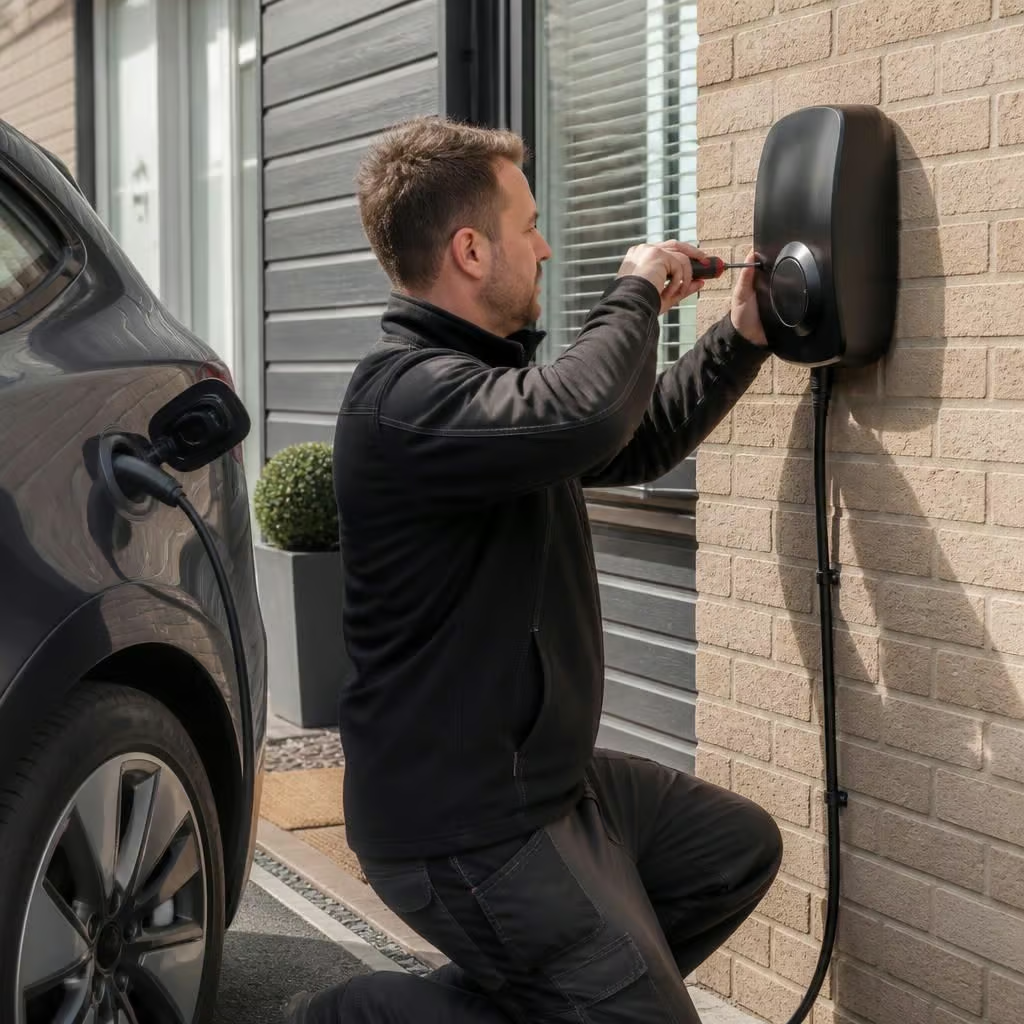
The time allowed for the visit includes the checks needed before the charger is put into use. We don’t treat mounting the unit as the finished job. The connection must be tested, the charger configured and the installation explained before we leave.
If the assessment identifies work outside the agreed installation, we explain what has changed and why before carrying it out. That keeps the timescale and cost tied to the actual electrical work, rather than adding unexpected tasks during the visit.