
What should I compare when choosing a home automation controller?
Compare a home automation controller’s compatibility with your heating, lighting, security and energy devices, then check how simple it is to use day to day. Security, integration with existing systems, ongoing support and the ability to add devices later will usually matter more than the number of features listed.
The right controller is the one that still behaves predictably when the internet drops, a device is replaced or someone wants to use a manual switch. Compare the system’s control method, operating limits, running costs, failure behaviour, data handling and installation requirements, not just the appearance of its app.
Start with what you want the controller to do. A simple timer for heating needs a different controller from a system coordinating heating, lighting, solar generation, battery storage and electric vehicle charging. Write down the routines that matter to you before comparing products. These might include reducing heating when the house is empty, using surplus generation to charge a battery or turning lights off at night.
A controller that performs one task very well may be more suitable than a larger system filled with functions you will never use. Extra features can also bring extra accounts, updates and points of failure. We look at the intended routines first, then check whether the controller can perform them without unnecessary complexity.
Check how the controller makes decisions. Some systems rely mainly on fixed schedules. Others use conditions such as temperature, occupancy, electricity prices or solar output. Find out whether several conditions can be combined, and whether the order of priority can be changed.
For example, a useful energy routine might heat a cylinder only when the home needs it, then divert spare solar generation to another load. The controller should show what happens when two demands occur together. If its rules are unclear, you may find that a comfort setting overrides an energy preference without warning.
Look for clear schedules, adjustable thresholds and a record of why an action took place. A system that shows “battery charging started because export was detected” is easier to understand than one that simply changes a setting without explanation.
Find out what works without an internet connection. A controller may use cloud services for remote access, but core routines should not necessarily stop when the broadband connection fails. Ask which functions continue locally, how long settings are retained and whether a phone is required to operate the equipment inside the home.
Manual controls still matter. A heating system needs a usable fallback if the controller, app or home network is unavailable. We check that occupants can still call for heat, change a setting and isolate equipment safely without having to dismantle anything or rely on a specialist account.
Compare the information you will actually receive. One controller may show only a current temperature, while another records room temperatures, energy use, generation, import and export. More data is not automatically better. The useful question is whether the information helps you make a decision.
Check the display and app for clear units, sensible time periods and understandable alerts. A graph should help you distinguish normal cycling from a fault. An alert should say which device needs attention and what you can safely do next, rather than simply reporting that something has gone wrong.
If several people will use the system, check whether it supports separate permissions. Someone may need to adjust the temperature without changing the main heating schedule. A guest may need lighting control but no access to energy settings. Clear user roles prevent accidental changes.
Assess the whole cost, not only the purchase price. Compare the controller, installation, additional sensors, wiring, gateways and any required subscriptions. Ask whether remote access, historical data or advanced automation depends on a recurring payment.
Also check what happens if a subscription ends. The system may continue controlling equipment locally, or it may lose important functions. That difference affects the long-term cost and usefulness of the installation. We set out these dependencies before work starts rather than treating them as an afterthought.
Consider where the controller and sensors will be fitted. A central device needs a suitable power supply, reliable communications and enough space for its connections. Wireless sensors need sensible positions away from direct sunlight, draughts and heat sources. A poor sensor location can make an otherwise capable system behave badly.
Older homes can have thick walls, outbuildings or separate heating zones that affect wireless coverage. A rural property may also have equipment spread between the house, plant room, garage and office. We assess those distances and construction materials before recommending a control arrangement. Adding a wireless extender later may cost more and create another device to maintain.
Ask how much disruption the installation involves. Some controllers replace existing controls at the same position. Others need new cabling, additional relays or changes inside a consumer unit. The comparison should include access to the wiring, isolation requirements and whether other trades need to alter pipework or equipment.
Check how the controller treats heating equipment. A controller should work with the actual boiler, heat pump, hot water cylinder, thermostats and zone valves in the property. The important point is not simply whether two devices can be connected. It is whether they can exchange the information needed for efficient control.
For instance, a system may offer only on-and-off switching, while another can adjust operating temperatures or respond to weather conditions. Those approaches have different effects on comfort, cycling and energy use. We match the control method to the heating system rather than assuming that every smart thermostat provides the same result.
Ask what happens during a fault. The controller should not hide a boiler fault behind a generic offline message. Heating equipment must retain its own safety controls, and the home should have a clear way to identify whether the problem is with the appliance, the controller or the network.
Look at ownership of the account and the installation records. The controller should be registered to the person who owns the property, not permanently tied to an installer’s account. You should know how to add another user, remove an old user and transfer control if the property is sold or rented.
Keep the model details, wiring information, sensor locations, access credentials and commissioning settings with the property records. Those details make future alterations safer and reduce the risk of replacing working equipment simply because nobody knows how it was configured.
Review privacy and access settings in practical terms. Check what information the system collects, where it is stored and which third parties can access it. Occupancy patterns and energy data can reveal when a home is empty. Use separate passwords, multi-factor authentication where available and individual user accounts rather than sharing one login.
We also check whether remote access can be disabled without losing essential local control. A controller should not require more access to household data than its intended functions justify.
Finally, compare the installation and handover, not just the equipment. A capable controller can be undermined by incorrect wiring, badly placed sensors or rules that were never tested. We commission each connected function, test manual operation and explain the settings in ordinary language.
Before choosing, ask for a written description of what will be controlled, which routines will be set up, what remains manual and what happens if a component or connection fails. That gives you a fair comparison between systems and leaves you knowing what has been installed, how to use it and where its limits are.
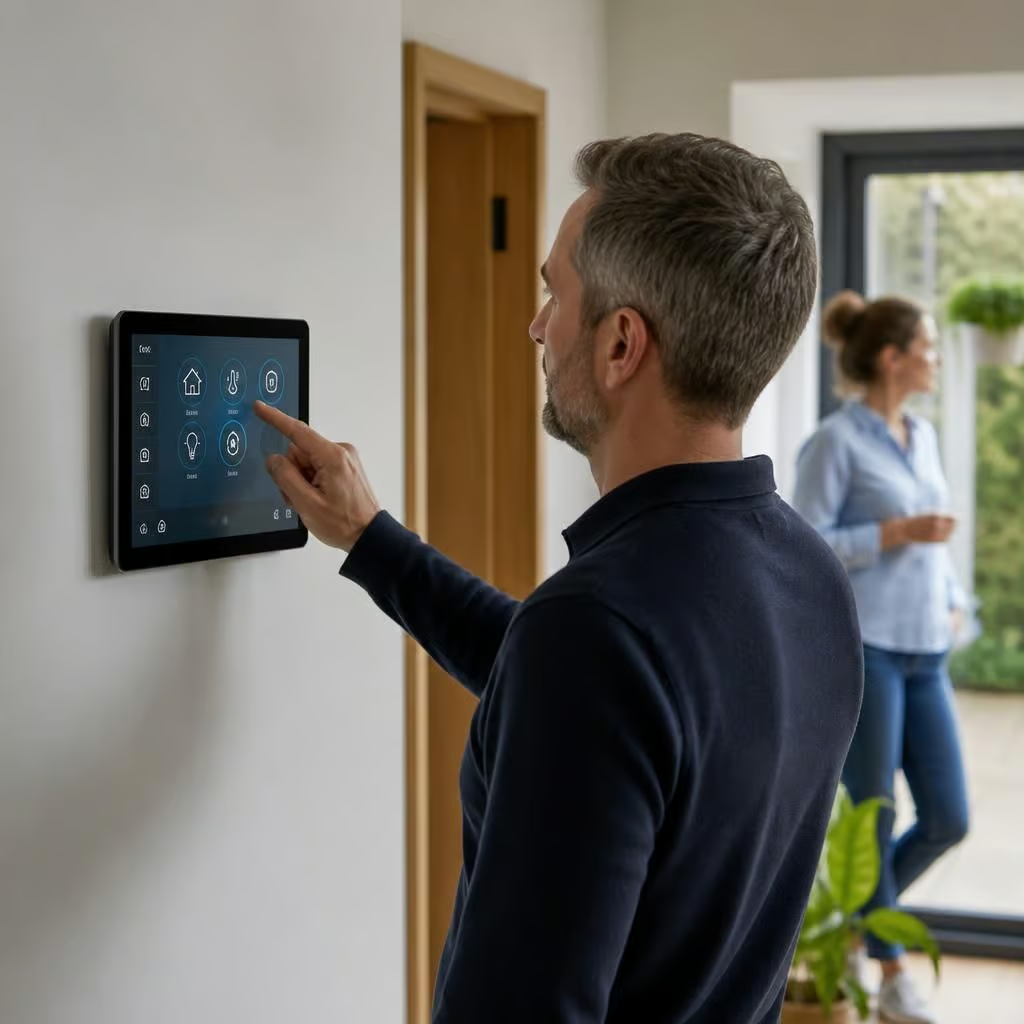
Check what “compatible” actually means. One controller may display information from a device, while another can change its settings and coordinate it with the rest of the home. Ask which functions are available for each item, and whether the connection uses an approved gateway or a limited third-party link.
This matters when heating, solar generation, battery storage and an electric vehicle charger are considered together. We map the equipment you want to connect and explain which actions the controller can take. The quotation then shows where control is shared and where a device remains separate, so you can compare systems on what they will do rather than on a long compatibility list.