What should I expect during an EICR inspection?
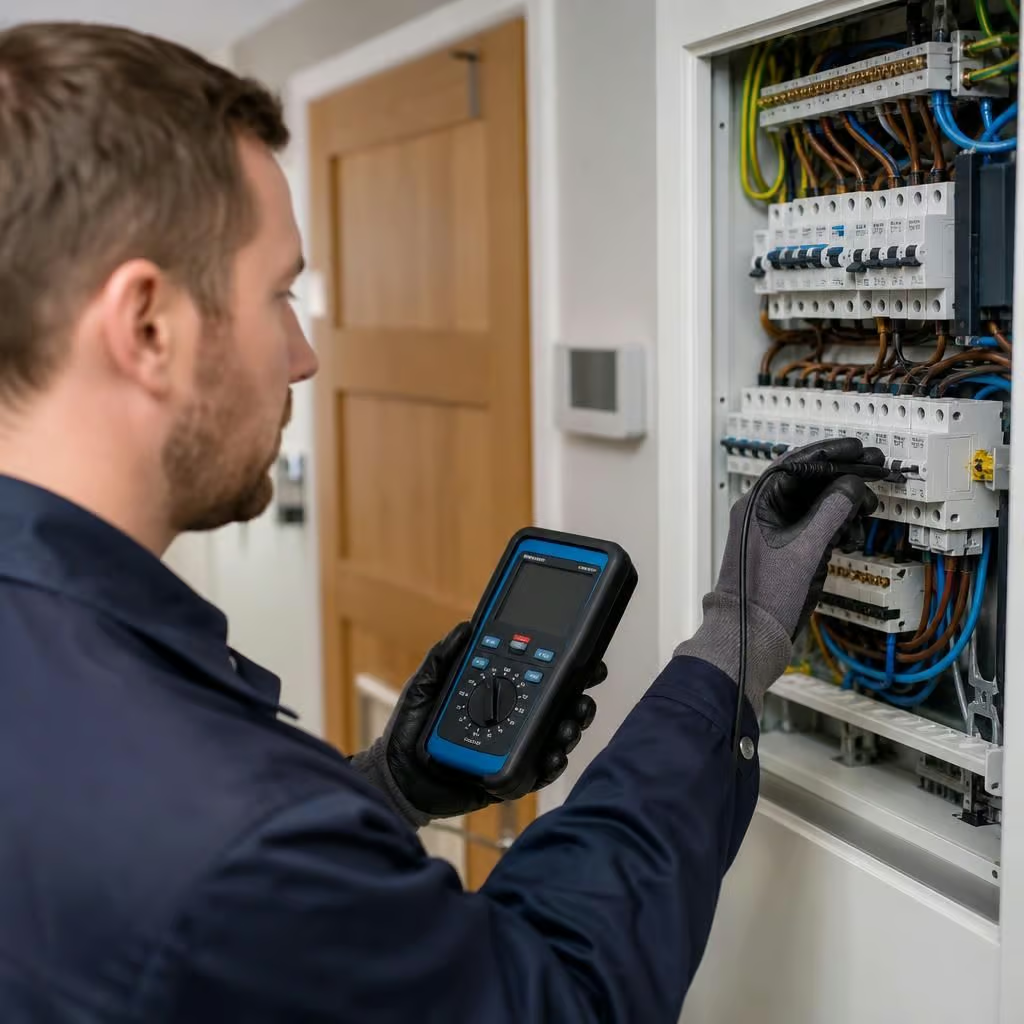
During an EICR inspection, we examine the visible installation, carry out electrical tests on the wiring and protective devices, and record any observations against the required standard. We then explain the findings, including any remedial work needed, and provide the completed report.
An EICR is a structured inspection of the fixed electrical installation, followed by tests that help identify danger, deterioration and faults. The visit is not the same as testing every appliance or portable item in the property. It covers wiring, sockets, switches, lighting points, consumer units, earthing, bonding and other permanently connected equipment.
Before the inspection, tell us about any electrical faults, alterations or extensions. Mention damaged accessories, flickering lights, repeated tripping, burning smells and parts of the installation that no longer work. If you have paperwork for a rewire, extension or consumer unit replacement, keep it available. It can help us understand what has changed, although the installation still needs assessing on site.
Make sure we can reach the consumer unit and the accessible parts of the installation. This may include sockets and switches, light fittings, loft spaces, garages, outbuildings and areas beneath floors. We cannot properly assess wiring hidden behind fixed finishes without access. If part of the installation cannot be reached, we record that limitation in the report rather than treating it as satisfactory.
At the start, we identify the electrical intake, consumer unit and individual circuits. We look at the condition of covers, labels, protective devices, cables and accessories. We also check for signs of overheating, damage, unsuitable alterations, exposed live parts and poor workmanship. Earthing and bonding receive particular attention because they help protective devices operate when a fault occurs.
Some tests require the power to be switched off. We explain when this is needed and which circuits will be affected. Testing can include:
- Continuity tests: these check that protective conductors and circuit conductors form the intended paths.
- Insulation resistance tests: these help identify weakened insulation or unwanted leakage between conductors.
- Polarity checks: these confirm that conductors are connected to the correct terminals.
- Earth fault loop impedance tests: these assess whether a fault should produce enough current for the protective device to disconnect the circuit.
- RCD testing: this checks that residual current devices disconnect the supply when required.
- Prospective fault current testing: this helps confirm that the installation and its protective devices are suitable for the fault current available.
Some circuits may need to be isolated during testing, so save work on computers and other sensitive equipment beforehand. We do not treat a portable appliance as part of the EICR. Its plug, lead and operation may be outside the inspection unless a fixed connection or accessory forms part of the installation being assessed.
Older wiring is not automatically unsafe simply because it does not match every detail of modern installation practice. We assess the condition and safety of the installation against the requirements relevant to the inspection. An older property may still need improvements where protection is inadequate, alterations are poorly connected, or deterioration has created a risk.
At the end, we discuss what we found and note any restrictions that affected the inspection. The report records observations using codes that indicate their significance. A dangerous defect needs immediate attention. A potentially dangerous defect requires remedial work. An improvement recommendation highlights a safer or more suitable arrangement without declaring the installation dangerous. Where we cannot reach a firm conclusion, we may recommend further investigation.
The report will state whether the overall result is satisfactory. An unsatisfactory result does not automatically mean that the property needs a complete rewire. The required work depends on the location, cause and seriousness of each observation. We explain which items need attention first and what can reasonably be left for planned improvement.
If remedial work is needed, we discuss it separately from the inspection. You receive a written quotation before work starts, so the decision and cost are clear. We can also explain whether a fault relates to a single circuit, an accessory, protective equipment or a wider problem with the installation. Electrical inspection work is carried out by NICEIC- and ECA-recognised electricians, with the findings set out in paperwork you can keep for future maintenance, letting or property records.
An EICR records the condition of the fixed installation on the inspection date. It is not a guarantee that the wiring will remain safe after later alterations, damage or deterioration.
Keep the report with the property records, particularly after buying, letting or carrying out building work. If another electrician changes the installation later, that work may need its own inspection and updated documentation.