
How much do domestic electrical repairs cost?
Domestic electrical repair costs depend on the fault, the parts required and how accessible the wiring is. We inspect the problem first, explain what needs doing and provide a written quotation before work starts, so you can make an informed decision without surprise charges.
There is no reliable standard price for domestic electrical repairs. A straightforward replacement may cost far less than a fault that needs tracing through concealed wiring, access work and safety testing. The important figure is the total cost of making the circuit safe and leaving you with a clear explanation of what was done.
What makes up the bill?
- Fault-finding: We test the supply, protective devices and affected circuit to locate the cause rather than replacing parts at random.
- Labour: The time depends on how accessible the wiring is and whether the fault is isolated to one fitting or runs through several points.
- Parts: A damaged socket, switch, light fitting, fuse, cable or consumer-unit component may need replacing. We explain which parts are necessary before fitting them.
- Making good access: Older properties, solid walls, loft spaces and buried cables can take longer to reach. We discuss any access work before it adds to the job.
- Testing and paperwork: The circuit needs testing after the repair. If the work calls for an inspection or certificate, we explain what the document covers and provide the relevant paperwork.
A fault that appears to be one failed socket may have a loose connection elsewhere on the circuit. A light that keeps tripping may point to a damaged fitting, moisture or an insulation fault. The visible symptom does not always identify the part that needs repair, so a proper diagnosis is often the most useful first step.
Examples of repairs and their likely cost factors
- Socket or switch replacement: This is usually more straightforward when the existing back box and cable are sound. Heat damage, loose terminals or a cracked back box may require more work.
- Lighting faults: We check the fitting, switch, connections and cable. High ceilings, roof spaces and awkward access can affect the time involved.
- Repeatedly tripping power: We identify whether the problem comes from an appliance, one circuit or the consumer unit. Resetting the breaker without finding the cause can leave the danger in place.
- Partial power loss: A loose connection can interrupt several sockets or lights. We trace the circuit and repair the defective connection or cable section.
- Damaged or exposed cable: The cost depends on whether we can make a safe local repair or need to replace a longer cable run.
- Consumer unit faults: A failed protective device may be replaceable, but an older board may not provide suitable protection for the rest of the installation. We explain the difference between repairing one component and upgrading the board.
When a repair may become a larger job
Your home may need more than a local repair if we find overheating, deteriorated insulation, repeated alterations or wiring that does not provide adequate protection. That does not automatically mean the whole house needs rewiring. We separate urgent safety work from improvements that can be planned later.
Older houses often contain a mixture of wiring from different periods. Barn conversions, solid-wall homes and properties with concealed cable routes can also make access more involved. We inspect what is present and explain the practical options before recommending wider work.
Can an electrician give a price before visiting?
We can discuss the symptoms and the likely type of visit beforehand, but a firm repair price is not always possible from a description alone. The same symptom can have several causes. A visit lets us test the installation, identify the defective part and check whether the proposed repair will leave the circuit safe.
Once we know what the job involves, we explain the work and provide a written quotation before starting. If the condition of the installation changes the scope, we discuss that with you rather than carrying out unagreed work. You can then compare the cost of a repair with the cost and disruption of a larger upgrade.
It is sensible to check whether a quoted figure includes parts, testing, certification, access work and VAT. A low initial figure may not represent the final cost if it covers only the first diagnostic step.
When should you stop using the circuit?
Switch off the affected circuit at the consumer unit if you notice a burning smell, buzzing, scorch marks, sparks, hot accessories or repeated tripping. Do not remove covers or attempt to repair damaged wiring yourself. If you cannot isolate the problem safely, leave the installation alone and contact a qualified electrician.
We work to the requirements expected of a NICEIC-registered and ECA-member electrical contractor. In practical terms, that means the repair is approached as electrical work requiring diagnosis, safe isolation, suitable testing and competent completion, not simply as a replacement of the part that looks damaged.
For a domestic repair, the best next step is to describe what has happened, which sockets or lights are affected and whether the consumer unit has tripped. Photographs of visible damage can also help us understand the starting point, but they cannot replace testing where the fault is hidden.
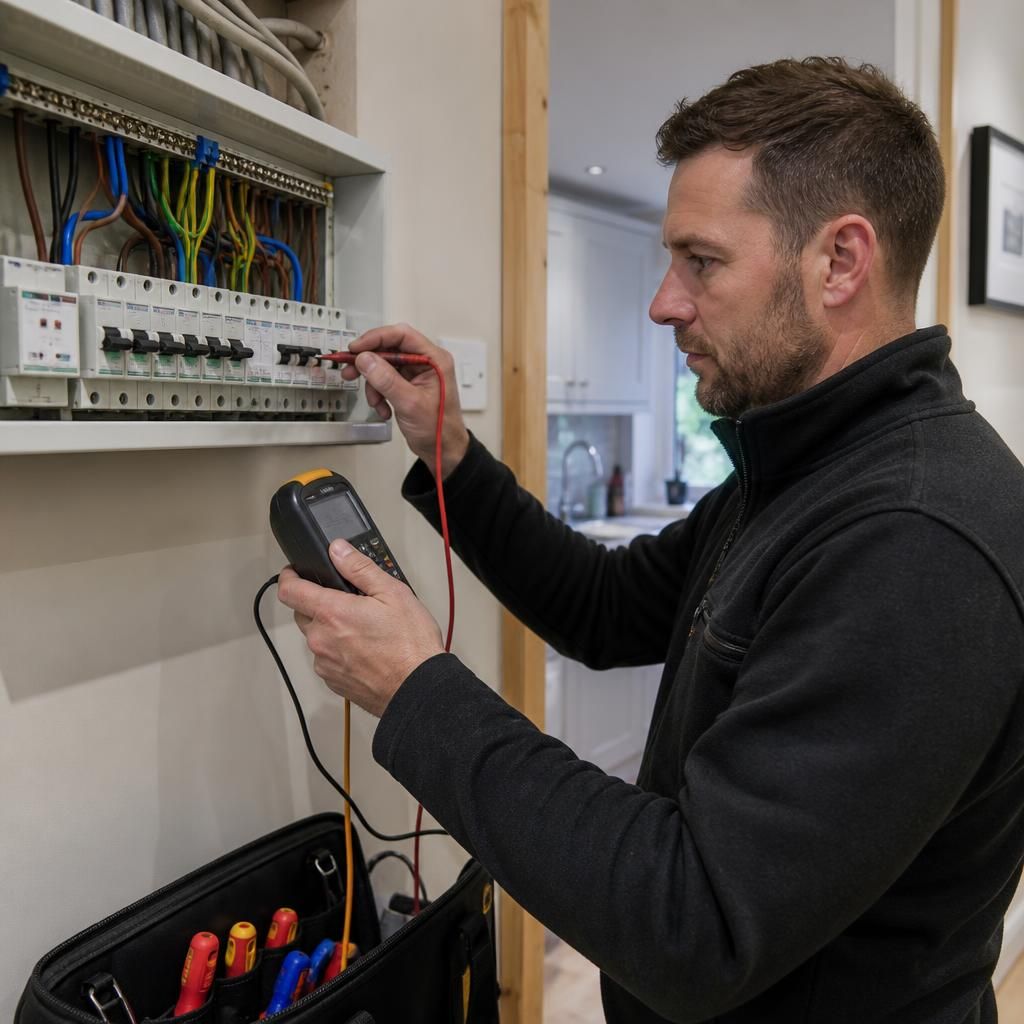
An intermittent fault can take longer to trace than a visible failure. If the circuit is working when we arrive, we look for loose connections, heat damage, moisture and signs of previous alterations rather than replacing a fitting without evidence.
You’ll be told what the tests have shown and which repair is justified. If further investigation is needed, we explain the next step before carrying it out, so the bill reflects agreed work rather than an open-ended search.