
What happens if a landlord fire safety check finds missing or unsuitable alarms?
If a landlord fire safety check finds missing or unsuitable alarms, we record the defect and explain what needs correcting before the property can meet its applicable safety duties. We install or replace the alarms, test each one and provide the completed paperwork for the landlord’s records.
If a landlord fire safety check finds missing or unsuitable alarms, the property needs remedial work before the alarm provision can be treated as satisfactory. We record the defect, explain the risk, agree the required correction with the landlord or managing agent, then test the completed work and provide a record of what changed.
The result depends on what is wrong. A missing alarm, a failed test, poor positioning and an unsuitable alarm type do not all require the same remedy.
- Missing alarms: We identify the rooms and circulation areas that need coverage, then recommend suitable alarm locations.
- A failed alarm: We check the power supply, battery, test function, age and condition before deciding whether repair or replacement is appropriate.
- Poor positioning: An alarm can be present but ineffective if it is too close to a wall, light fitting, ventilation point, cooking area or other source of interference. We assess its position and explain any changes needed.
- Unsuitable alarm type: A smoke alarm may not be appropriate in every location. Kitchens, bathrooms and areas with steam or fumes may need a different approach, such as a heat alarm where the risk assessment supports it.
- Alarms that do not work together: If the property requires linked alarms, we check that a fire detected in one area will alert occupants elsewhere in the property.
A check may also identify a wider issue. The alarms might be difficult for tenants to test, have unclear controls, lack suitable power, or have no reliable record of installation and maintenance. These points matter because a landlord needs to show that the system is present, operational and being managed properly, not simply that an alarm is fixed to the ceiling.
We start by separating an immediate fault from a documentation problem. If an alarm does not sound, is damaged or has been removed, we report that clearly rather than treating the inspection as a pass. If the equipment works but the arrangement does not suit the property, we explain why and set out the work needed. That gives the landlord a clear decision instead of an ambiguous certificate.
Where replacement is needed, we fit equipment suitable for the room and the property’s layout, subject to the instructions agreed with the landlord or responsible person. We test each alarm after installation. Where alarms are interlinked, we test the link as well as the individual sounders. We also check that occupants can operate the test function and understand what they should do if an alarm sounds.
A failed alarm check does not automatically mean that tenants must leave the property. The landlord or responsible person must assess the level of risk and take appropriate action. A property with no working detection, a serious electrical fault or a layout that leaves sleeping occupants without adequate warning needs more urgent attention than a minor positioning issue. We report the technical defect, but we do not decide tenancy or evacuation matters on the landlord’s behalf.
If a defect cannot be corrected during the visit, the landlord should not describe the property as fully compliant. The open issue should be recorded, along with any temporary measure, the person responsible for arranging the repair and the date for checking completion. Temporary measures should not be treated as a substitute for proper remedial work unless a suitably qualified fire risk assessor has confirmed that they are appropriate.
The landlord should also consider the reason the problem occurred. Tenants may have removed batteries, covered alarms while cooking or disconnected equipment they found disruptive. That does not remove the landlord’s responsibility to provide suitable working alarms. We can explain the controls and testing routine, while the landlord or agent should give tenants clear written instructions and deal with repeated interference through the tenancy process.
The completed record should show what the inspection found and what happened afterwards. Depending on the work, this may include:
- the date of the inspection and the property or dwelling checked;
- the location and type of each alarm inspected or installed;
- the fault, omission or suitability concern identified;
- the remedial work completed, including any replacement or relocation;
- the results of the alarm and interconnection tests;
- any remaining recommendation or limitation;
- the date of completion and the person or company carrying out the work.
Keep this record with the other property safety documents and give relevant information to the managing agent or fire risk assessor. An alarm inspection record is useful evidence, but it is not automatically the same thing as a full fire risk assessment or a fire safety certificate. The document needed depends on the property type, its use, the tenancy arrangement and any licensing or building requirements that apply.
For a landlord, the sensible next step is to send us the inspection findings or arrange an assessment of the alarms and their locations. We can then distinguish replacement work from wider fire safety advice, carry out the agreed remedial work and issue paperwork that records the completed checks.
If the property is an HMO, includes shared escape routes or forms part of a converted building, the alarm issue may sit within a wider fire safety arrangement. We clarify whether the check covered only the rented dwelling or also communal areas and linked systems.
Alarm remedial work does not replace a wider fire risk assessment. Where the inspection identifies concerns beyond the alarm installation, the landlord needs the appropriate fire safety advice before describing the property as fully compliant.
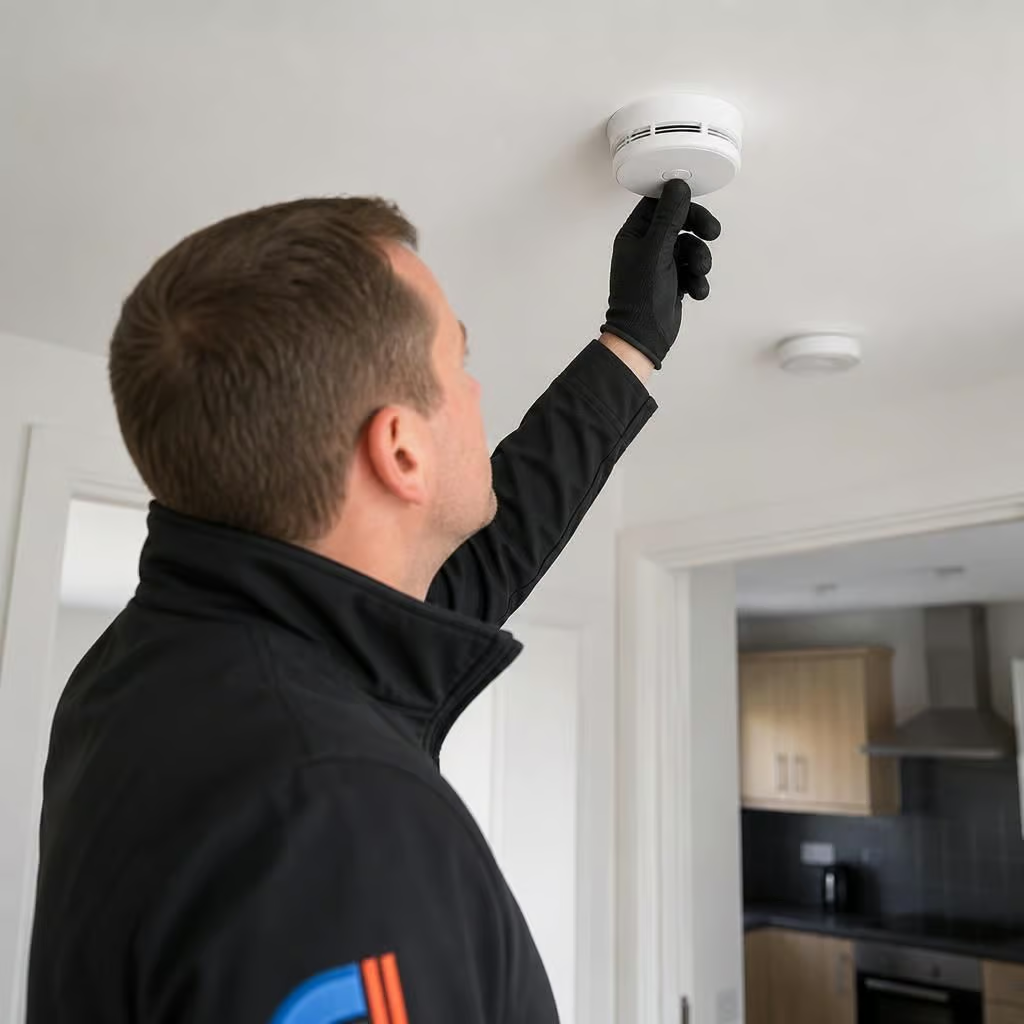
Arrange an assessment of your rental property's alarms
If you’re unsure whether an alarm issue has been properly resolved, contact us to review the inspection report and arrange the checks needed at the property. We’ll help you identify any remaining action before the alarms are treated as satisfactory.