
Can you find an intermittent electrical fault?
If an electrical fault comes and goes, we can trace it through systematic testing rather than waiting for it to reappear. We check the affected circuit, connections and connected equipment to identify the cause and explain the repair needed.
The most useful evidence is what happens immediately before the fault appears. Make a note of which light, socket, appliance or circuit is affected, what else is running, and whether a switch or RCD has operated. A photograph of a tripped device or a flickering light can also help us narrow the search.
Intermittent faults often leave no obvious sign by the time an electrician arrives. A socket may work normally again, or an RCD may reset and stay on. That does not mean the underlying problem has gone. A loose connection, damaged cable, moisture ingress or failing accessory can become unsafe when the circuit is loaded or conditions change.
Common patterns we investigate include:
- A circuit that trips only when particular appliances run together.
- Lights that flicker, dim or briefly go out.
- A socket that loses power and then works again.
- An RCD that trips during damp weather or when equipment is connected.
- Buzzing, crackling, heat or a burning smell from a socket, switch or consumer unit.
- Power loss in an outbuilding, garage or external circuit.
Your symptoms help us decide where to start, but we do not rely on the description alone. We identify the affected circuit, check the consumer unit and examine accessible accessories and connections. We then test the circuit in sections to separate a wiring fault from an appliance or piece of equipment connected to it.
Testing may include continuity, insulation resistance, polarity, earth fault loop impedance and RCD operation, depending on the fault. These tests show whether the circuit is electrically sound and can help locate a fault that does not appear during a visual inspection. Where a connection is only failing under load, we may need to recreate the conditions safely rather than simply reset the power.
A tripping RCD does not always mean the RCD itself is faulty. Several appliances can contribute small amounts of leakage, or one appliance may have insulation damage that only appears when it heats up or becomes damp. We test connected equipment where it is relevant, so you do not end up replacing the consumer unit when the actual cause is a single appliance.
Older properties can make the route harder to trace. Cables may run through solid walls, loft spaces, floors, extensions or detached buildings, and previous alterations may not match the original circuit layout. We work from the consumer unit outward and explain what access would help. We will not open a sealed appliance or disturb building fabric without discussing it first.
Some testing needs a circuit, or occasionally the whole installation, to be switched off. We tell you what will be isolated and why before we do it. If the fault is linked to an appliance, we may ask you to leave it disconnected while we test the fixed wiring. Do not keep resetting a breaker that trips repeatedly, and do not remove covers from the consumer unit or accessories.
If you notice heat, burning, smoke, exposed conductors, sparking or a strong burning smell, stop using the affected circuit. If it is safe to do so, switch it off at the consumer unit and keep clear of the equipment. Do not touch wet electrical fittings. Contact us with the location of the fault and anything you observed before the power was lost.
Once we have isolated the cause, we explain whether the repair involves a connection, accessory, cable, protective device or connected appliance. If the testing reveals wider deterioration, we distinguish the immediate repair from any recommended improvement. That lets you decide what happens next without treating every intermittent fault as a reason for a full rewire.
Electrical work is carried out by NICEIC- and ECA-registered electricians. We provide a written quotation before repair work starts, so the proposed work and its cost are clear before you approve it. Alderminster Group investigates intermittent faults for homes and businesses across Warwickshire, Oxfordshire, Gloucestershire and the North Cotswolds.
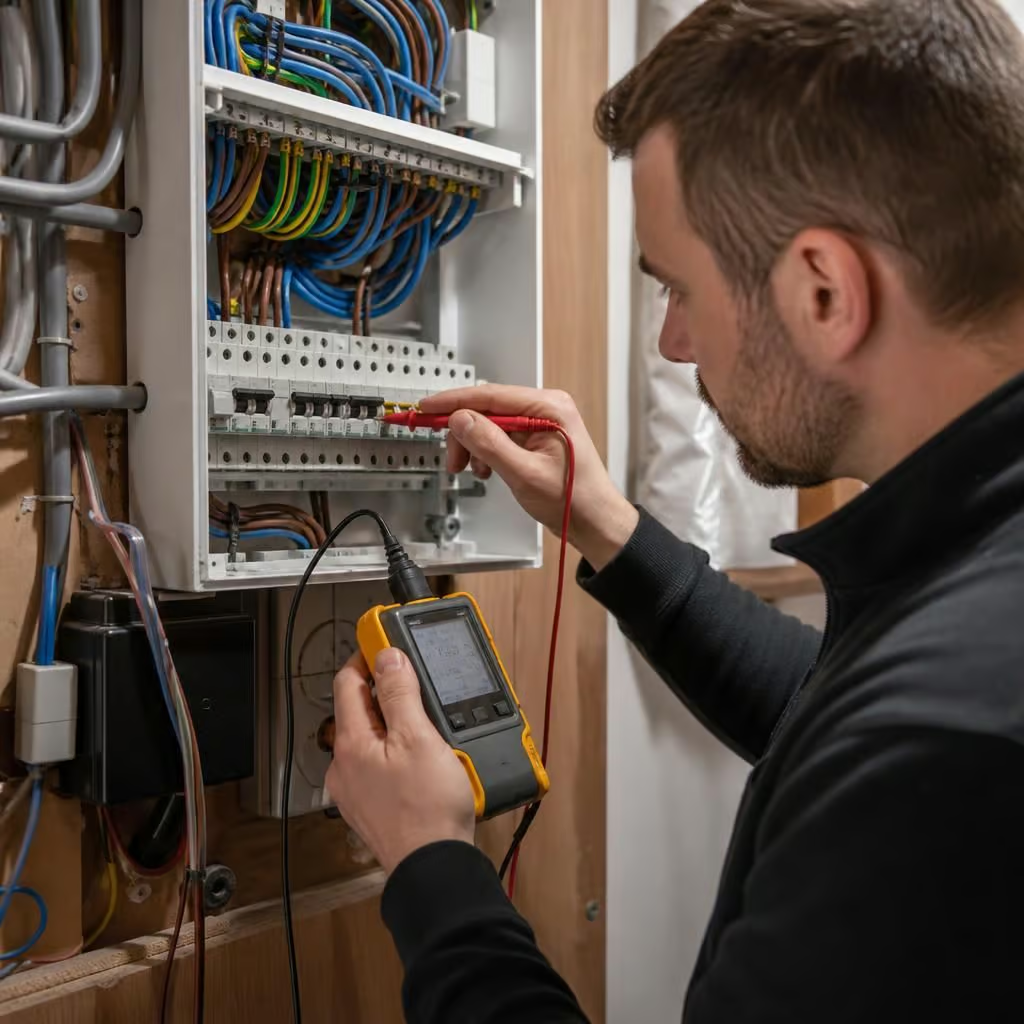
An intermittent fault can sit outside the fixed wiring. A faulty appliance, charger or piece of equipment may only leak current when it heats up, starts a cycle or becomes damp. That can make the circuit appear to be at fault when the cause is connected to it.
We separate connected equipment from the installation during testing, then reconnect items in a controlled way where it is safe. This helps identify the source without replacing sound wiring or protective devices unnecessarily.