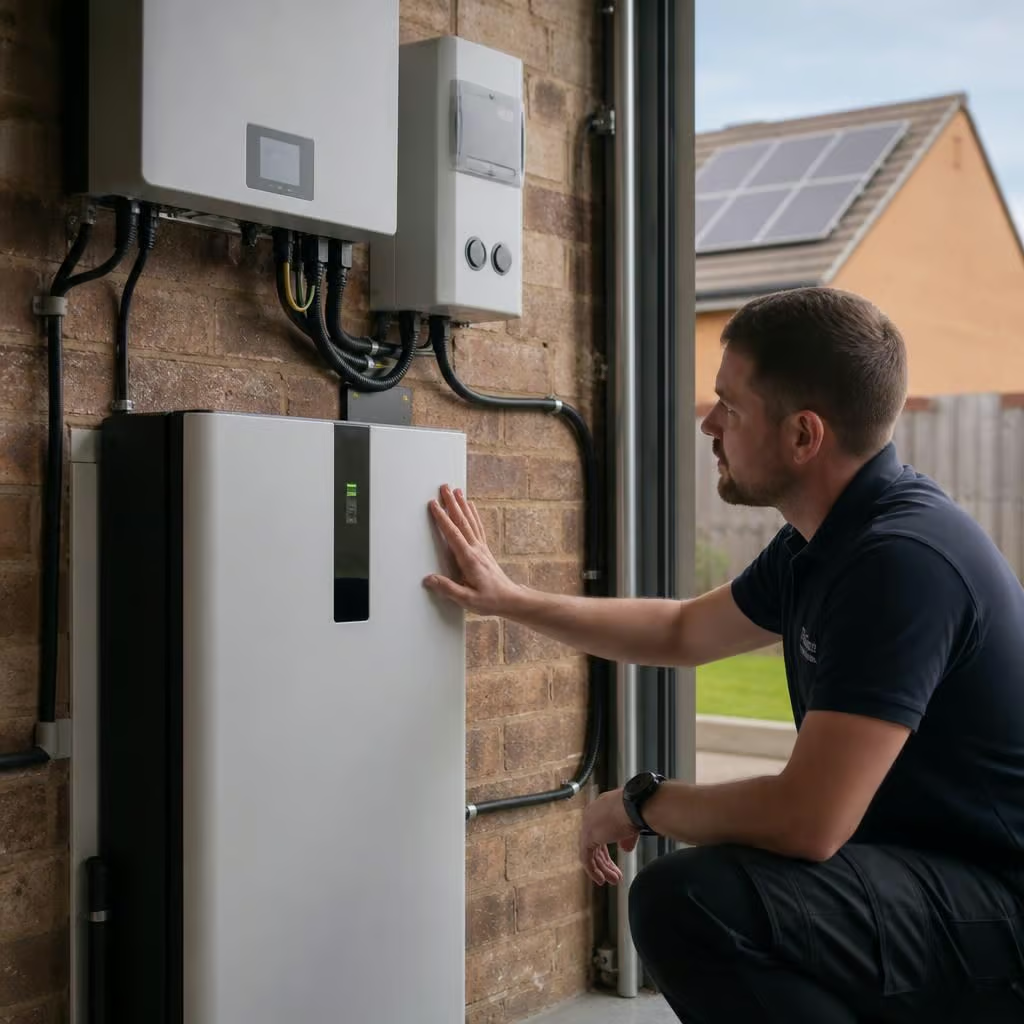
Which solar battery brands work with existing solar panels?
Several battery brands can work with existing solar panels, including Tesla, Sigenergy, Fox ESS and SolarEdge, but compatibility depends on the existing inverter, panel configuration and whether the new battery uses AC or DC coupling. We check the installed system before recommending a battery, so you know whether it can be added without replacing equipment unnecessarily.
The best battery brand depends mainly on the inverter already connected to the panels. The panels themselves produce the electricity, but the inverter controls how that electricity reaches the home, battery and grid. A battery can be added without changing the panels, but the existing inverter may need to stay, be replaced or work alongside a second inverter.
Tesla Powerwall is often considered where the existing solar system should remain largely intact. It uses an AC-coupled arrangement, so it can sit alongside many existing solar inverters. That can make it suitable for an older installation where the panels are still performing well but the original inverter cannot connect directly to a new battery. We still check the supply, protection, communications and export settings before confirming compatibility.
SolarEdge batteries are usually the natural choice where the property already has compatible SolarEdge equipment. The inverter model, firmware and system design all matter. An older SolarEdge installation may not accept a newer battery without an inverter change or additional equipment. Keeping the system within one compatible platform can simplify monitoring, but replacing a working inverter may not be the best use of the budget.
Fox ESS can suit some existing installations, but the correct arrangement depends on the battery and inverter models. Some systems use a hybrid inverter that manages solar generation and storage together. Others may use an AC-coupled arrangement beside the existing solar inverter. We match the equipment as a complete electrical system rather than choosing a battery from its capacity alone.
Sigenergy is more commonly considered when the system is being redesigned around its own energy-management equipment. It can be a strong option for a property needing coordinated solar generation, storage and backup functions. It is not automatically a direct add-on to every existing solar installation. We check whether the existing inverter can remain and whether the proposed equipment can communicate correctly with it.
Several details decide whether a brand is genuinely compatible:
- Existing inverter: We record the manufacturer, model, age, phase arrangement and operating limits. The same battery brand may work with one inverter model but not another.
- AC or DC connection: An AC-coupled battery has its own battery inverter and can often sit beside existing solar equipment. A DC-coupled battery connects through a compatible hybrid inverter and can reduce conversion stages, but it may require more equipment to change.
- Single-phase or three-phase supply: The battery must suit the electrical arrangement at the property. A system designed for a single-phase home cannot simply be assumed to work on a three-phase supply.
- Backup requirements: Keeping the lights on during a power cut needs suitable changeover equipment and a protected circuit design. Not every battery installation provides whole-house backup.
- Export and generation limits: The existing solar capacity, agreed export level and proposed battery controls affect how the system can operate. We check these before recommending a configuration.
- Monitoring and communications: The battery, inverter and meter need to exchange accurate information. Poor compatibility can lead to unreliable charging, incomplete monitoring or unnecessary grid import.
An older solar system does not automatically need replacing. If the panels, cabling, isolators and mounting remain in good condition, an AC-coupled battery may allow the useful parts to stay in place. If the inverter is near the end of its service life, has limited functionality or cannot support the required battery, replacing it may provide a cleaner long-term installation.
The right choice also depends on how the electricity is used. A home that uses most of its power during the day may need less storage than a home that generates surplus power at midday and uses more electricity in the evening. An EV charger, immersion heater, heat pump or other large load can change the recommended battery size and control strategy. We look at the generation history, electricity use and planned changes rather than matching the battery to the panel capacity alone.
Our assessment starts with photographs, system records and the existing inverter details where these are available. During the survey, we inspect the consumer unit, cable routes, meter position, battery location and access for installation. We then explain whether the sensible route is to retain the inverter, add an AC-coupled battery or replace part of the system.
You receive a written quotation that identifies the proposed brand and model, the equipment being retained, any replacement work, the location of the battery and the expected changes to monitoring. It also sets out the electrical work before installation begins, so the cost does not depend on discovering basic compatibility issues after the work has started.
Solar and battery installations are carried out by MCS-certified installers. That matters if the completed system is to meet the requirements for the Smart Export Guarantee. We also set up the monitoring and explain how the battery prioritises solar use, storage and export once the system is commissioned.
A battery can be electrically compatible with an existing solar system but unsuitable for the intended location. The manufacturer’s requirements for temperature, clearances, protection and communications all matter. A detached garage or outbuilding may also need a longer cable route and additional protection.
We assess the proposed position alongside the inverter and wiring. That leaves you with a battery brand and model that fits the property, not just one that appears on a compatibility list.