
How are industrial solar panels protected from damage on a working site?
On a working site, panels face risks from equipment, falling materials and maintenance activity. We reduce those risks with suitable mounting, protected cable routes, impact-prevention measures and inspection access planned around how the site operates.
Industrial solar panels are protected by designing the installation around the site’s actual hazards. We assess how vehicles, plant, deliveries, maintenance work, weather and other activities could affect the array, then specify the mounting, guarding and cable routes accordingly.
The panels themselves are built for outdoor conditions, not direct impact. Toughened glass and framed modules can withstand normal exposure to rain, wind and temperature changes. A reversing vehicle, falling object or badly placed piece of equipment can still cause cracked glass, frame damage or hidden electrical faults. Keeping those risks out of the array’s working area is more effective than relying on the panel to absorb a collision.
The roof or ground structure must carry the system safely. Before installation, we consider the roof construction, fixing points, wind exposure and the condition of the building. On a ground-mounted system, we look at the terrain, access routes and the type of activity taking place nearby. The mounting system is then fixed or ballasted in a way that suits the structure, rather than treating every industrial roof or site as the same.
Where machinery operates close to the array, physical protection may be needed. This can include barriers, bollards, restricted access or a clearly defined stand-off area. The right approach depends on the vehicles and equipment used on the site. A forklift route presents a different risk from a farm track, loading bay or maintenance compound.
Plant and maintenance work need to be considered after installation as well as during it. We allow for safe access around the array so roof contractors, cleaners and site staff do not need to step across panels or place tools against them. Routes for ladders, lifting equipment and temporary materials should not pass over the modules. Clear working arrangements reduce the chance of accidental impact during unrelated jobs.
Cables are routed and supported so they do not hang into traffic areas, rub against sharp edges or sit where water and debris can collect. We use suitable containment and keep connectors away from likely contact points. This protects the electrical system from knocks and abrasion, while also making future fault-finding more straightforward.
Weather protection is part of the design, not an afterthought. Wind can place stress on modules, rails, fixings and the roof itself. We account for the site’s exposure when selecting the mounting arrangement. Drainage, debris build-up and access to roof outlets also matter, particularly on large commercial roofs where a small maintenance issue can affect a wider area.
Some working sites create additional hazards. Agricultural buildings may have dust, bird activity or nearby machinery. Industrial premises may have exhaust heat, stored materials, chemical exposure or frequent roof access. These conditions can influence equipment positions, cable protection and the inspection routine. We discuss how the site operates before finalising the layout.
Electrical protection limits the consequences of damage. The system includes appropriate isolation, earthing and protective equipment so that a damaged section can be made safe for investigation. We label the relevant equipment and leave clear access for authorised maintenance staff. If a panel, cable or connector is struck, the site should not attempt to handle it; the solar array can remain electrically live in daylight even when the building supply is isolated.
Regular checks help identify smaller problems before they become wider damage. The inspection should look for cracked modules, displaced or loose components, damaged cable containment, exposed connectors, corrosion and signs that site activity has affected the array. Site operators should also report any collision, falling object or roof work near the installation, even when no obvious damage is visible.
Protection is therefore a combination of physical layout, suitable fixings, controlled access, protected wiring and sensible site procedures. We explain these measures during the design process, so the finished system works alongside the business rather than creating an obstacle for vehicles, staff or future maintenance.
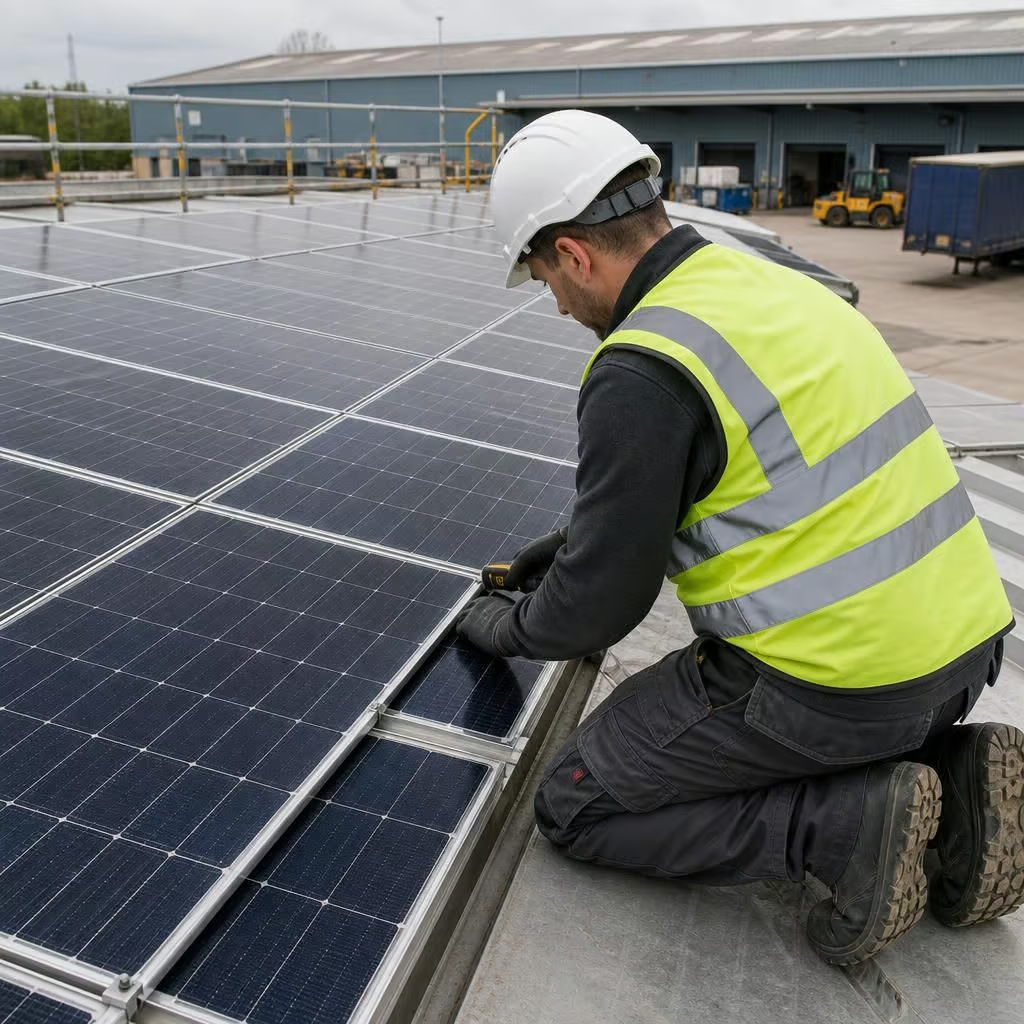
A collision can leave a panel cracked without stopping the whole array. Keep people away from the affected area and report the incident, even if generation appears normal. Solar equipment can remain live in daylight.
We then inspect the module, frame, connectors, cables and mounting points before deciding what needs replacing. We make the damaged section safe, check the rest of the array for related movement or impact, and test the system before it returns to normal operation.