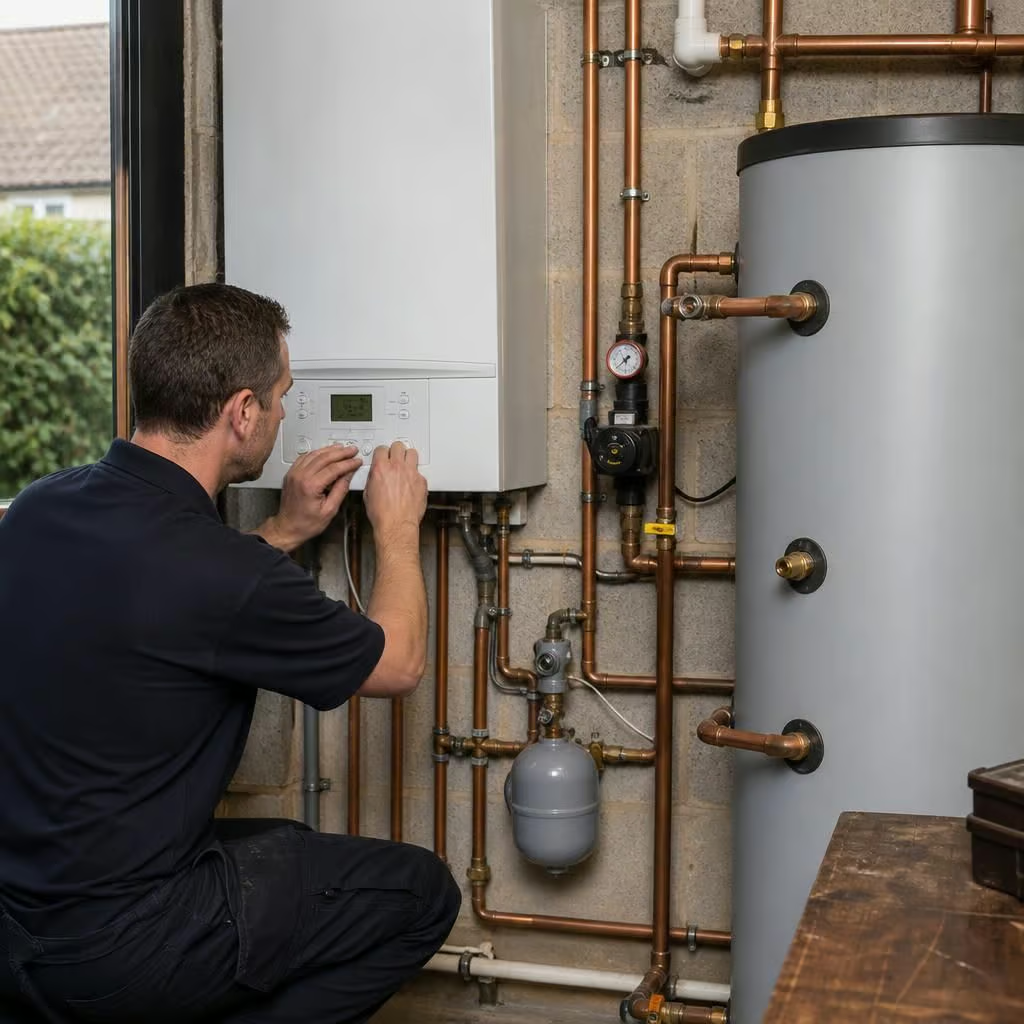
Can a solar hot water tank work with my existing boiler?
Yes, a solar hot water tank can usually work with an existing boiler, which provides backup heat when solar energy is insufficient. We check the boiler, cylinder, controls and pipework first, as an older system may need a compatible twin-coil cylinder or control changes.
The important point is the cylinder, not simply the boiler. A solar hot water system needs a cylinder with a dedicated coil for the solar circuit, while the boiler uses another coil to provide backup heat.
If you have a regular heat-only boiler, the arrangement is usually straightforward. Solar fluid circulates through the lower coil and heats the stored water first. When the solar input is insufficient, the boiler heats the upper part of the cylinder. Your heating system can stay broadly as it is, although the cylinder, controls and some pipework may need changing.
A system boiler can also work well with a solar cylinder. We check the boiler’s controls, pump arrangements and expansion equipment before connecting it. If the existing cylinder is suitable in size but has only one coil, replacing it is normally more practical than trying to adapt it.
A combi boiler needs closer assessment. It heats water directly rather than storing it in a separate cylinder, so it cannot normally connect to a solar cylinder in the same way. Some installations use solar-heated water to preheat the supply before it reaches the combi. The combi must accept that arrangement, and the controls must prevent water reaching the taps at an unsafe temperature.
Another option is to change from a combi system to a boiler and cylinder system. That creates space for solar storage but may involve new hot water pipework, cylinder controls and alterations to the heating layout. We only recommend this where the advantages justify the extra work and cost.
Your boiler can be gas, oil or LPG; the fuel does not decide compatibility on its own. Properties away from the gas grid often use a boiler for backup because solar energy varies through the year. The boiler still provides hot water during dull weather and periods of higher demand, while the solar system reduces how often it needs to fire.
We assess the following before recommending an arrangement:
- the boiler type, age, condition and current controls;
- the cylinder type, capacity, position and available access;
- the roof or ground position for the solar collectors;
- the route for flow and return pipework between the collectors and cylinder;
- the location for the pump station, expansion vessel and control equipment;
- the number of occupants and your usual hot water demand; and
- whether the existing hot water and heating pipework can be reused.
The cylinder normally needs two heat sources. The solar coil sits lower down, allowing the collectors to heat as much stored water as possible. The boiler coil sits higher, so the boiler can bring the upper part of the cylinder up to temperature without reheating the whole store.
Your current cylinder may also be vented or unvented. A vented cylinder depends on a cold-water storage tank, while an unvented cylinder works directly from the mains and needs correctly sized safety equipment. We check the incoming water pressure, discharge route and existing controls before specifying a replacement. That avoids fitting a cylinder that the property cannot support.
The boiler controls need to understand that solar energy has priority. A sensor in the cylinder reports its temperature, and the boiler only provides heat when the stored water needs more. An immersion heater may provide another backup option, depending on the cylinder and electrical supply. We explain which heat source will operate in different conditions before work starts.
Installation usually involves replacing the cylinder, fitting the solar pump and controls, connecting the collector pipework and commissioning both heat sources together. The work may require access through cupboards, loft spaces or service areas. We protect the working area, keep pipe routes as short and practical as possible, and explain any changes before we begin.
The solar equipment does not remove the need for normal boiler servicing. Your boiler, cylinder controls and solar circuit each need to remain safe and correctly set. We provide the relevant commissioning information and show you how to read the main controls, including the backup heating setting.
Some older homes have limited cylinder space or a boiler positioned far from the proposed tank. That does not automatically rule out solar hot water, but it can change the work involved. A survey is particularly useful in a barn conversion, solid-wall house or property with later extensions, where pipe routes and access may be less predictable.
Our quotation sets out whether the existing boiler can stay, which parts need replacing, how the solar circuit will connect, and what disruption to expect. It also separates essential changes from optional improvements, so you can judge the installation on the condition of the whole hot water system rather than the collector installation alone.
An older boiler may still be suitable as the backup heat source. Adding solar hot water does not automatically mean replacing it. We first check its condition, controls and connection to the cylinder, then separate any boiler work from the solar installation in the quotation.
That distinction matters on oil-fired and LPG-heated homes, where the boiler remains important during periods of low solar input. Our OFTEC-registered engineers can assess an oil-fired system, while the proposed cylinder and controls are selected to work with the heating arrangement already in place. You can then see which parts need changing and which can stay.