How often should solar panels be cleaned?
Most solar panels need cleaning once a year, although homes near trees, fields or busy roads may need it more often. Check them after periods of dry weather, heavy pollen or bird activity, and arrange cleaning when dirt or debris is visibly affecting the panels.
Solar panels do not usually need cleaning at a set interval. Arrange it when soiling has built up enough to affect the panel surface or the system’s output, rather than booking an automatic annual clean.
For many properties, normal rainfall removes loose dust and pollen. Rain will not always shift bird droppings, sticky deposits, lichen or residue from nearby building work. A panel can look reasonably clean from the ground while still having patches of soiling across several cells.
Your electricity generation is the most useful indication. If the weather and daylight are comparable but the system is producing less than expected, check for shading, inverter warnings and obvious dirt before assuming the panels need cleaning. A sudden drop may indicate an electrical or equipment fault instead, so cleaning is not a substitute for a system inspection.
Some deposits matter more than others:
- Bird droppings: Small, concentrated areas can shade part of a panel and reduce the contribution from the affected cells.
- Leaves and twigs: These can collect along the lower frame, particularly on low-pitched roofs, and may hold moisture against the panel edge.
- Dust and pollen: Loose deposits are often washed away, but a heavier layer can remain after a dry spell.
- Moss and lichen: These are more difficult to remove and may need careful treatment rather than vigorous scrubbing.
- Salt or agricultural deposits: Properties near the coast, fields or active farm buildings can receive deposits that rain does not fully clear.
The right frequency depends on the panel position, roof pitch and surroundings. Panels under trees, close to active farm buildings or below chimneys may need cleaning sooner than panels on an open roof. A steep roof generally sheds loose material more readily than a shallow one. New building work can also leave cement dust or other residue that should not be left on the glass.
Check the panels from ground level where possible. Look for persistent dark patches, bird mess, leaf accumulation or a film that remains after rain. Do not climb onto the roof simply to inspect them. Solar panels sit within an electrical installation, and roof access adds a separate fall risk.
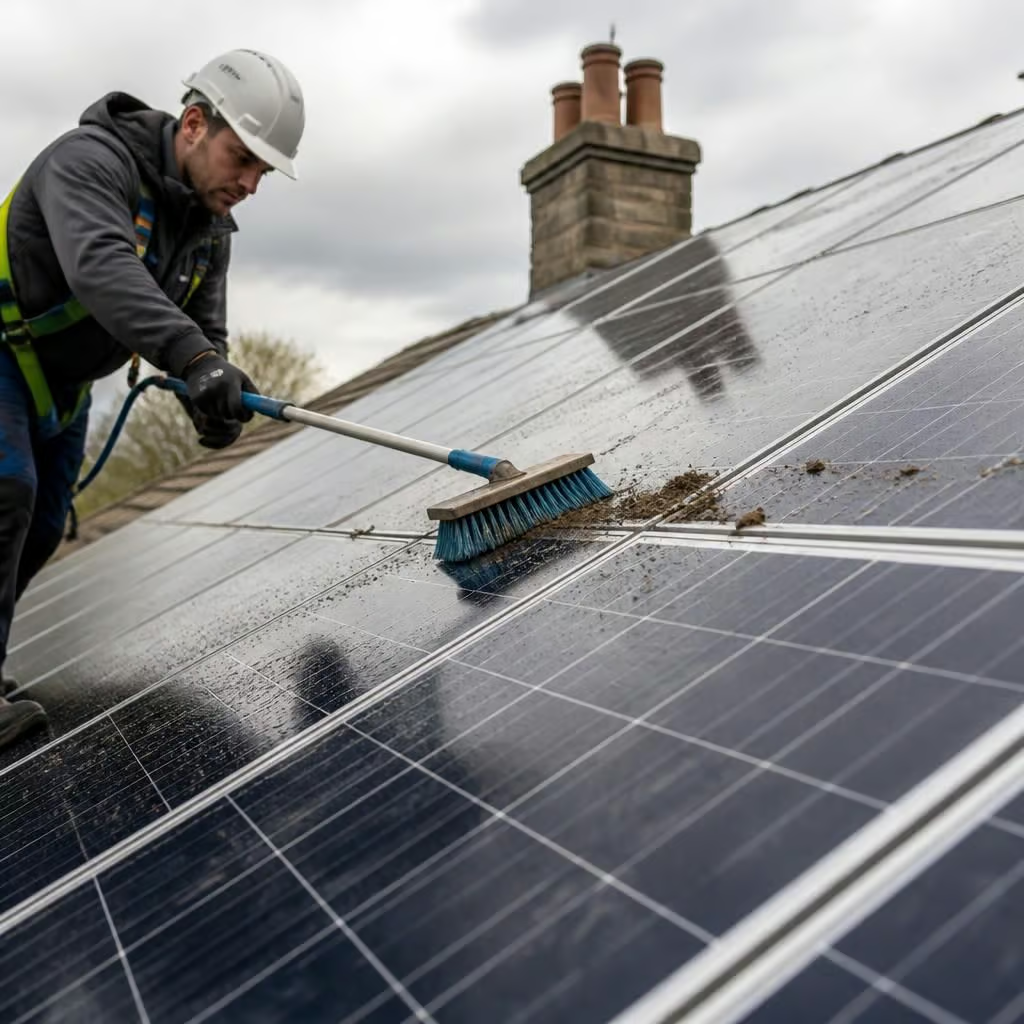
When cleaning is needed, the aim is to remove the deposit without scratching the glass, damaging seals or putting stress on the frame. We use a method suited to the roof and the type of soiling, taking account of access and the manufacturer’s care instructions. Abrasive pads, harsh chemicals and pressure washers can damage the surface or force water where it should not go.
Cleaning is often safest from suitable access equipment rather than by walking across the panels. If access is difficult, the roof is steep or the array is close to fragile tiles, we assess the practical risks before recommending work. Panels should not be treated like ordinary windows.
After cleaning, we can check for cracked glass, loose cables, damaged connectors and debris around the frame. If the system still produces less than expected, the next step may be an electrical or inverter check rather than another clean. Keeping the generation records helps distinguish a dirty panel from a developing fault.
For a new installation, plan maintenance around the property rather than a fixed calendar. A clear array in an open position may need very little attention. An array exposed to persistent deposits may benefit from more regular checks. The sensible approach is to monitor performance, inspect safely from ground level and clean only when there is a clear reason.
A small dirty patch doesn’t always mean the whole array needs cleaning. We assess how widely the soiling is spread and whether it is affecting several panels before recommending the work. That avoids treating a minor mark as a routine maintenance job.
If the array sits below a chimney, tree or farm building, the pattern of deposits can change as the surroundings change. We may recommend reviewing the cleaning interval after nearby building work, tree growth or changes to how the property is used.