
How much does home solar battery storage cost?
Home solar battery storage cost depends on the battery capacity, the electrical work required and whether solar panels are already installed. We assess the property and existing system before providing a written quotation, so the price reflects the installation you actually need.
Home battery storage is priced as an installed electrical system, not simply by the battery’s capacity. A smaller battery can cost more to fit if the consumer unit, cabling or inverter arrangement needs work. An existing solar installation may also need compatible equipment before a battery can be added.
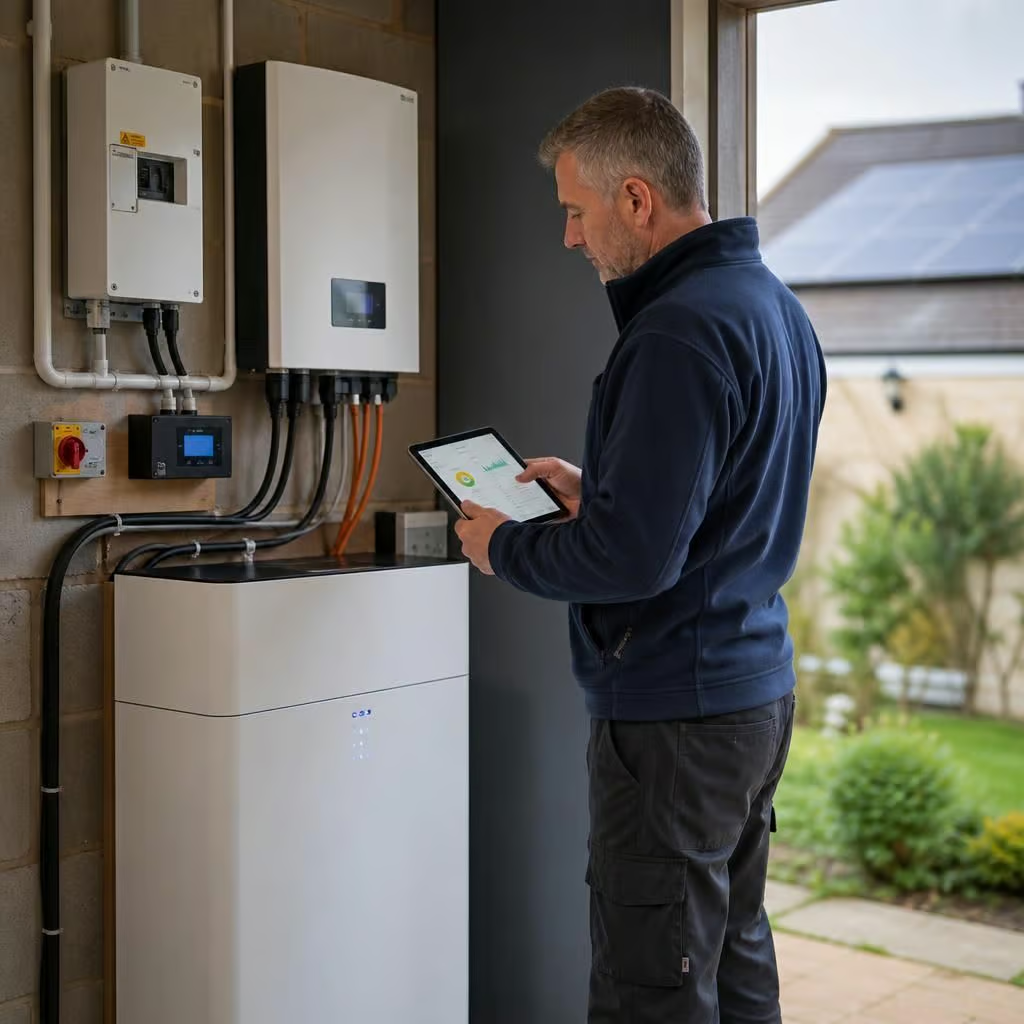
The battery itself is only one part of the cost. The final price usually includes the storage unit, inverter equipment where required, protection and isolation devices, cabling, controls, commissioning and the electrical work needed to connect everything safely. We also account for the location, cable route and condition of the existing installation.
Battery capacity affects the equipment price. A battery with more usable storage can hold more of the electricity generated during the day for use later. That does not automatically make it the better purchase. If the household uses little electricity in the evening, much of that extra capacity may sit unused. A smaller battery may make better financial sense if it matches the home’s actual demand.
Power output matters as well as storage capacity. Capacity describes how much energy the battery can hold. Power output describes how much electricity it can deliver at one time. A home with an induction hob, electric heating, an EV charger or several appliances running together may need a different inverter and battery specification from a home with lower peak demand.
The inverter arrangement can change the cost considerably. A new solar installation may use equipment designed to work with a battery from the outset. An existing solar system may need an additional battery inverter, or its current inverter may need replacing. We check the panel layout, inverter model, generation capacity and monitoring arrangement before deciding which approach is technically suitable.
Adding a battery to an existing solar system is not always a simple connection. Older equipment may have limited compatibility, and the original system may not have been designed for the charging and discharging patterns of a storage system. We test the existing installation rather than assuming that any battery will connect to it.
The installation location also affects the price. A battery needs a suitable position with enough clearance, appropriate environmental conditions and a safe route for the cables. Common locations include a garage, utility area, plant room or outbuilding, but every property is different. A longer cable run, difficult access or the need to protect equipment from moisture and temperature changes can add work.
Rural and older properties sometimes need additional electrical work before a battery can be installed. We may need to inspect the consumer unit, earthing and bonding, supply capacity and existing protection. If the installation requires an upgrade, we explain why it is needed and include it in the cost rather than treating it as an unexpected extra.
A battery installed alongside new solar panels is priced differently from a battery added to an existing system. A combined installation includes the panels, mounting system, generation inverter or hybrid inverter, roof and electrical work, as well as the battery. Combining the work can avoid duplicating some labour and equipment, but the right comparison is the total cost against the amount of electricity the household can use or store.
Battery storage can reduce the amount of imported electricity in some homes by shifting solar generation from the daytime into the evening. The financial benefit depends on how much electricity the household uses, when it uses it, the solar generation available, the chosen tariff and how the battery is controlled. We work through those patterns for the property instead of presenting a generic saving or payback period.
A battery may also be charged from the grid on a suitable tariff. That can change the economics, but tariff prices and terms can change too. The calculation should show which assumptions have been used and what happens if the household’s usage changes. An EV, heat pump, home-working pattern or future extension can all affect the required capacity and the likely value of storage.
Export payments need careful explanation. Where the solar installation meets the relevant requirements, MCS certification allows the system to be eligible for the Smart Export Guarantee. That does not mean every battery installation receives a payment, and export arrangements depend on the generation system and electricity supplier. We explain what the installed system can support rather than including an export income figure without checking the circumstances.
There is no standard battery price that applies to every home. Two properties with the same battery capacity can have different installation costs because one may have a nearby consumer unit and compatible inverter, while the other needs new protection, a longer cable route or an equipment upgrade.
When comparing quotations, check that each one states:
- the battery’s usable capacity and maximum power output;
- whether the price includes an inverter or additional inverter equipment;
- the monitoring, controls and commissioning included;
- any consumer unit, protection, earthing or cabling work required;
- where the battery will be installed and how the cable route will be handled;
- how the system will work with existing or proposed solar panels;
- what assumptions have been made about household electricity use and export;
- which parts of the work are included and which future costs remain separate.
We begin by looking at the home’s electricity use, existing generation and electrical installation. The survey also considers practical details such as the proposed battery location and the route back to the consumer unit. You then have a clear breakdown of the equipment and work needed, rather than a battery capacity chosen in isolation.
For an older or off-gas-grid property, the battery itself is only part of the wider energy picture. Solar generation, an oil or LPG heating system, an air source heat pump, an EV charger and the available electrical supply may all affect the most sensible arrangement. We consider those demands together so the storage system is sized for the way the home operates now and the changes you are seriously considering.
A battery for storing solar electricity is not automatically a backup system for power cuts. If you want essential circuits to keep running, tell us before we price the installation.
We then assess the supply arrangement, the circuits that need backup and the extra changeover and protection equipment required. That can change the cost compared with a standard storage installation, but it means the quotation reflects how you expect the battery to operate.