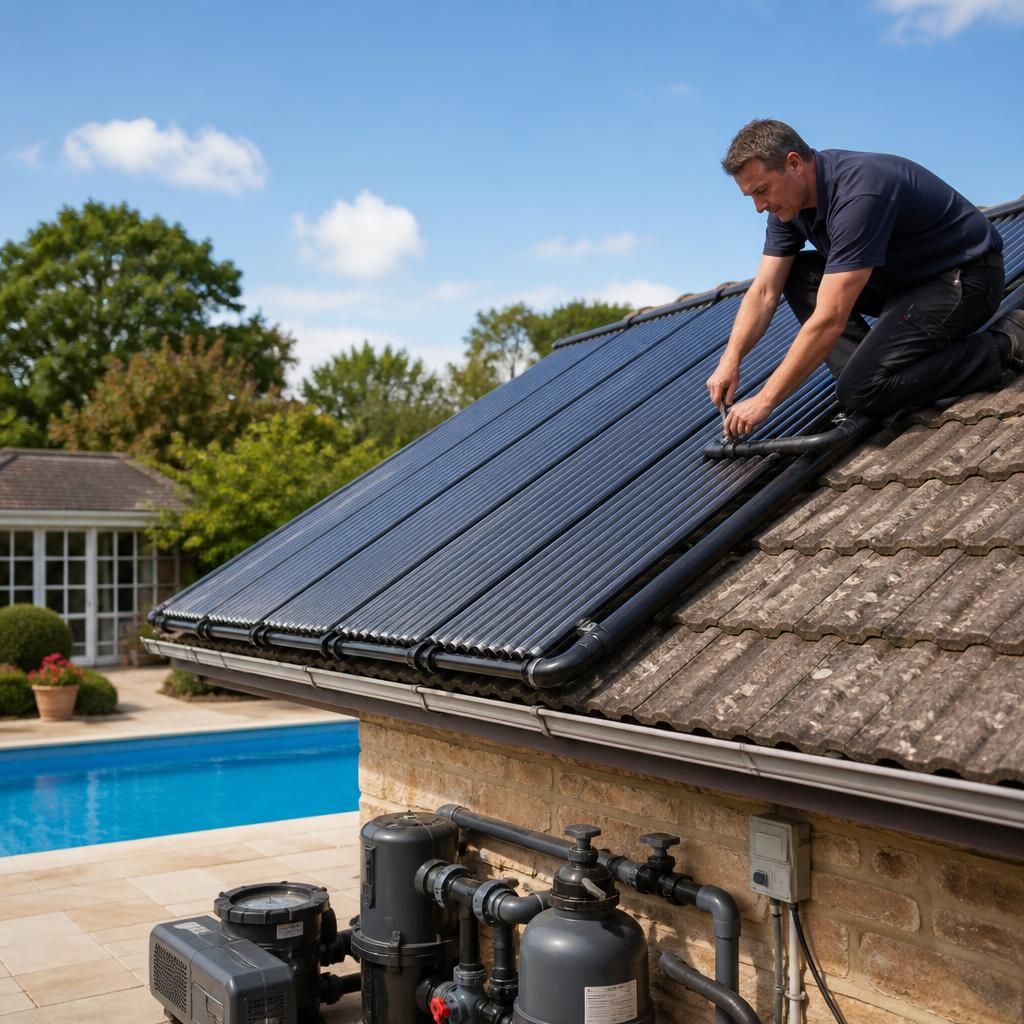
How much maintenance does a solar pool heater need?
A solar pool heater usually needs little routine maintenance: keep the collector surfaces clear, check visible pipework and connections, and watch for changes in heating performance. If the system develops a leak, damaged collector or control fault, we can inspect it and advise on the necessary repair.
A solar pool heater is usually low-maintenance, but it is not maintenance-free. The collector has few or no moving parts, so most routine care concerns the pool water, circulation equipment, valves and pipework. Keeping those parts in good condition helps the heater transfer as much warmth as the available sunlight allows.
Pool water still needs careful management. The solar heater uses the same pool water as the filtration system, so poor water chemistry can affect its performance and shorten the life of components. Follow the pool equipment manufacturer’s guidance for pH, chlorine and other treatments. Avoid adding concentrated chemicals close to the solar circuit unless the system instructions allow it, as high concentrations can damage some materials.
The filter also matters. A dirty filter restricts circulation and can make the pool appear to have a solar heating fault when the real problem is reduced flow. Keep the filter, strainer basket and pump maintained as part of normal pool care. If the heater has a separate bypass or diverter valve, operate it as instructed rather than forcing it between settings.
Seasonal checks prevent avoidable problems. Before you start heating the pool, look for:
- cracked or displaced collector sections;
- loose clips, brackets or visible damage around the mounting points;
- drips around valves, unions and accessible joints;
- pipework that has split, sagged or become exposed to damage;
- leaves, bird debris or other material affecting the collector or nearby equipment;
- controller readings or valve movements that do not match the system’s normal operation.
Do not climb onto a roof to inspect the collectors. A wet roof and smooth collector surface can be hazardous, and walking on some collector types can cause damage. We can inspect the roof-mounted equipment safely and check that the mounting arrangement, flow path and controls are working together.
Winter care depends on the system design. Some solar pool heating systems drain naturally when the circulation pump stops. Others need valves operated or sections drained to protect them from frost. The correct method depends on the collector, pipe layout and controls. Using the wrong procedure can leave water trapped in the system or send water where it should not go.
If the pool is closed for the winter, follow the installation instructions rather than assuming the solar circuit can simply be left full. Where the system uses automatic freeze protection, the pump and control settings need to remain available. A power cut or isolated pump can remove that protection, so check the system before cold weather and after any work on the pool plant.
After severe weather, check for physical damage. High winds, falling branches and heavy snow can affect roof-mounted collectors, supports and exposed pipework. A collector may look intact from the ground while a bracket or connection has moved. If you notice a leak, unusual noise, a damaged pipe or a drop in pool water level, stop using the affected circuit if it is safe to do so and arrange an inspection.
A gradual fall in pool temperature does not always mean the collectors need replacing. The cause may be reduced sunlight, a dirty filter, a valve in the wrong position, an airlock, a circulation fault or a controller that is no longer responding correctly. We test the system in operation, check flow and temperature readings, and trace the fault before recommending repair work.
Most owners can manage pool-water care, filter cleaning and visual checks. Electrical testing, controller faults, roof access, pressure issues and repairs to the solar circuit should be handled by a suitably qualified engineer. Keep the installation instructions and any valve labels with the pool equipment, as they make seasonal checks and fault finding more straightforward.
When we maintain or repair a solar pool heater, we look at the complete heating circuit rather than treating the collector in isolation. That includes the pump, controls, valves, accessible pipework and the way the heater connects to the pool filtration system. You are then left with clear guidance on normal operation, winter settings and the signs that call for further attention.
Pool equipment changes can affect the solar heater. A replacement pump, filter or controller may alter the flow through the collectors, even when the solar panels themselves are sound. Tell the installer that the pool has solar heating before any plant-room work begins.
We check the revised pipework, valves and control settings after an upgrade, so the heater continues to circulate correctly. That avoids treating a flow problem as a collector fault and helps keep routine maintenance straightforward.