
What does a boiler repair include?
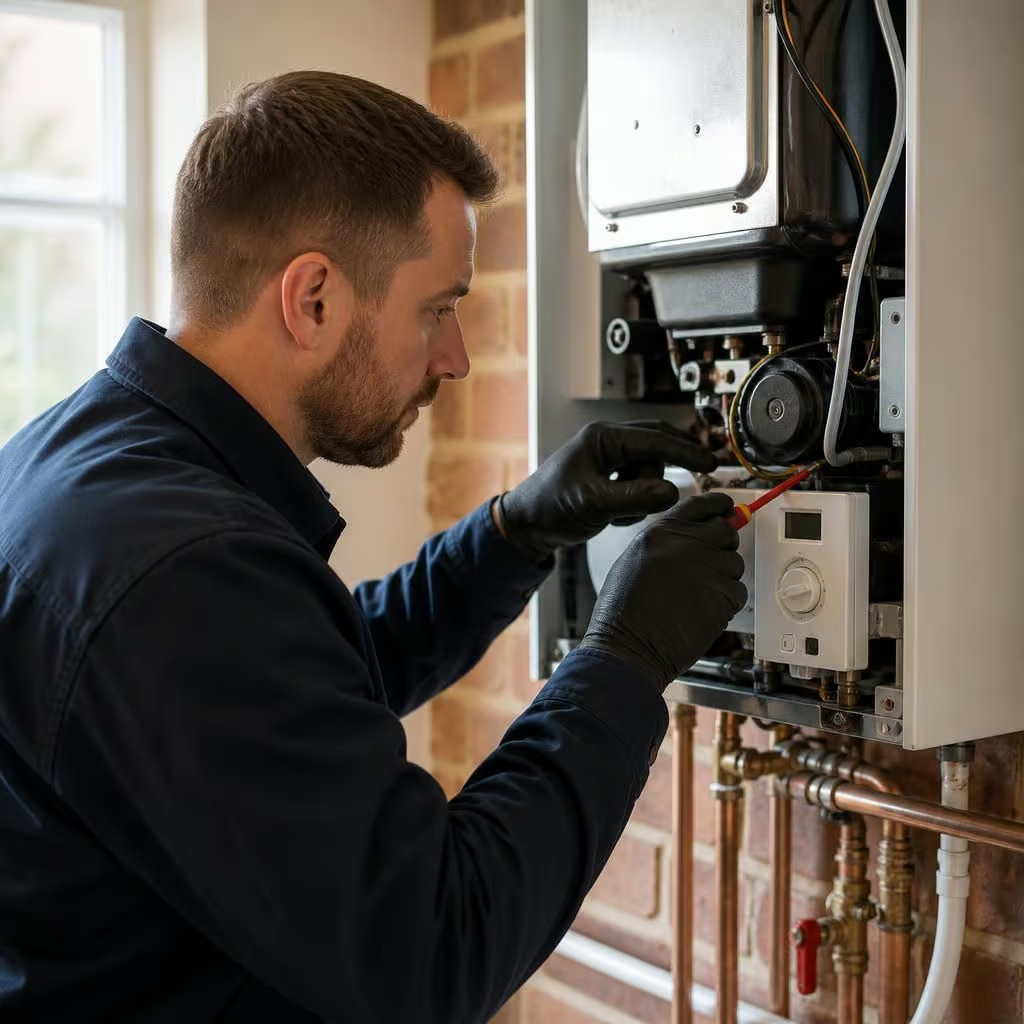
A boiler repair includes fault-finding, checks on the controls, pressure, pipework, flue and safety components, followed by the appropriate repair or replacement of failed parts. We then test the boiler and heating system to confirm it operates safely before explaining what we’ve done and any further work the boiler may need.
A proper boiler repair is a diagnosis-led visit, not simply a replacement part. We identify why the boiler has stopped working, establish whether it can be repaired safely, carry out the necessary work and check that the heating and hot water operate correctly afterwards.
We start with the symptoms. If the boiler is displaying a fault code, losing pressure, making unusual noises or failing to heat the water, tell us what happened before the visit. That information helps us compare the boiler’s behaviour with its stored fault history and avoid replacing parts without finding the cause.
We then look at the boiler’s condition and installation. This can include the electrical supply, fuses, connections, pressure, condensate route, expansion vessel and accessible pipework. A repeated lockout may point to a deeper problem with circulation, ignition, sensing or fuel supply, rather than the component that first appears to have failed.
The repair depends on the fault. Common work includes replacing a failed sensor, pump, valve, ignition component, fan, thermostat or pressure-related part. We use parts that are suitable for the boiler and explain when a repair involves a temporary fix, a wider system issue or a part that is no longer practical to replace.
Your home may have more than one cause of the problem. For example, poor circulation can make a boiler overheat, while a control fault can leave the boiler working but unable to respond to the heating programmer. We trace the fault through the system so the repair addresses the cause rather than only resetting the boiler.
Safety checks form part of the work. With a gas boiler, a Gas Safe registered engineer checks the appliance and combustion performance using the appropriate test equipment. On an oil-fired boiler, an OFTEC registered engineer checks the burner, fuel supply and combustion. We also consider the flue terminal, air supply and surrounding installation where these affect safe operation.
If the boiler is in an older or rural property, the wider installation can matter. An ageing heating system may contain restricted pipework, dirty system water or radiators that do not circulate properly. We explain when cleaning, a filter, a control change or other remedial work is relevant, rather than treating every fault as a boiler-only problem.
After the repair, we run the boiler through its heating and hot-water functions. We check that it starts, reaches the correct operating condition and responds to the controls. Where the system has been opened, we check for leaks and restore the pressure and settings needed for normal operation.
If the repair uncovers another issue, we explain what it means for the boiler’s operation and what can wait. Where further work is needed, we provide a written quotation before it starts, so the cost and scope are clear. If the boiler is beyond sensible repair, we explain why and outline the replacement options rather than carrying out work that is unlikely to be worthwhile.
You should finish with a working, tested system and a clear explanation of what we found. We also tell you about any limitations, recommended follow-up work or signs that should prompt another call.
A boiler repair and a boiler service are different jobs. If the heating has failed, we focus first on finding and correcting the fault rather than carrying out a routine service that may not address it.
If the boiler also needs servicing, we explain that separately so you can decide what to do. This keeps the repair focused on the problem you reported and makes clear which further work is recommended, rather than adding unrelated work to the bill.