
Do I need a recirculating pump for my hot water heater?
Usually, no: most homes don’t need a recirculating pump for hot water. It can be worthwhile where taps are far from the cylinder and hot water takes a long time to arrive, but we’d first check the pipework, insulation and control options because a pump also uses electricity and can increase heat loss.
A recirculating pump is mainly a comfort upgrade for a stored hot water system. It keeps hot water moving around a dedicated return pipe, so water reaches distant taps with less waiting. It does not heat the water itself, and it is not normally the right addition to a combi boiler system.
Your cylinder may be close to the bathroom but far from the kitchen, utility room or an ensuite. The water in that branch of pipework cools between uses, so the first water out of the tap is cold. A correctly designed secondary return circuit sends that cooled water back to the cylinder for reheating.
Installing the pump alone will not solve a long wait. The system needs a suitable return pipe, correctly positioned connections, non-return protection and controls that match the cylinder and heating system. If the pipework has no return route, creating one may involve lifting floors, opening walls or working in cupboards. That disruption can outweigh the improvement in comfort.
Some homes can achieve most of the benefit through simpler work. We may find that the hot water pipe is poorly insulated, oversized, badly routed or connected to the wrong cylinder outlet. Improving insulation or correcting the pipework can reduce the amount of cooled water in the run without adding a continuously operating pump.
A pump can make sense when:
- the cylinder serves several bathrooms or kitchen areas;
- a tap is a long distance from the cylinder;
- people use the distant tap regularly;
- the property already has a suitable secondary return pipe; or
- the stored hot water system was designed for secondary circulation.
It is less attractive when one bathroom sits close to the cylinder, the distant tap is rarely used, or the installation would need extensive new pipework. In those situations, the pump may add complexity without making a meaningful difference to everyday use.
Running the pump continuously is rarely the best arrangement in a home. The circulation pipe loses heat into the building, even when nobody is drawing water, and the pump also uses electricity. A timer can restrict circulation to the periods when the property is occupied. A temperature-controlled or demand-operated arrangement can reduce unnecessary running further, provided the controls are compatible with the cylinder and hot water requirements.
Insulation matters just as much as the pump. If the flow and return pipes run through a loft, garage, floor void or another cold area, we insulate accessible sections so the system does not lose heat unnecessarily. We also check for vibration, because an incorrectly mounted pump can transfer noise into nearby cupboards, floors or walls.
Stored hot water still needs to reach and maintain a safe temperature. A recirculation circuit must not be set up in a way that leaves parts of the system lukewarm for long periods. We check the cylinder controls, thermostats, blending arrangements and return temperature as part of the design rather than treating the pump as a standalone fitting.
The cylinder type affects the work. Vented cylinders, unvented cylinders and cylinders heated by different sources have different connections and control requirements. An unvented system also includes safety components that must remain correctly configured after any pipework changes. A heat pump cylinder needs particular care because unnecessary circulation can increase the heat demand placed on the system.
During a survey, we trace the hot water pipework, identify the cylinder and heat source, measure the problem areas and establish how the property is used. We then compare a secondary return with insulation, pipework alterations or control changes. That gives you a practical choice based on the disruption, comfort improvement and running cost for your home, rather than assuming a pump is needed.
If a pump is suitable, we set its operating times and controls before testing the taps at the end of the circuit. We check that hot water circulates in the intended direction, that the pump does not run against a closed valve and that the system remains safe when nobody is using the taps. The finished arrangement should make hot water more convenient without turning the cylinder cupboard into a source of constant heat or noise.
If a distant tap is used regularly, waiting for hot water can send usable water down the drain. A secondary return keeps the water in that branch moving back towards the cylinder, so warm water reaches the tap sooner when it is needed.
That makes the biggest difference at a frequently used kitchen, utility room or ensuite. A rarely used tap may not justify the extra circulation pipework, because the comfort gained would be limited. We look at how each outlet is used before recommending a pump, rather than treating faster hot water as a reason to add one automatically.
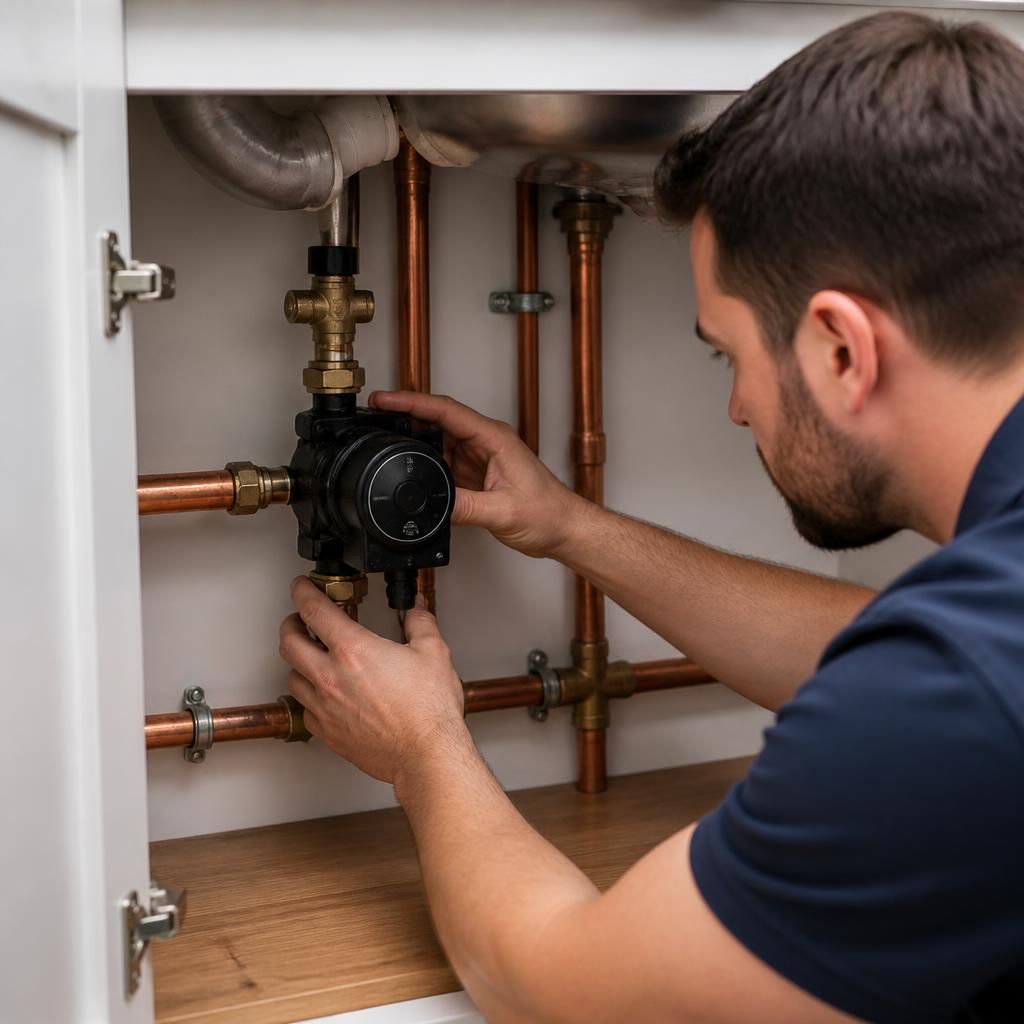
Find out whether your hot water system needs a recirculating pump
If you’re unsure whether a recirculating pump is suitable, contact us to discuss the waiting time, pipework and layout of your hot water system. We’ll explain the practical options so you can decide whether the improvement justifies the work.