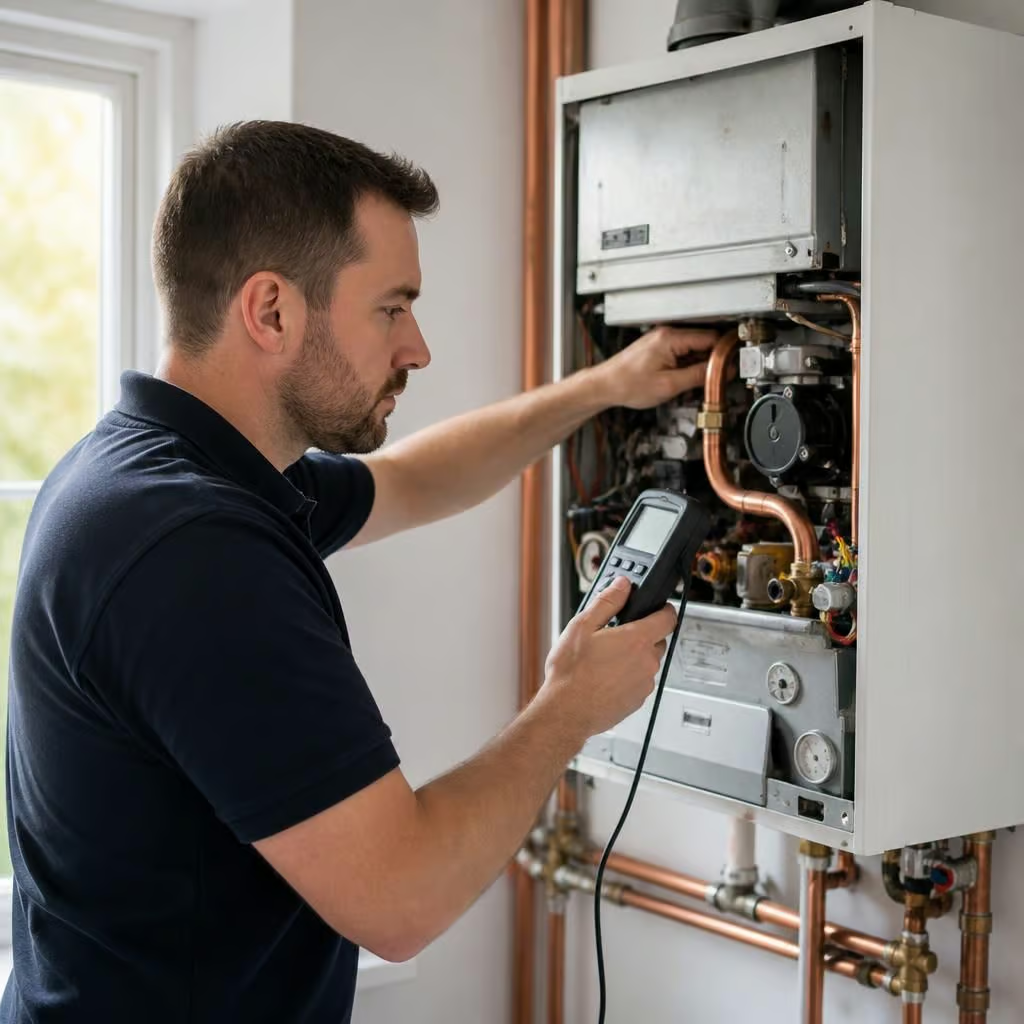
What does a central heating repair visit involve?
A central heating repair visit starts with a conversation about the fault, followed by checks on the boiler, controls, radiators, pipework and safety systems. We’ll explain what has failed, carry out a suitable repair where possible, and tell you clearly if further work or replacement is needed.
A central heating repair visit is a fault-finding exercise first, followed by a clear decision about the safest practical repair. We aim to establish what has failed, whether other parts have been affected and what the system needs to operate properly again.
Before we arrive
Make a note of what happened and when you first noticed it. Details such as a fault code, unusual noise, pressure loss, leaking water or radiators staying cold can help us prepare. If the boiler has a display, take a photograph of the code rather than repeatedly resetting it.
Clear access to the boiler, programmer, cylinder, airing cupboard and any visible pipework. We may also need to reach radiators, motorised valves, pumps or the electrical controls. Move stored items away from the boiler and let us know about any areas we cannot access safely.
If you smell gas, do not wait for a routine repair visit. Turn off the gas supply if it is safe to do so, avoid using electrical switches or naked flames, ventilate the property and contact the gas emergency service.
What we look at during the visit
- The boiler casing, connections, flue arrangement and condensate pipe.
- System pressure and signs of water loss.
- The programmer, room thermostat and other heating controls.
- The pump, motorised valves, expansion vessel and safety devices where they are part of the system.
- Radiators and pipework where they could be causing poor circulation or repeated pressure problems.
- Electrical supplies and relevant wiring around the heating equipment.
Some faults sit outside the boiler itself. A boiler may be working correctly while a failed thermostat, pump, valve or control connection prevents heat reaching the radiators. Looking at the whole system helps us avoid replacing a working component because the symptom appears elsewhere.
For a gas boiler, the work is carried out by a Gas Safe registered engineer. That is the legal requirement for anyone working on gas appliances. On an oil-fired system, OFTEC registration covers the engineer’s work on the oil appliance, which is particularly relevant for homes that are not connected to the gas grid.
How the fault is confirmed
We use the system’s symptoms, visual checks and test results to narrow down the fault. We may measure electrical values, check temperatures, inspect connections or test how the system responds when a control calls for heat. A fault code can point us in the right direction, but it does not always identify the failed part on its own.
We also look for the reason a component has failed. A replacement pump may not solve a problem caused by sludge, restricted circulation or an electrical fault. Finding that wider cause can reduce the chance of the same problem returning.
If a repair is suitable
We explain which part has failed, what the repair involves and whether any related work is advisable. You can then decide how to proceed with the information in front of you. We do not treat an old boiler as automatically beyond repair, but age, condition, parts availability and safety all matter.
Some repairs involve replacing a single component. Others need cleaning, recommissioning, renewed connections or correction of the original installation. We work carefully around older properties, where pipe routes, wiring and previous alterations may not match a modern layout.
If the system has a leak, we identify whether it is coming from a visible joint, radiator, valve, cylinder or concealed section. A small drop in pressure may have a simple cause, while repeated pressure loss needs further investigation. Topping up the system without finding the leak only masks the symptom.
If the repair cannot be completed on the day
A required part may need to be sourced, or further access may be needed before the work can be finished. We explain what remains outstanding and what the system can safely do in the meantime. We will not leave an appliance operating when a safety fault makes that unsuitable.
Where repair costs are no longer sensible for the condition of the boiler, we can explain the alternative of replacement. That does not mean every older boiler needs changing. The decision should take account of the fault, the appliance’s condition, the heating demand and any changes you may already be considering for the property.
What you should have afterwards
Once the work is complete, we check that the relevant heating and hot-water functions operate correctly. We explain any controls you need to use and point out anything that needs monitoring, such as pressure or a recurring warning sign.
You receive a written record of the work carried out and any recommendations that follow from the fault. If the system needs a larger upgrade rather than a repair, that can be considered separately, without treating a breakdown visit as an automatic commitment to replacement.
A repair visit focuses on the fault you reported, rather than automatically becoming a full service or heating upgrade. If the checks show that the boiler needs servicing, the system needs balancing or the property would benefit from a wider improvement, we explain that separately.
That keeps the decision clear. You can authorise the immediate repair first, request a written quotation for further work, or leave the additional recommendation for later. We do not carry out extra work without your agreement.