
What maintenance does a rapid EV charging station need?
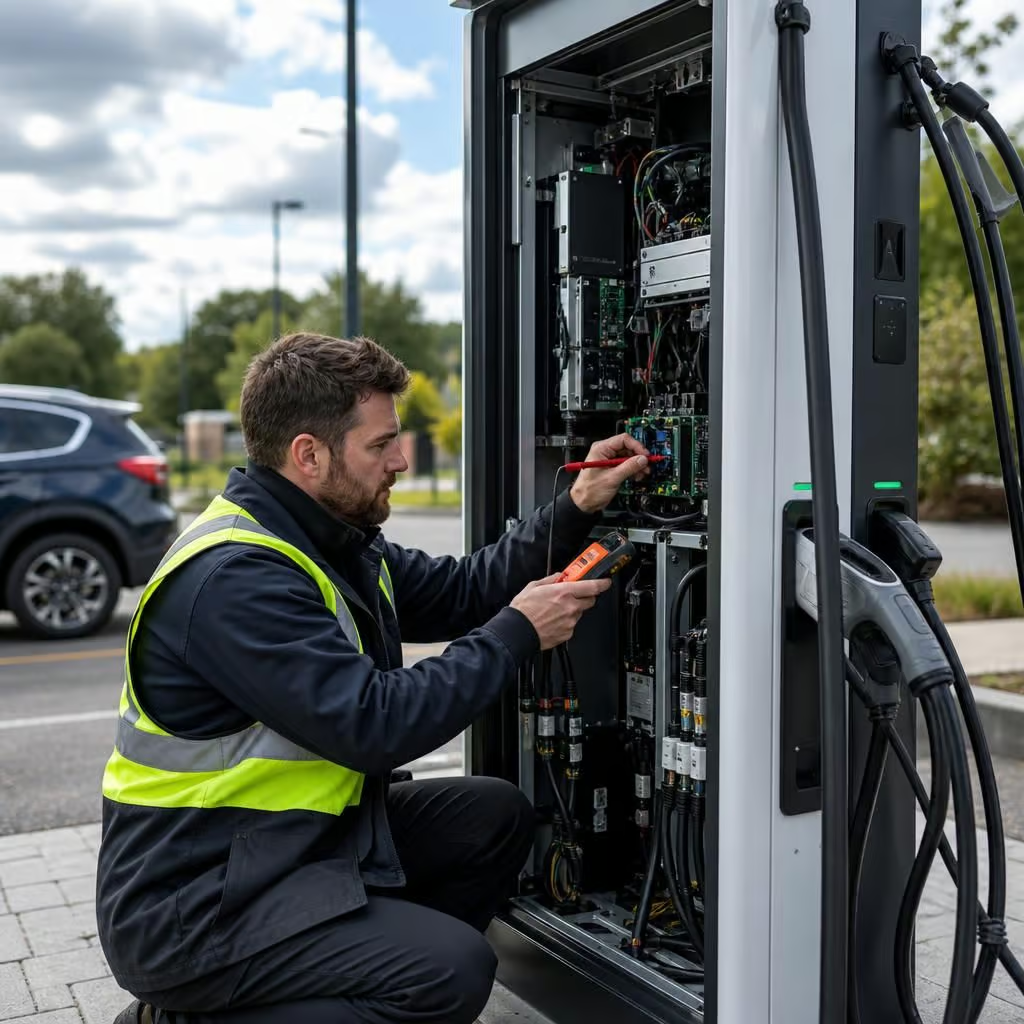
A rapid EV charging station needs planned inspections, safety checks, software updates and prompt attention to faults. We check the charger, cables, connectors, electrical protection and site condition, then record any repairs or servicing needed to keep it operating safely and reliably.
Rapid EV charging station maintenance is a planned cycle of inspections, functional testing, electrical checks, cleaning, fault diagnosis and record keeping. The exact interval depends on the charger manufacturer, its operating environment and how heavily the site is used. A busy forecourt needs closer attention than a private fleet site with limited daily use.
The site operator should keep the manufacturer’s maintenance instructions with the installation records. Those instructions set out the required checks, replacement parts and safe isolation procedure. We can use them alongside the charger’s operating history to set a sensible maintenance plan, rather than treating every site identically.
What a maintenance visit covers
- We inspect the cabinet, base, doors, locks and mounting points for damage, water entry or signs of tampering.
- We examine the charging guns, holsters and cable supports for strain, impact damage and worn parts.
- We check the emergency stop arrangement and confirm that the charger shuts down correctly when it is operated.
- We test the protective devices and the earth-fault protection that disconnects the supply when an unsafe condition develops.
- We check the incoming supply, terminations and distribution equipment for heat damage, loose connections or deterioration.
- We inspect the charger’s cooling arrangement, including fans, filters and air paths where those are fitted.
- We test a charging session and confirm that the vehicle connection, authorisation process and payment method work together correctly.
- We check the display, status lights, fault messages and user instructions so drivers can understand what the charger is doing.
A rapid charger may contain several power modules and electronic protection systems. A fault in one part can limit output without stopping the whole unit. We review the charger’s event history and error codes, then test the affected circuit before replacing anything. That helps distinguish a charger fault from a problem with the vehicle, the site supply or the network connection.
Software and network support still need an owner
The charger may rely on a back-office platform for payments, access control, usage data and fault notifications. We check that the unit communicates with that platform and that the site operator can see the information needed to manage it. A maintenance plan should also make clear who manages account access, payment settings and updates supplied by the charger manufacturer or network provider.
That division matters when a charger appears electrically sound but drivers cannot start a session. We can test the charger and its local connection, identify whether the fault sits with the site equipment or the network service, and record what needs to happen next.
Site conditions affect maintenance
Outdoor chargers face rain, frost, dust, standing water and accidental impact. A rural site may also have mud, agricultural debris or vehicle movements close to the equipment. We look at the surrounding ground, drainage, lighting, bollards and access route as well as the charger itself. A damaged barrier or blocked access can create a safety problem even when the electrical equipment is working normally.
Commercial sites should keep the area around each bay clear and report damage as soon as staff notice it. They should not open the charger or attempt internal repairs. Rapid charging equipment contains high-energy electrical parts, and only a suitably qualified person should isolate and work on it.
What happens when a fault is found
If a charger trips, smells hot, shows physical damage or behaves unpredictably, the operator should take it out of service and prevent further use. We establish whether the fault is safe to reset or needs isolation. We then investigate the cause, replace defective components where appropriate and carry out functional tests before returning the unit to service.
Some repairs require parts from the equipment manufacturer. We explain what the fault means, what work is needed and whether the charger can remain partly operational while that work is arranged. We do not treat a recurring trip as fixed simply because a reset restores power.
Maintenance records protect the operation
After a visit, the site should have a clear record of the checks completed, test results, faults found, parts changed and any follow-up action. Keep these records with the installation documentation and electrical test information. They help the next engineer understand the equipment and give the site manager evidence that maintenance has been carried out properly.
For a commercial installation, we can review the charger, supply equipment and operating conditions, then recommend a maintenance schedule that reflects the site. The result is a documented plan for routine checks, fault reporting and repairs rather than waiting for a failed charging session to expose a problem.
Maintenance works best when everyone knows what they are responsible for between engineering visits. Site staff can keep the bay clear, check for visible damage and report warning messages or failed sessions. They should not remove covers, reset protective equipment repeatedly or attempt electrical repairs.
We can set out the boundary between routine site checks and work requiring a qualified engineer. That gives the operator a clear route for reporting problems and helps prevent a minor warning from becoming an unsafe or disruptive failure.