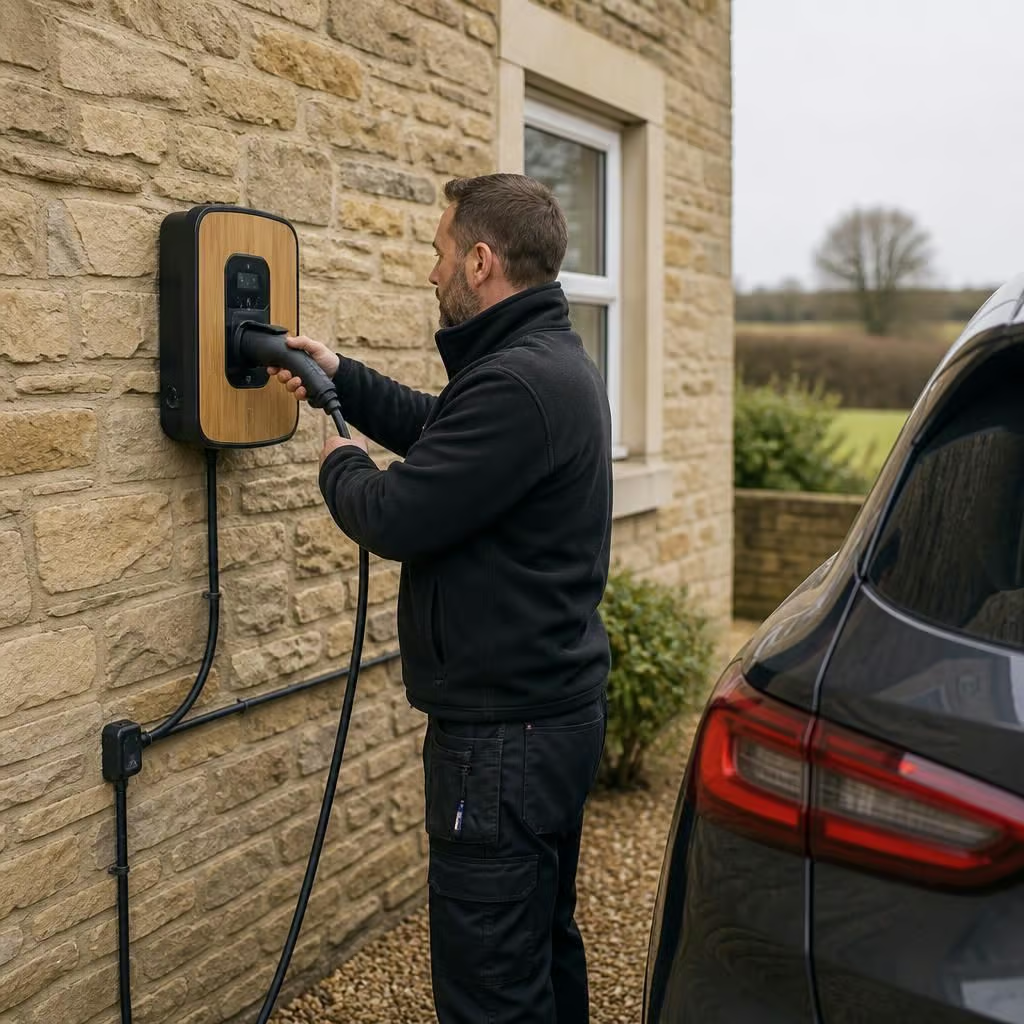
Is a 7kW home EV charger suitable for my property?
Usually, yes, provided your electrical supply can support the charger and there is a safe route from the consumer unit to your parking space. We assess the supply, cable route, earthing and charger position before confirming whether a 7kW installation suits your property.
A 7kW unit is usually a practical choice for a home with dedicated parking, provided the property can supply it safely and the cable can reach the car without creating a trip or vehicle-damage risk. The right answer depends on the whole installation, not just the charger’s rated output.
Your car may accept less than 7kW. The vehicle controls how much power it takes. If its onboard charger has a lower limit, a 7kW home charger will not make it charge faster. We check the car’s charging specification alongside the proposed charger, so you are not paying for capacity the vehicle cannot use.
Your electricity supply must have enough spare capacity. We look at the incoming supply, meter arrangement, consumer unit, earthing and the demand from other large appliances. An older property may need electrical work before a charger can be added. Rural homes can also have longer cable runs or detached outbuildings, which can affect voltage drop and installation design.
A load-management system may allow the charger to reduce its output when the cooker, immersion heater, heat pump or other high-demand equipment is running. That can be useful where the supply cannot safely carry every load at full power at once. We explain when this is appropriate rather than treating 7kW as an automatic requirement.
The charging position matters as much as the electrical rating. A suitable installation normally needs:
- a parking space that you control and can use safely;
- a direct, protected cable route from the consumer unit or suitable distribution point;
- enough room to mount the charger without blocking doors, windows or access routes;
- protection against impact, water exposure and damage from vehicles or garden equipment; and
- a cable position that does not leave the lead across a public path or frequently used walkway.
If the consumer unit is inside the house and the car parks beside a garage, we may need to route the cable through walls, under floors or externally. A detached garage may require a suitable submain or other electrical alterations rather than a simple connection from the nearest socket. We agree the route with you before work starts and include the required work in the quotation.
Older and listed homes can still be suitable. Solid walls, barn conversions and unusual construction do not rule out a 7kW charger, but they can make the cable route more important. We plan around visible stonework, protected features and difficult access instead of assuming that the shortest route is acceptable. Listed buildings or properties in conservation areas may also need planning advice before equipment is fixed externally.
Off-gas-grid homes need the same electrical checks as any other property. An oil boiler, LPG system or heat pump does not prevent EV charging, but the combined demand may affect the design. If solar panels or a battery are already installed, we can consider how the charger fits alongside them. That does not necessarily mean the car will charge only from surplus solar power; the controls and your charging habits determine how the system operates.
Some properties are not well suited to a fixed 7kW charger. Examples include homes with no private parking, a supply that needs substantial upgrading, a long route with no practical protection, or a shared parking arrangement where cable placement could be unsafe. In those cases, we explain the limitation and discuss a lower-power arrangement, load management or the electrical work needed to make a higher-power installation viable.
The installation is more than mounting a box on the wall. For electrical work, our NICEIC-registered electricians assess the circuit protection, earthing and isolation arrangements before connecting the charger. The installation is tested when complete, and we provide the relevant paperwork so you know what has been inspected and changed.
Before work begins, we give you a written quotation covering the charger position, cable route, protective equipment and any consumer-unit or supply alterations. This lets you compare the actual installation rather than comparing charger prices alone. A survey is worthwhile if the parking space is distant from the house, the property has an older electrical installation or you are considering solar, battery storage or a heat pump at the same time.
For many properties, 7kW is suitable once these points have been checked. The useful question is not simply whether the house can have an EV charger, but whether this charger, in this position, can operate safely alongside the rest of the property.
A 7kW charger suits a car that returns home and stays parked for several hours. It is designed for regular parked charging, not rapid top-ups between journeys.
If you often leave home again soon after arriving, the charging speed may not match your routine. We look at how far you normally drive, when the car is parked and how much charge you expect to add. That gives you a realistic view of whether 7kW fits your day-to-day use before you choose the installation.